The best things to do in Seville, from essentials to local experiences
Discover the best things to do in Seville, from the Alcázar, Cathedral and Plaza de España to flamenco, aristocratic palaces, Triana, river walks, museums, markets and worthwhile day trips. Seville rewards careful timing: reserve the major monuments, use mornings for exposed sights, and leave evenings open for tapas, performances and neighborhoods that come alive after the heat drops.
Best time
March to May and October to early November offer the best balance of walking weather, long evenings and outdoor life. Semana Santa and Feria de Abril are unforgettable but exceptionally busy; summer requires early starts, shaded midday plans and later evenings.
Ideal trip length
Allow 2 full days for Seville’s essential monuments and neighborhoods, 3 days for palaces, museums, Triana and a slower food-and-flamenco rhythm, and 4 days if you also want Itálica, Córdoba, Carmona or another full excursion.
Continue planning your Seville trip
Use the Seville city guide to understand how the historic center, Triana, Arenal and northern neighborhoods connect, then choose where to stay and match these activities to the time available.
Top things to do in Seville at a glance
Visit the Real Alcázar and its gardens – Area: Santa Cruz · Best for: Mudéjar architecture, royal history and first visits · Time needed: 2 to 3 hours · Worth it: Essential. This is Seville’s highest-payoff historic attraction. · Book ahead: Yes — reserve a timed entry well ahead in busy periods.
Visit Seville Cathedral and climb La Giralda – Area: Cathedral quarter · Best for: Monumental architecture, history and city views · Time needed: 1.5 to 2 hours · Worth it: Essential for understanding Seville’s religious and urban scale. · Book ahead: Recommended, especially in spring, autumn and on weekends.
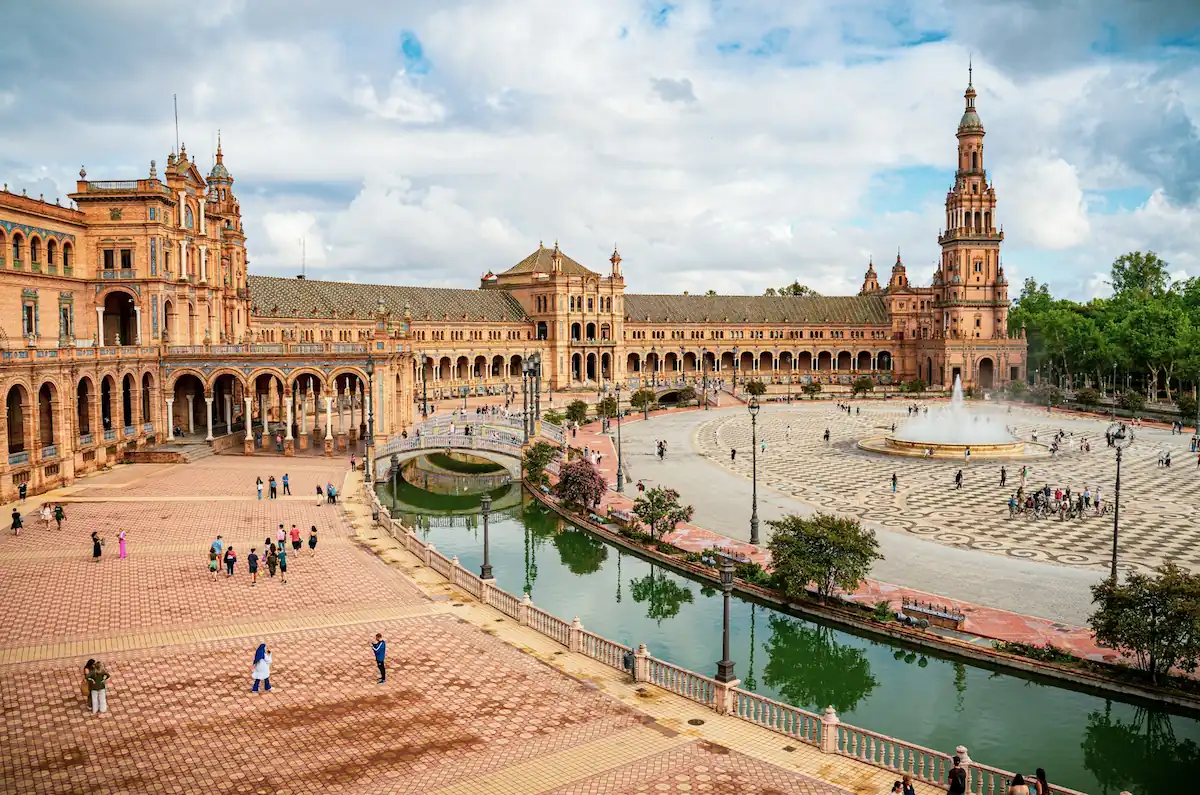
Walk Plaza de España and María Luisa Park – Area: South of the historic center · Best for: Architecture, tiles, families and open space · Time needed: 1.5 to 2.5 hours · Worth it: One of Seville’s best free sequences, especially early or late. · Book ahead: No.
See flamenco in a focused small venue – Area: Triana, Santa Cruz or Centro · Best for: A defining evening cultural experience · Time needed: 1 to 1.5 hours · Worth it: Yes, when the venue prioritizes the performance over a dinner package. · Book ahead: Yes for intimate venues and weekend evenings.
Cross into Triana for ceramics, food and river views – Area: Triana · Best for: Neighborhood atmosphere and craft heritage · Time needed: 3 to 4 hours · Worth it: A high-value contrast to the monument-heavy historic center. · Book ahead: No, unless joining a food, flamenco or ceramics experience.
Tour Casa de Pilatos or Palacio de las Dueñas – Area: Historic center · Best for: Quieter palace architecture and decorative arts · Time needed: 1 to 1.5 hours each · Worth it: Choose at least one if you have more than two days. · Book ahead: Usually not essential outside peak dates.
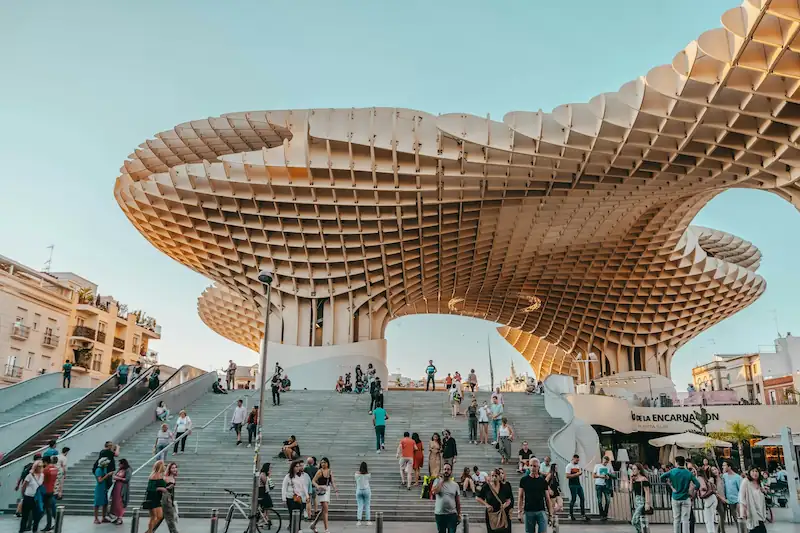
Watch sunset from Las Setas – Area: Encarnación · Best for: Modern architecture and rooftop views · Time needed: 45 minutes to 1 hour · Worth it: High payoff when timed around sunset or blue hour. · Book ahead: Helpful for popular sunset slots.
See Spanish art at the Museo de Bellas Artes – Area: Museum quarter · Best for: Painting, quiet culture and hot or rainy days · Time needed: 1.5 to 2 hours · Worth it: One of Seville’s strongest museums and excellent value. · Book ahead: Usually no.
Explore the Macarena and San Luis churches – Area: Northern historic center · Best for: Baroque architecture and a less visited Seville · Time needed: 2 to 3 hours · Worth it: Very rewarding for return visitors and architecture-focused trips. · Book ahead: Usually no; check individual opening times.
Build a tapas evening across several bars – Area: Arenal, Centro, Triana or Feria · Best for: Food culture and flexible evenings · Time needed: 2 to 3 hours · Worth it: One of the most characteristic ways to experience Seville. · Book ahead: No for independent bar-hopping; yes for guided food tours.
Cruise or walk beside the Guadalquivir – Area: Arenal and Triana riverfront · Best for: Easy sightseeing, families and a break from interiors · Time needed: 1 to 2 hours · Worth it: Best as a relaxed complement rather than a core monument. · Book ahead: Optional outside busy weekends.
Take a day trip to Córdoba, Itálica or Carmona – Area: Outside Seville · Best for: Islamic, Roman or small-town Andalusian history · Time needed: Half day to full day · Worth it: Worthwhile once Seville’s essential sights are covered. · Book ahead: Yes for Córdoba trains and organized excursions.
How to choose what is actually worth doing
The best Seville trip combines a small number of major monuments with contrasting experiences: a palace garden, a church or art museum, a neighborhood across the river, a flamenco performance, and an evening shaped by tapas rather than a rigid reservation. Heat and timed entries matter more here than distance, so build each day around one booked anchor and keep the surrounding streets flexible.
Book the Real Alcázar first, then fit the Cathedral and Giralda around the remaining high-value time slots.
Visit Plaza de España early or late and combine it directly with María Luisa Park rather than crossing the city for a short photograph.
Choose one secondary palace—Casa de Pilatos, Palacio de las Dueñas or Palacio de la Condesa de Lebrija—unless historic interiors are a main interest.
Give Triana at least a half day or evening for ceramics, the market, river views, tapas and flamenco context.
Use the Museo de Bellas Artes, Casa de Pilatos, Las Dueñas, Antiquarium or CAAC as meaningful heat and rain alternatives.
Treat flamenco as a cultural performance: prioritize venue quality, proximity to the stage and clear sightlines over dinner bundles.
With children, alternate monuments with Plaza de España, María Luisa Park, the aquarium, river activities or Casa de la Ciencia.
Add Córdoba, Itálica or Carmona only after protecting enough time for Seville itself.
Iconic things to do in Seville
Seville’s essential attractions explain the city through royal architecture, religious scale, civic spectacle, Islamic and Christian layers, and the broad public spaces built for the 1929 Ibero-American Exposition. Most belong to two connected clusters: the Cathedral–Alcázar quarter and Plaza de España–María Luisa Park.
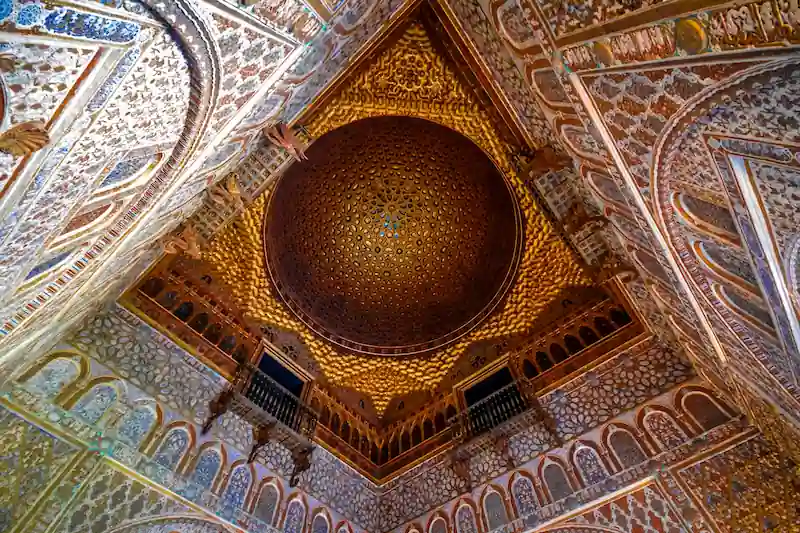
Explore the Real Alcázar, palace rooms and gardens – The Alcázar is Seville’s most important book-ahead sight, combining Mudéjar halls, courtyards, later royal additions and extensive gardens. Allow enough time to move beyond the most photographed rooms and understand how water, shade and planting shape the palace complex. (First-time essential · Best for: Architecture, history and gardens)Find tours & experiences
Visit Seville Cathedral and climb La Giralda – The Cathedral’s vast interior, main altarpiece, Columbus tomb, treasury and Patio de los Naranjos form a substantial visit before the ramped ascent of La Giralda. The tower view makes Seville’s low skyline and dense historic center easier to read. (First-time essential · Best for: Gothic architecture, history and views)Find tours & experiences
Walk Plaza de España when the light is softer – Plaza de España’s curved façade, bridges, canal and ceramic provincial benches are most enjoyable before the strongest heat or near sunset. Walk the full semicircle rather than stopping only at the central viewpoint. (Free essential · Best for: Architecture, photography and families)
Continue through María Luisa Park – The park provides shade, fountains, pavilions and quieter paths directly beside Plaza de España. It works as a real part of the visit, especially with children or during warmer months, rather than simply as a shortcut back to the center. (Best free park · Best for: Shade, walking and family breaks)
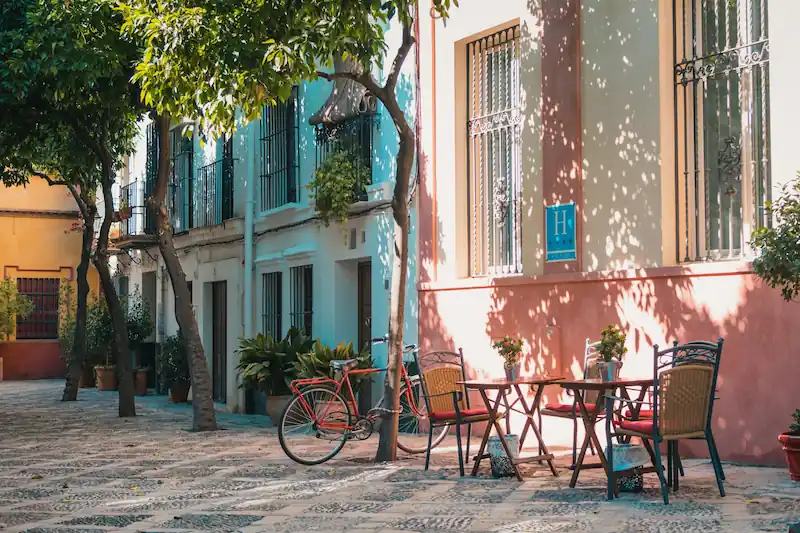
Walk Santa Cruz beyond the busiest lanes – Santa Cruz is most rewarding as the atmospheric layer around the Alcázar and Cathedral. Move beyond the most crowded lanes toward small squares, shaded passages and the Murillo gardens, ideally in the morning or after the daytime visitor peak. (Best for: Historic streets and short atmospheric walks)
See Seville from Las Setas at sunset – The elevated walkway above Plaza de la Encarnación gives a contemporary panorama over tiled roofs, domes and bell towers. Time the visit around late light, then continue into Centro or Alameda for dinner. (Best at sunset · Best for: Views and contemporary architecture)Find tours & experiences
Visit the Archivo de Indias between the major monuments – The former merchants’ exchange holds the archive documenting Spain’s overseas empire and completes the UNESCO ensemble with the Cathedral and Alcázar. Exhibitions vary, but the building is a useful free historical stop in the heart of the monument quarter. (Free historic stop · Best for: Atlantic history and efficient sightseeing)
Walk the Arenal riverfront from Torre del Oro – The promenade beside Torre del Oro opens Seville toward the Guadalquivir and Triana. It is a valuable easy-going sequence after the Cathedral quarter, with broad views, bridges and easy access to the Triana crossing. (Free walk · Best for: River views and an easier afternoon)
Take a Guadalquivir sightseeing cruise – A short river cruise offers an easy view of Torre del Oro, Triana, bridges, Cartuja and the city’s relationship with the Guadalquivir. It is most useful for families, hot afternoons or travelers needing a seated break rather than as a replacement for walking the riverfront. (Easy sightseeing · Best for: Families and low-effort views)Find tours & experiences
Cultural things to do in Seville
Beyond the Alcázar and Cathedral, Seville has an unusually rich deeper side of palaces, baroque churches, painting, archaeology, ceramics, contemporary art and flamenco history. Choose according to your interests: one palace, one museum or church cluster, and one performance usually creates more contrast than collecting similar interiors.
Choose Casa de Pilatos for tiles, patios and Renaissance detail – Casa de Pilatos combines Mudéjar decoration, Renaissance sculpture, courtyards and upper rooms in a calmer setting than the Alcázar. It is one of the best secondary palace visits and fits naturally into an east-of-center walking route. (High payoff · Best for: Architecture and decorative arts)
Visit Palacio de las Dueñas for a lived aristocratic palace – Las Dueñas layers courtyards, gardens, family collections and literary associations inside a palace that feels more domestic than monumental. It is especially rewarding for visitors who want a second major interior without repeating the Alcázar experience. (Strong second palace · Best for: Courtyards, gardens and aristocratic history)Find tours & experiences
See mosaics and Roman sculpture at Palacio de Lebrija – This central palace is best known for its Roman mosaics, archaeological collection and richly decorated rooms. It is a compact alternative for visitors drawn to collecting, decorative interiors and the Roman layer beneath Andalusia. (Hidden palace · Best for: Roman mosaics and decorative collections)
See Murillo and Zurbarán at the Museo de Bellas Artes – Set in a former convent, Seville’s principal fine-art museum is especially strong in Spanish baroque painting. The building, courtyards and galleries make it a worthwhile cultural visit rather than merely a rainy-day fallback. (Best art museum · Best for: Spanish painting and quiet interiors)
Visit Hospital de los Venerables and the Velázquez Centre – This restored baroque complex in Santa Cruz combines a theatrical courtyard, church decoration and a focused collection linked to Velázquez and Seville’s painting tradition. It adds genuine depth to a neighborhood often reduced to its streets. (Santa Cruz depth · Best for: Baroque architecture and painting)
Enter Iglesia del Salvador after the Cathedral – El Salvador is Seville’s major baroque church and offers a more concentrated interior than the Cathedral. Admission is often linked to the Cathedral ticket, making it an easy way to compare two very different forms of religious architecture. (Major baroque interior · Best for: Religious art and architecture)
Explore San Luis de los Franceses and the Macarena – The northern historic center contains some of Seville’s strongest baroque architecture and religious identity. San Luis de los Franceses is the architectural highlight, while the Basilica de la Macarena adds living devotional culture and Holy Week context. (Beyond the main circuit · Best for: Baroque architecture and local religious culture)
See the Antiquarium beneath Las Setas – The archaeological remains beneath Plaza de la Encarnación reveal Roman streets, houses and mosaics directly below contemporary Las Setas. Pairing the two gives one of Seville’s clearest contrasts between ancient and modern urban layers. (Roman Seville · Best for: Archaeology and urban history)
Visit CAAC in the former Cartuja monastery – The Andalusian Centre for Contemporary Art occupies a monastery and former ceramics factory on Isla de la Cartuja. Historic cloisters, industrial kilns, gardens and contemporary exhibitions make it one of Seville’s most distinctive cultural settings. (Contemporary Seville · Best for: Modern art and unusual architecture)
Experience flamenco beyond the performance – A strong flamenco evening can be complemented by the Museo del Baile Flamenco, Triana’s neighborhood history or a venue that explains the forms being performed. Context helps distinguish flamenco as a living art from a generic tourist show. (Signature culture · Best for: Music, dance and Andalusian identity)Find tours & experiences
Local experiences and lower-pressure things to do
Seville’s local side appears through neighborhood transitions, markets, riverbanks, plazas and evening streets rather than through a list of minor monuments. These experiences work best as connected walks that move from the visitor-heavy center into Triana, Feria, Macarena, San Luis or Cartuja.
Give Triana a real half day or evening – Cross Puente de Isabel II, browse the market and ceramics center, follow Calle Betis for views, then move inland toward neighborhood bars and small streets. Triana becomes meaningful when food, craft and river geography are experienced together. (Best neighborhood contrast · Best for: Food, craft and local atmosphere)
Browse Mercado de Triana and Calle San Jacinto – The market works as a compact food and neighborhood stop, while Calle San Jacinto and the streets beyond reveal a more everyday Triana. Visit around late morning or connect it to an early-evening tapas route. (Best for: Market life and casual food)
Walk Feria, San Luis and the northern old town – Calle Feria, San Luis and the surrounding lanes offer markets, churches, local bars and a less polished historic atmosphere than Santa Cruz. This is one of the best areas for travelers seeking Seville beyond the standard monument circuit. (Local Seville · Best for: Repeat visitors and slower walking)
Spend an evening around Alameda de Hércules – Alameda is a broad social space rather than a single attraction, with terraces, casual restaurants and late-night energy. It is best after the main sightseeing day, especially for travelers who prefer informal neighborhood nightlife. (Best in the evening · Best for: Terraces and informal nightlife)
Walk or cycle beside the Guadalquivir – The river path creates an easy route between Torre del Oro, the Triana bridges, Cartuja and northern riverfront areas. Walking is enough for the central stretch, while a bicycle helps connect longer sections without repeated heat-heavy city crossings. (Free outdoor option · Best for: Walking, cycling and open views)Find tours & experiences
Slow down in Seville’s plazas – Plaza del Salvador, Plaza de Doña Elvira, Plaza de Santa Isabel and smaller neighborhood squares are places to pause rather than merely pass through. Coffee, shade and evening social life often provide the city’s most natural transitions. (Best for: Slow travel and low-cost breaks)
Visit a neighborhood market beyond a meal stop – Mercado de Triana, Mercado de Feria and Mercado del Arenal each reflect a different part of the city. Browse produce and prepared-food counters, then use the surrounding streets to understand the neighborhood rather than treating the market as an isolated attraction. (Best for: Food culture and neighborhood rhythm)
Food-led things to do in Seville
Seville is built for small plates and flexible evenings. The most rewarding approach combines traditional tapas, seasonal dishes, markets, Andalusian wines and one experience that adds context—such as a food tour, cooking class or guided market visit—without turning every meal into a reservation.
Build a tapas crawl through Arenal or Centro – Keep each stop light: one or two plates, a drink, then move on. Arenal and Centro provide enough density to compare traditional counters, seafood, montaditos, fried dishes and more contemporary kitchens without long transfers. (Signature food experience · Best for: First-time food exploration)Find tours & experiences
Use Triana for a neighborhood-led food evening – Triana’s appeal comes from the combination of market, river crossing, local streets and bars rather than one essential restaurant. Start before dinner, explore the neighborhood and let the evening unfold across several stops. (Best for: Local atmosphere and casual dining)
Join a food tour to learn how Seville eats – A good tour should explain ordering, portions, meal times, traditional dishes and neighborhood differences rather than simply provide tastings. It is especially useful at the beginning of a short stay. (Useful for first-timers · Best for: Food context and efficient discovery)Find tours & experiences
Take an Andalusian cooking class – Cooking classes add practical context to ingredients and dishes encountered in tapas bars, from salmorejo and seasonal vegetables to seafood, rice and local desserts. Market-linked classes are particularly useful for understanding regional produce. (Hands-on experience · Best for: Couples, groups and food-focused trips)Find tours & experiences
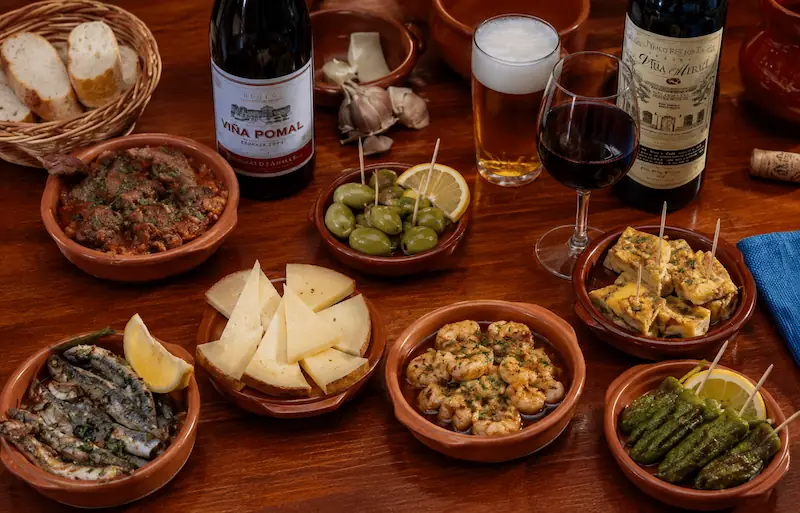
Try classic Sevillian and Andalusian dishes selectively – Look beyond generic tapas for espinacas con garbanzos, solomillo al whisky, fried fish, seasonal snails, salmorejo, carrillada and montaditos. Order according to season and venue rather than trying to complete a fixed food checklist. (Best for: Traditional food and repeat visits)
Make one stop about sherry or Andalusian wine – Fino, manzanilla, oloroso and other regional wines make more sense when tasted with the dishes they traditionally accompany. Choose a specialist bar, guided tasting or thoughtful restaurant pairing rather than treating sherry as a sweet after-dinner drink. (Andalusian wine culture · Best for: Wine-curious travelers)Find tours & experiences
Start early with tostada, churros or a market breakfast – A simple breakfast fits Seville’s rhythm and supports an early monument start. Try toasted bread with tomato and olive oil, churros or a market-adjacent café before the streets and temperatures become busier. (Best for: Low-cost mornings and families)
Best things to do in Seville for first-timers
A first visit should protect Seville’s defining range: royal architecture, the Cathedral and Giralda, Plaza de España, one neighborhood beyond the monument core, flamenco and a food-led evening. Secondary palaces and museums add depth once those anchors are secured.
Reserve the Real Alcázar first and allow enough time for both the palace rooms and gardens.
Visit the Cathedral and Giralda as one complete experience, then use Santa Cruz for atmosphere rather than as a replacement for the monuments.
Combine Plaza de España with María Luisa Park in the morning or late afternoon.
Spend at least one half day or evening in Triana for the market, ceramics, river views and tapas.
Choose one focused flamenco performance in a venue with good sightlines.
Add Casa de Pilatos, Palacio de las Dueñas or the Museo de Bellas Artes on a third day.
Keep Córdoba, Itálica and other excursions for trips of at least three or four days.
Priority
Activities
Why
Essential
Real Alcázar, Cathedral, Giralda, Plaza de España
They define Seville’s royal, religious and civic identity.
Signature experiences
Flamenco, Triana and a tapas evening
They add living culture and neighborhood rhythm.
Strong deeper side
Casa de Pilatos or Las Dueñas, Museo de Bellas Artes, Las Setas
They deepen the city without repeating the same experience.
With extra time
Macarena, San Luis, CAAC, Antiquarium or a day trip
They reward longer and repeat visits.
Free things to do in Seville
Seville has enough free activity value to soften the cost of its major ticketed sights. The strongest free experiences are walks, viewpoints from ground level, parks, plazas and neighborhood transitions.
Walk the full curve of Plaza de España and study the provincial tile benches.
Use María Luisa Park for gardens, fountains, shade and family downtime.
Cross Puente de Isabel II and follow the riverfront between Arenal and Triana.
Explore Santa Cruz early in the morning and the Murillo gardens nearby.
Visit the Archivo de Indias when exhibitions and public access are available.
Walk the Cathedral and Giralda exterior after dark.
Spend an evening around Alameda de Hércules and the northern old town.
Browse Mercado de Triana, Mercado de Feria or Mercado del Arenal.
Walk Calle Feria, San Luis and the Macarena neighborhood.
Explore the Guadalquivir river path on foot or by bicycle.
FreeActivity
BestTime
BestFor
Plaza de España and María Luisa Park
Morning or late afternoon
Architecture, families and open space
Triana river crossing
Late afternoon
Views and neighborhood contrast
Santa Cruz and Murillo gardens
Early morning
Historic atmosphere before crowds
Archivo de Indias
Between Cathedral and Alcázar visits
Free historical context
Feria, San Luis and Macarena walk
Morning or early evening
A less visited side of Seville
Unique and unusual things to do in Seville
The most distinctive Seville experiences usually sit just beyond the first layer of sights. Look for craft, rooftops, quieter palaces, contemporary spaces and performances where the setting changes the feeling of the city.
Pair the Roman Antiquarium beneath Las Setas with the contemporary rooftop walkway above it.
Visit San Luis de los Franceses for one of Seville’s most theatrical baroque interiors.
Explore CAAC inside the former Cartuja monastery and ceramics factory.
See the Roman mosaics and collections of Palacio de la Condesa de Lebrija.
Visit Hospital de los Venerables for its baroque courtyard, church and Velázquez-focused collection.
Learn about tile production at Centro Cerámica Triana before walking the neighborhood.
Attend flamenco in a compact venue where the performance is close and unamplified.
Take a cooking class linked to a local market.
Visit Itálica for Roman streets, mosaics and the amphitheater outside Seville.
Explore Macarena and San Luis for baroque architecture and Holy Week culture beyond the main circuit.
Things to do in Seville at night
Seville is especially strong after sunset, when the heat drops, plazas refill and the city’s evening rhythm becomes more generous. Choose one main night idea and let the rest stay flexible.
Book a focused flamenco show in Triana, Santa Cruz or Centro.
Watch sunset and blue hour from Las Setas.
Build a tapas crawl through Arenal, Centro, Feria or Triana.
Walk around the illuminated Cathedral, Giralda and Avenida de la Constitución.
Cross Puente de Triana for evening river views and continue to Calle Betis.
Spend a relaxed terrace evening around Alameda de Hércules.
Choose a rooftop drink for views, but treat it as an atmosphere stop rather than a substitute for dinner.
Attend an evening concert, opera or performance at Teatro de la Maestranza when the program fits.
NightOption
BestFor
PlanningLevel
Flamenco show
Cultural intensity
Book ahead
Tapas crawl
Food and social rhythm
Light planning
Las Setas
Sunset and rooftop views
Time carefully
Cathedral and river walk
Free evening atmosphere
Spontaneous
Alameda
Informal nightlife
Spontaneous
Things to do in Seville with kids
Seville works well with children when monuments are balanced with gardens, water, animals, science and short active experiences. In warm weather, schedule major outdoor sights early and plan a hotel, pool or indoor break during the hottest hours.
Use Plaza de España’s bridges, canal and tiled benches as a visually active first stop.
Continue into María Luisa Park for shade, fountains and unstructured time.
Keep the Alcázar focused on its most memorable palace rooms, then give children more freedom in the gardens.
Climb La Giralda if children are comfortable with the long ramped ascent and crowds.
Visit the Seville Aquarium for a dependable indoor family activity near María Luisa Park.
Choose Casa de la Ciencia for interactive exhibitions and a planetarium.
Take a short Guadalquivir cruise or family bike tour when walking fatigue builds.
Use markets, churros stops and hotel breaks to reset the day.
Consider Isla Mágica or Agua Mágica only when a dedicated theme-park day fits the trip.
Activity
AgeFit
WeatherFit
TimeFit
Plaza de España and María Luisa Park
All ages
Best outside peak heat
1.5 to 3 hours
Alcázar gardens
School-age and up
Morning
Keep the palace route focused
Seville Aquarium
All ages
Excellent for heat or rain
1.5 to 2 hours
Casa de la Ciencia
School-age children
Indoor and air-conditioned
1.5 to 2.5 hours
Guadalquivir cruise
All ages
Best in mild weather
Around 1 hour
Isla Mágica
Families wanting a full break from sightseeing
Seasonal
Half or full day
Things to do in Seville when it rains
Rain in Seville usually calls for interiors with real cultural value, not filler. The Cathedral, palaces, museums, markets and flamenco venues keep a day strong without forcing long exposed walks.
Visit Seville Cathedral and La Giralda if wind and visibility allow the tower climb.
Use the Real Alcázar for palace interiors and keep the gardens flexible.
Spend a substantial block at the Museo de Bellas Artes.
Choose Casa de Pilatos, Palacio de las Dueñas or Palacio de Lebrija.
Visit Hospital de los Venerables and its Velázquez Centre.
Explore the Antiquarium beneath Las Setas.
Visit CAAC at the Cartuja monastery, allowing for some outdoor transitions.
Use Mercado de Triana or another market for a food-led break.
Book an evening flamenco performance.
Take children to the Aquarium or Casa de la Ciencia.
RainyOption
BestFor
TimeNeeded
Museo de Bellas Artes
Painting and a long indoor block
1.5 to 2 hours
Casa de Pilatos or Las Dueñas
Architecture and decorative arts
1 to 1.5 hours
Antiquarium
Roman archaeology
45 minutes to 1 hour
Flamenco show
A strong evening plan
1 to 1.5 hours
Aquarium or Casa de la Ciencia
Families
1.5 to 2.5 hours
Things to do in Seville by area
Santa Cruz and the Cathedral quarter
This is Seville’s highest-value first-time cluster. Reserve the Alcázar and Cathedral, then use the Archivo de Indias, Hospital de los Venerables, gardens and historic lanes to connect the major visits without overloading the day.
Real Alcázar
Seville Cathedral and La Giralda
Archivo de Indias
Hospital de los Venerables
Santa Cruz lanes and Murillo gardens
Arenal and the Guadalquivir
Arenal links the monument quarter with the river and Triana. Use it for Torre del Oro, the Maestranza area, river walks, cruises, tapas and an easy transition across Puente de Isabel II.
Torre del Oro
Guadalquivir river walk
River cruises
Arenal tapas bars
Access to Triana
Triana
Triana deserves a half day or evening built around craft, market life, river views and food. The ceramics center gives cultural context, while the market and streets inland make the neighborhood more than a waterfront photograph.
Mercado de Triana
Centro Cerámica Triana
Calle Betis
Tapas and markets
Flamenco venues
Centro, Encarnación and the palace district
Central Seville combines Las Setas with aristocratic palaces, shopping streets, Iglesia del Salvador and the Museo de Bellas Artes. It is the strongest zone for second-day culture and heat-proof planning.
Las Setas and Antiquarium
Casa de Pilatos
Palacio de las Dueñas
Palacio de Lebrija
Museo de Bellas Artes
Plaza de España and María Luisa Park
This spacious southern cluster works best early or late in the day. Combine Plaza de España, the park and one family or cultural attraction rather than making repeated journeys from the center.
Plaza de España
María Luisa Park
Seville Aquarium
Casa de la Ciencia
Archaeological and ethnographic museum zone
Alameda, Feria, San Luis and Macarena
The northern historic center combines local markets, baroque churches, Holy Week culture and informal nightlife. It is rewarding for longer stays and visitors who want a less visitor-shaped side of Seville.
Alameda de Hércules
Calle Feria and market
San Luis de los Franceses
Basilica de la Macarena
Neighborhood bars and plazas
Cartuja
Across the river, Cartuja mixes contemporary art, monastery architecture, industrial heritage and family attractions. It works as a focused half day rather than a casual extension of the historic center.
CAAC
Cartuja monastery
Ceramics factory heritage
Isla Mágica
River and cycling routes
What to prioritize with limited time
Seville’s activity choices become much easier when you decide how much depth you want before adding more places. The mistake is not missing a minor sight; it is under-timing the experiences that give the city its shape.
Profile
Prioritize
Skip
Structure
Half day
Choose either the Real Alcázar or Cathedral and Giralda, then add a short Santa Cruz or river walk.
Plaza de España, Triana and secondary palaces unless they sit directly on your route.
One booked monument, one connected walk and one food stop.
1 full day
Real Alcázar, Cathedral, Giralda, Plaza de España and one evening focus.
Secondary museums, multiple palaces and all day trips.
Booked historic core, open-air late afternoon, flamenco or tapas at night.
2 days
Add Triana, Las Setas, a tapas crawl and either Casa de Pilatos or Las Dueñas.
Overfilling both days with similar interiors.
Monument core on day one; neighborhoods and second-layer culture on day two.
3 days
Add Museo de Bellas Artes, Macarena/San Luis, CAAC, a food experience or a short excursion.
A full-day excursion if it removes essential Seville time.
One major cultural visit, one local district and one flexible afternoon.
4 days or more
Add Itálica, Córdoba or Carmona, plus deeper food, palace or contemporary-art interests.
Collecting minor sights without allowing time for evenings and neighborhoods.
Three varied Seville days plus one excursion or specialist day.
Culture-first stay
Alcázar, Cathedral, one secondary palace, Museo de Bellas Artes, flamenco, San Luis and ceramics.
Generic cruises or theme-park activities unless they serve the group.
Alternate major heritage, painting, performance and neighborhood craft.
Family trip
Plaza de España, María Luisa Park, focused Alcázar visit, Aquarium, science museum and river activity.
Long sequences of palaces and churches in peak heat.
One cultural anchor, one active break and a midday reset.
Repeat visit
Macarena, San Luis, Feria, CAAC, Palacio de Lebrija, food experiences, Itálica or Carmona.
Automatically repeating every headline sight.
Use Seville as a lived cultural base rather than a monument checklist.
Best day trips and excursions from Seville
Day trips from Seville make sense once the city’s core has been properly covered. Córdoba is the strongest full-day cultural extension, while Itálica and Carmona work better when you want depth without giving up an entire day.
Excursion
Best for
Time needed
First trip?
Transport
Book ahead
Córdoba
The Mezquita-Cathedral, Jewish quarter and a major Andalusian cultural extension
Full day
Yes, if you have at least 4 days in the region
Fast train is usually the easiest option
Reserve trains and the Mezquita-Cathedral in busy periods Check options
Itálica
Roman streets, mosaics and the amphitheater close to Seville
Half day
Excellent for archaeology-focused visitors or an extra morning
Public bus, taxi or guided excursion
Usually light planning; guided visits add historical context Check options
Carmona
Historic streets, gates, viewpoints and a quieter Andalusian town
Half day to full day
A strong slower alternative to a major-city excursion
Smart activity combinations that work well together
These combinations group nearby experiences into practical half-day or full-day sequences, reducing unnecessary walking and keeping each day varied.
Real Alcázar + Cathedral + Santa Cruz – Reserve the two major monuments, then use Santa Cruz and the Murillo gardens as the flexible walking layer around them. This is the strongest first-day sequence.
Plaza de España + María Luisa Park + Aquarium or Casa de la Ciencia – This combination works especially well for families or warm weather. Visit the open spaces early, then move indoors when the day heats up.
Triana ceramics + market + tapas – Begin with the ceramics center and market, walk Calle Betis and inland streets, then stay for an early tapas evening rather than crossing back immediately.
Las Setas + Antiquarium + Palacio de las Dueñas – Pair Roman archaeology below the square with contemporary views above, then add a nearby palace for a compact second-day cultural visit.
Casa de Pilatos + Iglesia del Salvador + Museo de Bellas Artes – This route links palace architecture, baroque religion and painting, with central streets and food stops between visits.
Macarena + San Luis + Feria + Alameda – Explore the northern historic center from baroque churches and local markets into an informal terrace evening around Alameda.
CAAC + Cartuja river route + Triana – Use a bicycle, taxi or bus to reach Cartuja, spend time at CAAC, then return toward Triana for the market, riverfront and dinner.
Flamenco + light tapas crawl – Eat lightly before or after the performance and keep the rest of the night flexible. A few focused bar stops work better than a large formal dinner package.
What to book ahead in Seville
Seville is not difficult to visit, but the highest-value experiences are sensitive to timing. Book the monuments and intimate evening experiences first; keep walks, markets and neighborhood time flexible.
Accommodation and selected events require very early planning
Dates change annually and crowd conditions reshape the whole city
Guided context can be useful for Holy Week traditions
FAQ: what to do in Seville
These answers cover the practical questions travelers ask when choosing attractions, planning time, booking tickets and balancing Seville’s monuments with neighborhoods, food and excursions.
What are the best things to do in Seville for a first visit?
Prioritize the Real Alcázar, Seville Cathedral, La Giralda and Plaza de España. Add a flamenco performance, a tapas evening and at least one visit to Triana. These experiences cover Seville’s royal, religious, civic and living cultural identity.
How many days do you need in Seville?
Two full days cover the essential monuments and one strong evening. Three days allow time for Triana, a secondary palace, the Museo de Bellas Artes and a slower food-and-flamenco rhythm. Four days are better if you want Itálica, Córdoba or another excursion.
Is the Real Alcázar worth visiting?
Yes. It is Seville’s most important historic attraction and deserves two to three hours including the gardens. Reserve a timed ticket and avoid treating the visit as a quick series of palace photographs.
Should you visit the Alcázar or Cathedral first?
Book whichever high-quality time slot is available first, then structure the other visit around it. Morning generally suits the Alcázar gardens, while the Giralda climb is most comfortable outside the hottest hours.
Is Seville Cathedral and La Giralda worth it?
Yes. The Cathedral is one of the city’s defining monuments, and the Giralda gives the clearest central panorama. The combined visit also includes major artworks, the Patio de los Naranjos and layers inherited from the former mosque.
What should you book ahead in Seville?
Book the Real Alcázar first. Cathedral and Giralda tickets are also recommended in busy periods, as are intimate flamenco venues, sunset slots at Las Setas, food tours and popular day-trip trains.
What are the best free things to do in Seville?
Plaza de España, María Luisa Park, the Archivo de Indias, Santa Cruz streets, the Triana bridge, the Guadalquivir riverfront, Alameda de Hércules and walks through Feria, San Luis and Macarena provide the strongest free experiences.
What are the best things to do in Seville at night?
Choose a flamenco show, tapas crawl, Las Setas at sunset, illuminated Cathedral walk, Triana riverfront or an informal evening around Alameda. One main evening focus usually works better than trying to combine all of them.
What can you do in Seville with children?
Plaza de España, María Luisa Park, the Alcázar gardens, Seville Aquarium, Casa de la Ciencia, a short river cruise and the Giralda can all work well. In warm weather, limit long indoor sequences and plan a midday break.
What should you do in Seville when it rains?
Choose the Cathedral, Alcázar interiors, Museo de Bellas Artes, Casa de Pilatos, Palacio de las Dueñas, Antiquarium, Hospital de los Venerables, the Aquarium or an evening flamenco show.
Is Plaza de España free?
Yes, the square and its public walkways are free to enter. Boat rentals and any special activities cost extra. Visit early or late to avoid the strongest heat and largest crowds.
Is Triana worth visiting?
Yes. Triana adds ceramics, market life, flamenco associations, river views and a more neighborhood-led food scene. Give it at least a half day or evening rather than crossing only for a photograph.
Where is the best place to see flamenco in Seville?
Small dedicated venues in Triana, Santa Cruz and Centro can all offer strong performances. Choose based on sightlines, room size, artistic focus and recent reviews rather than relying only on the neighborhood or a dinner package.
Is Las Setas worth visiting?
Yes if you want a modern contrast and a broad rooftop view, particularly at sunset. Pair the walkway with the Antiquarium below or with a Centro and Alameda evening.
Which secondary palace is best in Seville?
Casa de Pilatos is the strongest all-round choice for Mudéjar and Renaissance architecture. Palacio de las Dueñas feels more domestic and garden-led, while Palacio de Lebrija is best for Roman mosaics and collections.
What are the best museums in Seville?
The Museo de Bellas Artes is the main fine-art museum. CAAC is best for contemporary art and unusual architecture, Antiquarium for Roman archaeology, Centro Cerámica Triana for craft heritage and the Flamenco Dance Museum for performance context.
What are the best neighborhoods to explore in Seville?
Santa Cruz is essential for the historic core, Triana for ceramics and food, Arenal for the river, Alameda and Feria for local evenings, and Macarena and San Luis for baroque architecture and a less visited old town.
Can you take a boat trip in Seville?
Yes. Short sightseeing cruises operate on the Guadalquivir and provide a relaxed view of Torre del Oro, Triana, bridges and Cartuja. They are especially useful for families or as a break from walking.
What food experiences are worth doing in Seville?
A self-guided tapas crawl is the classic choice. Guided food tours, market-linked cooking classes and sherry tastings add context, especially for first-time visitors unfamiliar with local ordering and meal rhythms.
What are the best day trips from Seville?
Córdoba is the strongest full-day cultural trip. Itálica is the easiest archaeological half day, Carmona suits a slower historic-town visit, Jerez is best for sherry and horses, and Cádiz offers an Atlantic contrast.
Is Córdoba worth a day trip from Seville?
Yes when you have at least four days in the region or have already protected enough time for Seville. Fast trains make it practical, but reserve transport and the Mezquita-Cathedral in busy periods.
Is Itálica worth visiting?
Yes for Roman history, mosaics and the amphitheater, especially because it can fit into a half day. A guided visit adds useful archaeological and historical context.
What is Seville like during Semana Santa?
Holy Week transforms movement, accommodation prices, street access and daily schedules. It is a major cultural experience rather than a normal sightseeing week, so plan far ahead and expect processions and crowds to determine the rhythm of the city.
Is Seville too hot in summer for sightseeing?
Summer sightseeing is possible with a different schedule: begin early, use palaces and museums around midday, rest during the hottest hours and return outside in the evening. Avoid building a continuous walking day through exposed areas.
Can you visit Seville in one day?
Yes. Prioritize the Real Alcázar, Cathedral and Giralda, then add one contrasting experience such as Plaza de España, a flamenco show or a short Triana evening. Skip secondary palaces and all excursions.
The best Seville trip protects the Alcázar and Cathedral, then uses palaces, neighborhoods, flamenco, food and open-air evenings to create contrast rather than volume.
Turn the right experiences into the right itinerary
Once you know what you want to do in Seville, the next step is turning those ideas into a trip that actually works day by day. Use the planner to organize the right mix of highlights, neighborhoods, and pace into a route that feels coherent, not crowded.