Where to stay in Montreal for the right kind of trip
Find the best areas to stay in Montreal by matching the base to the way you want the trip to work: Old Montreal for atmosphere and a first sense of place, Downtown for convenience and hotel choice, Plateau Mont-Royal for restaurants and local rhythm, Mile End for food-led neighborhood texture, Little Italy for markets and longer stays, and Griffintown or the Lachine Canal for modern rooms, space, and calmer waterside access. Montreal is not a city where the single most central address is always the smartest one; the right base should reduce friction while putting the right kind of streets, food, transport, and evenings outside your door.
Best areas
Old Montreal for first-timers and atmosphere; Downtown for convenience, families and winter logistics; Plateau Mont-Royal for restaurants and local rhythm; Mile End for food, cafés and independent streets; Little Italy for Jean-Talon Market and longer stays; Griffintown/Lachine Canal for modern apartments, space and calmer central-adjacent stays.
Booking timing
Book early for June to August, major festival periods, Formula 1 weekend, autumn weekends, and any stay where neighborhood choice matters. In Montreal, late booking often means losing the right district before losing the right hotel category.
Best areas to stay in Montreal at a glance
Old Montreal – Best for: First-time visitors, couples, boutique hotels and short stays · Vibe: Historic, atmospheric, polished, walkable, and closest to the city’s classic old-stone experience. · Stay here if: You want to walk out to Notre-Dame Basilica, the Old Port, Saint-Paul Street, galleries, restaurants, and heritage hotels without needing to decode the city first. · Avoid if: You want the most local residential rhythm, the lowest prices, easy parking, or the best everyday food value.
Downtown Montreal – Best for: Convenience, families, winter trips, rail arrivals, business trips and hotel choice · Vibe: Practical, central, hotel-rich, commercial, and easier for metro-based planning than more atmospheric districts. · Stay here if: You want the lowest-friction base for transit, museums, shopping, Central Station, Underground City access, and moving between Old Montreal, Mount Royal and northern neighborhoods. · Avoid if: You want the most charming streets immediately outside the hotel or a neighborhood that feels intimate after dark.
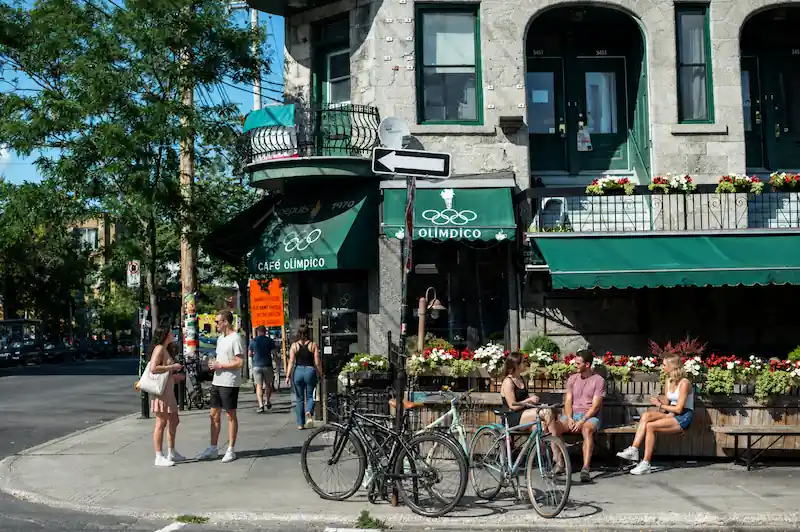
Plateau Mont-Royal – Best for: Restaurants, cafés, local-feeling stays, parks, murals and repeat visits · Vibe: Residential, creative, food-led, terrace-friendly, and more lived-in than visitor-facing. · Stay here if: You want staircases, side streets, parks, bakeries, wine bars, casual restaurants and neighborhood walking to shape the stay. · Avoid if: You need large hotel supply, full-service properties, elevators, or immediate access to Old Montreal’s main sights.
Mile End – Best for: Food-focused travelers, cafés, bagels, independent shops and slow local stays · Vibe: Compact, understated, creative, food-driven, and built around short routines rather than landmark sightseeing. · Stay here if: You want breakfast, coffee, bagels, bakeries, small shops and daily neighborhood movement to matter as much as attractions. · Avoid if: You want large hotels, classic sightseeing efficiency, maximum late-night choice or a frictionless first-time base.
Little Italy – Best for: Jean-Talon Market, longer stays, apartment-style trips and food-first travelers · Vibe: Neighborhood-scale, relaxed, market-centered, residential, and less central than the obvious first-visit bases. · Stay here if: You want Jean-Talon Market nearby, kitchen-friendly accommodation, calmer streets, and easy links to Mile End and the northern Plateau. · Avoid if: You only have two or three nights and want the most efficient base for Old Montreal, museums and first-time sightseeing.
Griffintown and the Lachine Canal – Best for: Modern hotels, apartment stays, canal walks, groups, families and calmer central-adjacent bases · Vibe: Contemporary, lower-density, design-conscious, waterside, and less historically textured than Old Montreal. · Stay here if: You want space, newer rooms, apartment-style comfort, easy canal access, and quick movement toward Downtown or Old Montreal. · Avoid if: You want old-city atmosphere, dense street life, or the most local restaurant-and-café rhythm immediately outside the door.
How to choose where to stay in Montreal
Choosing where to stay in Montreal is less about finding the single most central area and more about deciding what kind of city you want outside the hotel door. Old Montreal makes a first trip feel instantly atmospheric, Downtown makes the logistics easier, Plateau Mont-Royal and Mile End make the city feel lived-in and food-led, Little Italy rewards market-based longer stays, and Griffintown or the canal gives a more modern, spacious base. The wrong choice is usually not a bad neighborhood; it is a neighborhood that solves the wrong problem for your trip length, season, mobility, or evening style.
Choose Old Montreal when atmosphere, first-time sightseeing, boutique hotels, and walkable old-city evenings matter more than price or local residential rhythm.
Choose Downtown when transport access, hotel choice, museums, rail links, family logistics, or winter movement matter more than charm outside the door.
Choose Plateau Mont-Royal when restaurants, cafés, parks, murals, staircases, and a lived-in evening scene are the real reason for the trip.
Choose Mile End when food rituals, bagels, independent shops, bakeries, and slow local routines matter more than large hotels or classic sightseeing access.
Choose Little Italy only when you have enough time to benefit from Jean-Talon Market, apartment-style stays, and a less central but more food-grounded base.
Choose Griffintown or the Lachine Canal when space, newer rooms, apartment layouts, canal walks, and calmer evenings matter more than historic character.
Do not confuse a neighborhood you should visit with a neighborhood you should sleep in: noise, elevators, cobbles, winter access, metro distance, and hotel supply can change the decision.
For two or three nights, reduce friction; for five nights or more, let the base reflect food, parks, markets, and repeatable daily routines.
How Montreal’s map affects where you should stay
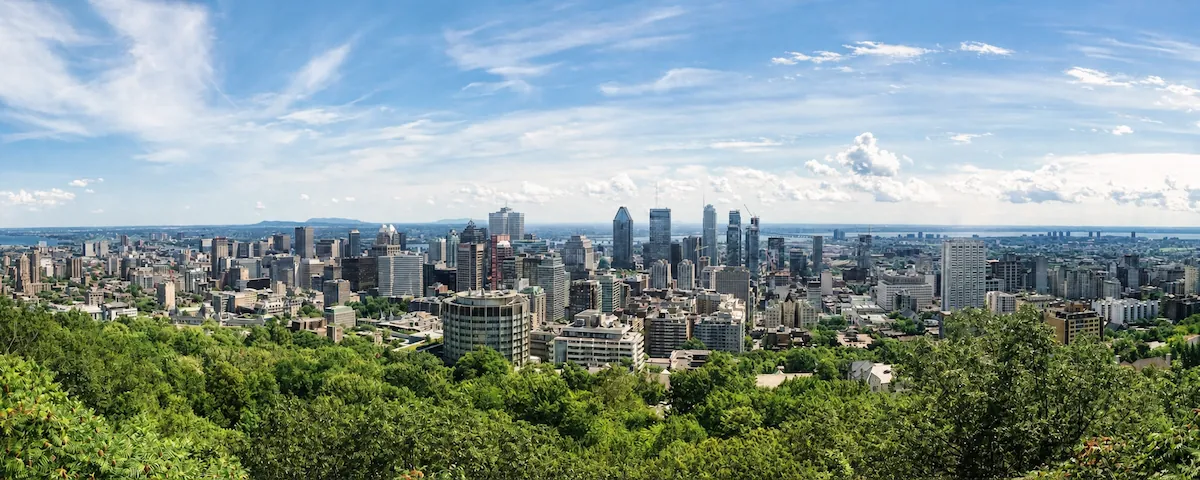
Montreal looks compact on a map, but the stay experience changes sharply by district. Old Montreal, Downtown, Plateau Mont-Royal, Mile End, Little Italy, and Griffintown each sit in a different relationship to the metro, the river, Mount Royal, markets, restaurants, museums, the Underground City and evening movement. The biggest mistake is judging distance by straight lines rather than by daily friction: winter sidewalks, luggage, cobbles, metro access, restaurant location and whether the hotel sits on the useful edge of a neighborhood.
Old Montreal and Downtown are the most efficient pair for classic first-time sightseeing, short stays, train arrivals and simple orientation.
Old Montreal sits by the river and old city; Downtown sits behind it with stronger transport, hotel density and museum access.
Plateau Mont-Royal and Mile End sit farther north and work better when walking, food, cafés, parks and local streets are the main reason to visit.
Little Italy is a strong food and market base but less efficient for travelers expecting to walk to the old city every day.
Griffintown and the canal create a calmer central-adjacent base, but the exact block determines whether it feels connected or inconvenient.
Metro access matters more than straight-line distance, especially in winter, with children, or when moving between Old Montreal and the northern neighborhoods.
A hotel can be in a famous district but still sit on the wrong edge for your trip style, so check the nearby metro, food, evening streets and walking route.
Historic and first-time cluster – Old Montreal and the Old Port work best for atmosphere, short stays, boutique hotels, the strongest sense of arrival and classic first-time sightseeing.
Practical central cluster – Downtown is best for transport, museums, shopping, business trips, rail access, winter movement, families and travelers who need hotel infrastructure.
Local texture cluster – Plateau Mont-Royal and Mile End are strongest for cafés, bakeries, restaurants, side streets, murals, parks and a less visitor-facing stay.
Food and market cluster – Little Italy and Jean-Talon Market suit longer stays and travelers who want food routines, kitchen use and neighborhood calm close to the accommodation.
Canal and modern-stay cluster – Griffintown and the Lachine Canal suit travelers who want newer rooms, apartment formats, canal walks, Atwater Market access and calmer waterside movement.
Event and culture cluster – Downtown and Quartier des Spectacles suit festival nights, concerts, museums, performance venues and trips where being near programmed culture matters.
Best areas to stay in Montreal
Montreal’s best neighborhoods to stay in are not interchangeable. Each area changes the trip’s tempo: Old Montreal gives the strongest arrival, Downtown solves logistics, Plateau Mont-Royal creates a restaurant-and-street-life base, Mile End concentrates food and independent culture, Little Italy turns the stay toward Jean-Talon Market, and Griffintown or the Lachine Canal trades old-city atmosphere for space, modern accommodation and water-side movement. The goal is not to find the universally best area, but the area that makes your specific trip easier and more memorable.
Old Montreal
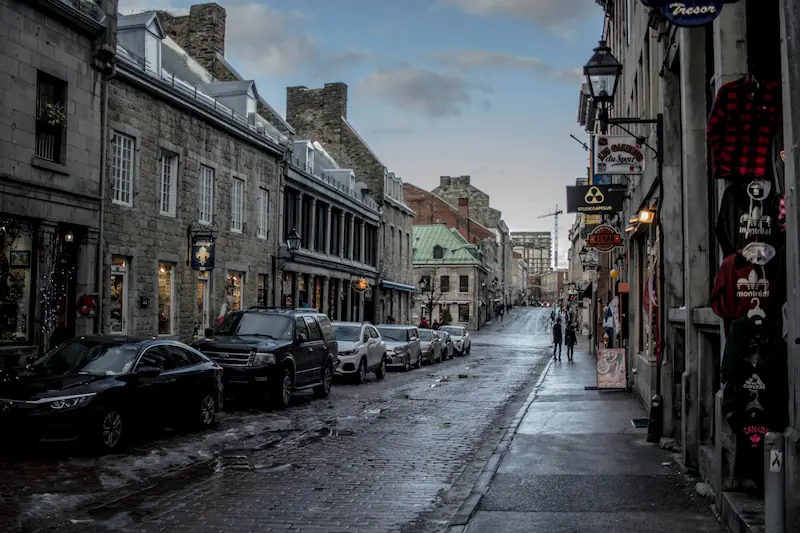
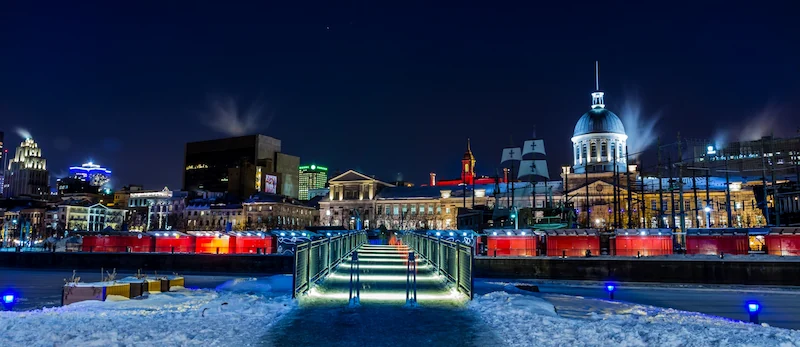
Old Montreal is the best area to stay in Montreal for a first visit if you want the city to feel immediately distinctive. The streets are stone, the scale is lower, and many of the best boutique hotels sit inside converted heritage buildings. Mornings are especially strong before the day-trip crowds thicken around Notre-Dame Basilica, Place Jacques-Cartier and the Old Port. Staying here gives the trip a clear sense of arrival: you step outside into the version of Montreal many travelers came to see, with warm evening light on façades, restaurants filling, and the waterfront close enough for an easy final walk. The trade-off is that the area can be expensive, more visitor-facing, and less useful if your priority is everyday neighborhood life.
Why stay here: Stay in Old Montreal when you want atmosphere, walkability, heritage hotels and a strong short-trip base. It is especially useful for two- or three-night stays where every exit from the hotel should feel like part of the trip, and for travelers asking where to stay in Montreal near Notre-Dame Basilica, the Old Port, Saint-Paul Street or the historic center.
Best for: First-time visitors, couples, boutique-hotel travelers, short trips, Old Port access, historic atmosphere, and anyone asking where to stay in Montreal near the main attractions.
Pros
The most atmospheric hotel setting in Montreal, especially for a first visit or romantic stay.
Easy walking access to Notre-Dame Basilica, the Old Port, galleries, Saint-Paul Street, riverfront paths and many guided tour meeting points.
Strong boutique and upscale hotel selection in historic buildings, with more sense of place than many standard downtown properties.
Excellent for couples, short stays, first-time visitors and travelers who want classic Montreal immediately outside the door.
Good for evening walks, polished dinners and a clear sense of arrival without needing much orientation.
Close enough to Downtown and the convention district to remain practical for mixed leisure and business trips.
Cons
Less local and residential than Plateau Mont-Royal, Mile End or Little Italy.
Hotels can be expensive during summer, festival periods, Formula 1 weekend and autumn weekends.
Cobbled streets can be awkward with luggage, strollers, mobility needs or winter ice.
Restaurant choice is strong but can be more visitor-facing and less everyday than the northern neighborhoods.
Parking is not the easiest in the old city and driving in/out can feel slow.
Nearby highlights
Notre-Dame Basilica within easy walking distance before the busiest visitor flow.
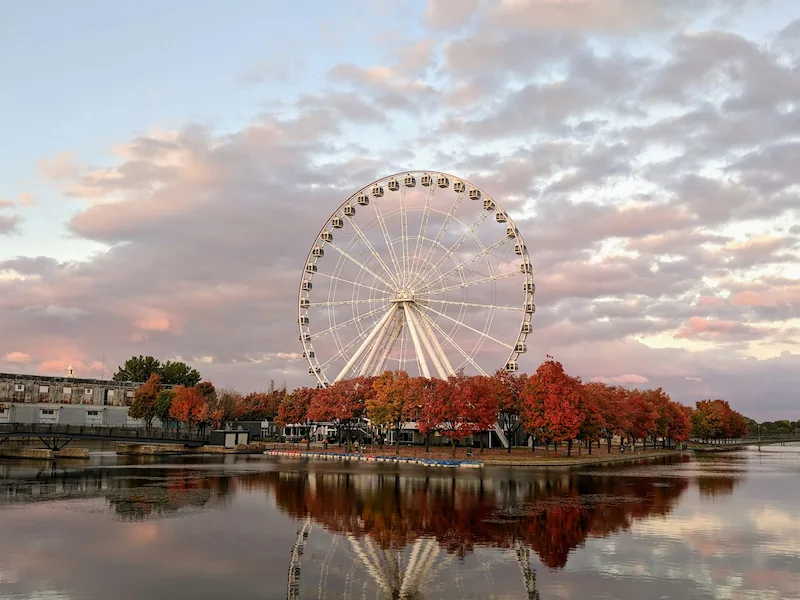
Old Port access for waterfront walks, cruises, La Grande Roue, skating in winter and river-facing evenings.
Saint-Paul Street, Place Jacques-Cartier, galleries and heritage façades directly outside the hotel zone.
Boutique hotels in historic buildings with more character than standard downtown rooms.
Easy walks toward Chinatown, the convention district and Downtown when needed.
A strong base for a first Montreal itinerary that prioritizes atmosphere over maximum value.
Budget
Auberge Alternative – A simple hostel-style stay close to Old Montreal’s core, suited to travelers who want location over polish. Why we recommend: One of the few lower-cost options that keeps you genuinely close to the old city. Check availability
Maison Sainte-Thérèse By Maisons & co – Apartment-style rooms in the old city, better for independent stays than classic hotel service. Why we recommend: It gives budget-conscious travelers more space and a real Old Montreal address. Check availability
Hôtel Uville Montréal – A compact hotel near the Old Port with a more contemporary, culture-led personality. Why we recommend: A smart lower-to-mid option when you want Old Montreal character without full luxury pricing. Check availability
Mid
Le Petit Hôtel Vieux-Montréal - Saint-Paul by Gray Collection – A small boutique hotel on Saint-Paul Street, good for travelers who want charm without a large-property feel. Why we recommend: It balances location, scale, and personality better than many mid-range old-city options. Check availability
Hotel Epik Montreal – A small heritage-style hotel close to the old city’s main walking routes. Why we recommend: It works well for short stays where the hotel should feel connected to the district. Check availability
SpringHill Suites by Marriott Old Montreal – A more conventional suite-style hotel option near the Old Port, useful for travelers who want reliability and room functionality in the historic core. Why we recommend: It offers chain-hotel predictability, practical layouts and Old Montreal access in an area dominated by smaller boutique stays. Check availability
Upscale
Hotel Nelligan – A polished Old Montreal hotel with large windows, historic texture, and strong access to Saint-Paul Street. Why we recommend: One of the safest upscale choices for travelers who want Old Montreal to define the stay. Check availability
Auberge du Vieux Port by Gray Collection – A riverside old-city hotel with a heritage feel and direct access to the Old Port. Why we recommend: It stands out when waterfront proximity matters as much as boutique atmosphere. Check availability
Le Saint-Sulpice Hotel Montreal – An all-suite hotel beside Notre-Dame Basilica, useful for travelers wanting space in the old city. Why we recommend: It is one of the strongest upscale options for room size and landmark proximity together. Check availability
Downtown Montreal
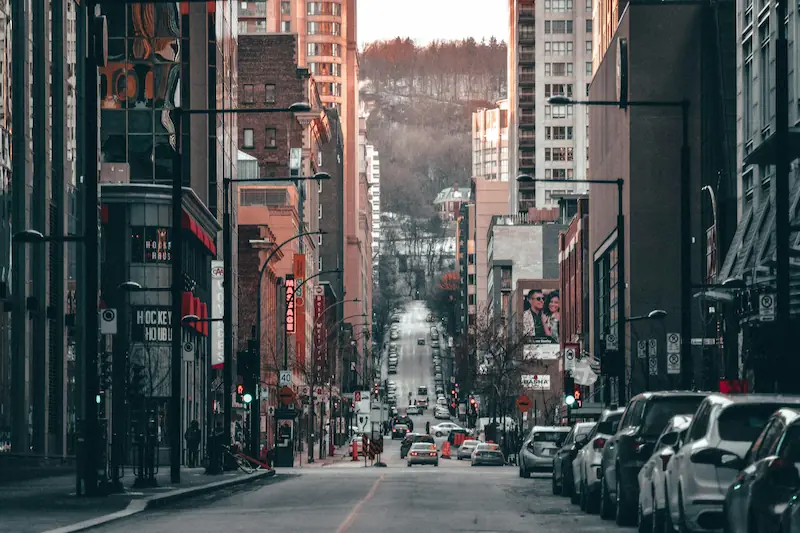
Downtown Montreal is the most convenient area to stay if the trip needs to work smoothly. It has the largest hotel supply, strong metro access, shopping, museums, business addresses, Central Station, and easier links to the airport bus and train routes. It is not the most intimate part of the city, but it reduces the number of small logistics decisions that can drain a short stay. Downtown becomes especially useful in winter, on family trips, for rail arrivals, or when you plan to move between Old Montreal, Mount Royal, the Plateau, Mile End and Little Italy rather than anchor the whole trip in one neighborhood.
Why stay here: Stay Downtown when you want practical centrality, transport options, indoor-routing advantages, and the widest range of hotels. It is the safest default for families, business travelers, winter trips, first-time visitors prioritizing logistics, and anyone looking for the most convenient area to stay in Montreal.
Best for: Families, business travelers, rail arrivals, winter trips, first-timers prioritizing convenience, museum visits, shopping, and travelers looking for the most central area to stay in Montreal.
Pros
Largest range of hotels across budget, mid-range, upscale, chain, suite and family-friendly categories.
Excellent access to metro lines, Central Station, shopping streets, museums and the Underground City.
More practical in winter or heavy rain because indoor links and shorter transit connections matter.
Good for families who need room options, elevators, services, pools, larger properties and easier luggage movement.
Better hotel availability than Old Montreal during many peak periods.
Efficient for visitors who want to split time between Old Montreal, Mount Royal, museums and northern neighborhoods.
Cons
Less atmospheric after dark than Old Montreal, Plateau Mont-Royal or Mile End.
Some blocks feel commercial or generic compared with Montreal’s more distinctive neighborhoods.
Restaurant choice is broad but requires selectivity to avoid bland central dining.
Traffic and large streets can make the area feel less relaxed.
The exact block matters because Downtown stretches across several different micro-areas.
Nearby highlights
Central Station and airport-bus access for smoother arrival and departure logistics.
Montreal Museum of Fine Arts, McCord Stewart Museum, Sherbrooke Street and downtown shopping within practical reach.
Quartier des Spectacles access for festivals, concerts and performance-led evenings.
Underground City links that become genuinely useful in winter, rain or extreme heat.
Good metro connections toward Old Montreal, the Plateau, Mile End, Little Italy and Olympic Park.
More hotel choice with elevators, larger rooms, pools, suites and service support than most neighborhood bases.
Budget
Hôtel Saint-Laurent Montréal – A practical suite-style hotel near Chinatown and the edge of Old Montreal, with kitchen facilities in many rooms. Why we recommend: It is useful when budget, space, and central access matter more than boutique character. Check availability
Travelodge by Wyndham Montreal Centre – A straightforward central hotel near Chinatown and the convention district. Why we recommend: It keeps costs lower than many central hotels while staying walkable to key areas. Check availability
L'Appartement Hôtel – An apartment-style downtown stay with kitchen facilities, useful for longer stays and simple family logistics. Why we recommend: It offers more functional room layouts than many standard budget-central hotels. Check availability
Mid
Le Square Phillips Hôtel & Suites – A central suite hotel with kitchen facilities and larger room layouts than many downtown competitors. Why we recommend: A strong mid-range choice for families and longer stays that still want central convenience. Check availability
Hotel Monville – A modern hotel close to the convention center and Old Montreal, with cleaner design than many business hotels. Why we recommend: It bridges Downtown practicality and old-city access unusually well. Check availability
AC Hotel by Marriott Montreal Downtown – A reliable modern hotel between the Quartier des Spectacles and Old Montreal. Why we recommend: It is a good fit when you want predictable comfort and easy movement in several directions. Check availability
Upscale
Hotel Bonaventure Montreal – A large downtown hotel near Central Station with unusually strong amenities for a central address. Why we recommend: The rooftop pool and station access make it more memorable than most practical downtown hotels. Check availability
Fairmont The Queen Elizabeth – A landmark downtown hotel directly connected to the city’s transport and business core. Why we recommend: It is the strongest choice for travelers who want service, scale, and unbeatable logistics. Check availability
HONEYROSE Hotel, Montreal, a Tribute Portfolio Hotel – A newer design-forward hotel near the Quartier des Spectacles and central shopping streets. Why we recommend: It gives Downtown a more stylish stay option without sacrificing central access. Check availability
Plateau Mont-Royal
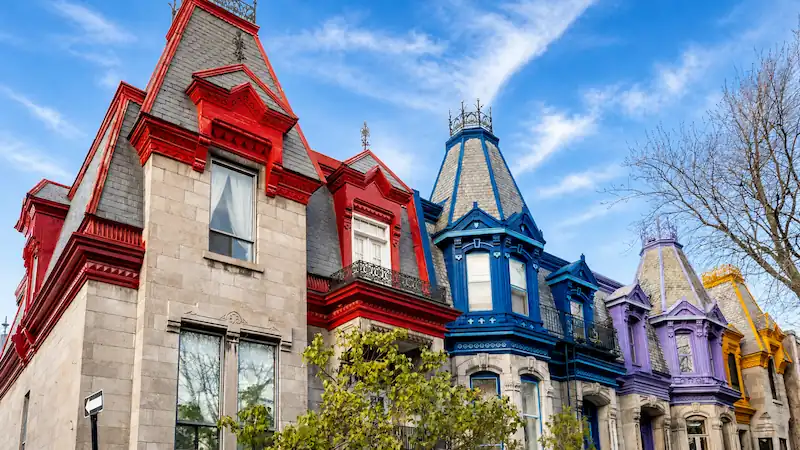
Plateau Mont-Royal is the best neighborhood to stay in Montreal if you want the city to feel lived-in rather than staged. It is built from stair-lined residential streets, cafés, bakeries, small restaurants, murals, parks, terraces, and everyday foot traffic. Hotels are fewer here than Downtown or Old Montreal, so the stay often feels more like inhabiting a neighborhood than checking into a major visitor district. The reward is a base where breakfast, dinner, side streets, and the route back from Mount Royal can become part of the trip. The trade-off is reduced hotel supply and less immediate access to the classic old-city sights.
Why stay here: Stay in the Plateau when food, walking, local rhythm, parks, restaurants and neighborhood atmosphere matter more than immediate landmark access. It is a strong choice for repeat visitors, longer weekends, and first-timers who would rather understand Montreal through daily life than sleep in the old city.
Best for: Local-feeling stays, food-focused travelers, walkers, return visitors, couples, restaurants, cafés, parks, and anyone looking for a less generic Montreal base.
Pros
One of the best areas in Montreal for local texture, cafés, bakeries, restaurants, parks and terraces.
Excellent walking rhythm if you enjoy side streets, murals, staircases and neighborhood detail more than formal sights.
Good access to Mount Royal, La Fontaine Park, Mile End and several strong food corridors.
More residential and intimate than Downtown or Old Montreal, especially in the evening.
A strong base for longer weekends, repeat visits and travelers who want Montreal to feel everyday rather than packaged.
Often better for late dinners and casual evenings than more visitor-facing hotel districts.
Cons
Traditional hotel choice is limited compared with Downtown and Old Montreal.
Some stays are guesthouses or apartment-style properties rather than full-service hotels.
Not as efficient for first-time landmark sightseeing, Old Port access or rail logistics.
Street parking, luggage movement and walk-up buildings can be awkward depending on the exact property.
Noise can be an issue near busy restaurant or nightlife corridors, so side-street selection matters.
Nearby highlights
La Fontaine Park and neighborhood green space for a calm break between food and walking.
Strong café, bakery, wine bar and casual restaurant density within short walking distance.
Close to Mount Royal approaches, Parc Jeanne-Mance and leafy residential streets.
Good base for exploring murals, independent shops, staircases and side-street architecture.
Natural connection north toward Mile End without changing the day’s rhythm.
Better evening neighborhood atmosphere than many downtown blocks, especially for restaurant-led trips.
Budget
Auberge du Plateau – A hostel-style Plateau stay with a rooftop terrace and direct neighborhood access. Why we recommend: It is one of the few genuinely budget-friendly options in a strong local area. Check availability
The Cove Hotel - Plateau Mont-Royal – A simple, modern guesthouse-style option in the Plateau with easy walking access to neighborhood streets. Why we recommend: It works for travelers who want the district more than full hotel services. Check availability
Manoir Sherbrooke – A characterful older property near the Plateau edge and downtown cultural areas. Why we recommend: It gives a more atmospheric lower-cost stay than many plain central hotels. Check availability
Mid
Auberge de La Fontaine – A small hotel facing La Fontaine Park, ideal for travelers who want calm and neighborhood access. Why we recommend: It is unusually peaceful while still keeping the Plateau’s restaurants and streets close. Check availability
Hôtel de l'ITHQ – A polished training-hotel property near the Plateau and Latin Quarter, with strong food credentials. Why we recommend: It offers better service discipline and room quality than many comparable local stays. Check availability
Hotel de Paris Montreal – A small property near Sherbrooke and the Plateau edge, suited to short practical stays. Why we recommend: It keeps costs and location in balance for travelers focused on the eastern Plateau. Check availability
Upscale
Hotel Kutuma – A suite-style boutique hotel near the Plateau with larger rooms and distinctive interiors. Why we recommend: It gives more room character and space than most standard hotels around the area. Check availability
Boxotel – A modern apartment-hotel near the Plateau and Quartier des Spectacles, with flexible room layouts. Why we recommend: It suits travelers who want design, autonomy, and a central-east position. Check availability
LiV MTL Plato – A spacious apartment-style stay in the Plateau, better for groups or longer stays than classic hotel rooms. Why we recommend: It makes sense when neighborhood immersion and living space matter more than hotel services. Check availability
Mile End
Mile End is the best area to stay in Montreal if your ideal trip is built around food, cafés, independent shops, and short neighborhood walks. It does not have the hotel density of Downtown or Old Montreal, so accommodation leans apartment-style, selective and sometimes limited. That is part of the appeal: staying here feels less like being near the city and more like entering its daily routines. Morning light on low brick façades, bagel shops, bakery counters, small galleries and corner cafés gives the area a quiet precision. It is not the most efficient first-time base, but it may be the most satisfying one for food-focused travelers.
Why stay here: Stay in Mile End when you want Montreal at its most compact, local, creative and food-oriented. It is best for travelers who value breakfast, coffee, bakeries, Jewish food traditions, independent shops and neighborhood routine over immediate access to the main attractions.
Best for: Food travelers, independent-neighborhood stays, repeat visitors, slow weekends, cafés, bagels, couples, solo travelers, and travelers looking for the best local area to stay in Montreal.
Pros
Excellent for bagels, cafés, bakeries, casual food, small shops and low-key evenings.
Compact walking scale with a strong local identity and easy overlap with the Plateau.
Easy to combine with Little Italy, Jean-Talon Market and Mount Royal on food-led days.
Quieter and less visitor-facing than Old Montreal, with a more everyday rhythm.
Good for longer stays where daily routines, breakfast and coffee matter.
A strong base for travelers searching for the coolest or most local area to stay in Montreal, as long as they accept limited hotel supply.
Cons
Very limited traditional hotel supply; many options are apartments or managed units.
Less efficient for Old Montreal, museum-heavy trips and first-time sightseeing.
Apartment-style stays may have fewer services, stricter check-in logistics and less support than hotels.
Evening choice is good but more low-key than nightlife-heavy districts.
Winter or bad-weather trips can feel less convenient if the property is far from the metro.
Nearby highlights
Walkable access to Montreal-style bagel shops, bakeries and café counters.
Independent shops, bookshops, small galleries and creative street texture within a compact grid.
Easy connection to Plateau Mont-Royal without needing transit.
Natural pairing with Little Italy and Jean-Talon Market for food-led days.
More local evening texture than Downtown without the density of nightlife corridors.
Good base for travelers who want breakfast, coffee and short walks to be part of the accommodation experience.
Budget
The Parc Mile End ApartHotel – Apartment-style accommodation in Mile End with simple, practical rooms and local access. Why we recommend: It is one of the most direct ways to stay in Mile End without drifting into another district. Check availability
Le Mile End by M11 - Modern Studio – A compact studio option in the Mile End area, better for independent travelers than full-service hotel stays. Why we recommend: It keeps the stay close to Mile End’s cafés and food routes at a more accessible level. Check availability
Les Lofts du Mile End-Plateau Mont Royal – Loft-style accommodation positioned between Mile End and the Plateau. Why we recommend: It works for travelers who want the Mile End-Plateau overlap rather than a conventional central hotel. Check availability
Mid
Le Mile End by M11 - Modern 1 BDR Unit with Sofa Bed – A one-bedroom apartment-style stay with more flexibility than a standard hotel room. Why we recommend: A useful middle option for couples or small families who want Mile End without giving up space. Check availability
Le Mile End by M11 - Modern 2BDR with Sofa Bed – A two-bedroom setup for travelers needing more room in a local neighborhood. Why we recommend: It is stronger for groups than trying to force a small downtown hotel room into the same role. Check availability
2 Bedroom Luxury in the Mile End by Den Stays – A furnished apartment in Mile End suited to longer stays and food-led trips. Why we recommend: It gives more living space while keeping the stay anchored in the neighborhood. Check availability
Upscale
Le Mile End by M11 - Upscale & Spacious 1BDR with King Bed – A more polished one-bedroom apartment with a larger sleeping setup and local positioning. Why we recommend: It offers a higher-comfort Mile End stay where hotel inventory is naturally limited. Check availability
Le Mile End by M11 - Luxury 1BDR Loft with Sofa Bed – A loft-style apartment for travelers who want design and flexibility in the Mile End area. Why we recommend: It suits travelers who would rather trade hotel services for a more residential base. Check availability
M11 Gorgeous 3BR in the Heart of Plateau-Mile End – A larger apartment-style stay positioned for groups wanting Mile End access. Why we recommend: It is one of the better options when a group wants to stay local without splitting rooms downtown. Check availability
Little Italy
Little Italy is not the obvious answer for a first Montreal trip, which is exactly why it works for certain travelers. The area is anchored by Jean-Talon Market, small restaurants, cafés, food shops, bakeries, and a calmer residential scale. It is less convenient for classic sightseeing, but it gives longer stays a grounded food rhythm that central districts cannot fully reproduce. The morning sound of market carts and café counters makes the neighborhood feel useful before the day has properly begun. Stay here when the trip is about food access and local routine rather than landmark efficiency.
Why stay here: Stay in Little Italy when food, Jean-Talon Market, apartment-style space, and a less central rhythm matter more than being near Old Montreal. It is best for longer stays, repeat visitors, market lovers, and travelers who already understand the trade-off.
Best for: Food-first travelers, longer stays, repeat visitors, market lovers, apartment-style stays, and travelers searching for a quieter local area to stay in Montreal.
Pros
Excellent access to Jean-Talon Market and neighborhood food routines.
Good for longer stays, kitchen-friendly accommodation and apartment-style formats.
Calmer and more residential than the central visitor districts.
Easy to combine with Mile End, the northern Plateau and food-led walking routes.
A strong choice for food-focused travelers who do not need full hotel services.
Often more rewarding for repeat visitors than paying for a central old-city base.
Cons
Not ideal for two-night or first-time sightseeing trips.
Traditional hotel inventory is limited; many stays are apartments or studios.
Requires more transit or taxi use for Old Montreal, the Old Port and downtown museums.
Evenings are pleasant but less dense than Plateau Mont-Royal or central areas.
Bad-weather or winter trips need careful attention to metro distance.
Nearby highlights
Immediate access to Jean-Talon Market for breakfast, lunch, provisions and casual food browsing.
Easy food-led days across Little Italy, Mile End and the northern Plateau.
More apartment-style space than many central hotel districts.
Residential streets that make longer stays feel less tourist-focused.
Good base if markets, bakeries and casual dining matter more than landmark proximity.
Useful for travelers who want to see how Montreal eats outside formal restaurants.
Budget
Palms Little Italy Studio with Full Bathroom by Den Stays – A compact studio in Little Italy for travelers who want a simple local base. Why we recommend: It keeps costs and scale appropriate for a market-focused neighborhood stay. Check availability
Wonderful Studio in Little Italy with Full Bath by Den Stays – A small studio apartment near Little Italy’s food streets and market access. Why we recommend: It suits solo travelers or couples who want location over hotel facilities. Check availability
Fun & Funky Little Italy Studio with Full Kitchen by Den Stays – A studio with kitchen facilities, useful for short local stays and light self-catering. Why we recommend: The kitchen makes sense in a market district where casual food shopping is part of the appeal. Check availability
Mid
Blue Tropics Studio in Little Italy with Kitchen by Den Stays – A practical studio with kitchen access in the Little Italy area. Why we recommend: It offers the right level of autonomy for travelers using the neighborhood as a food base. Check availability
Romantic Studio in the Heart of Little Italy by Den Stays – A small apartment-style stay positioned for couples prioritizing neighborhood texture. Why we recommend: It gives a more personal stay than a standard hotel room outside the area. Check availability
Little Italy - Montreal Contemporary Apartment – A contemporary apartment option in Little Italy with more room than a studio setup. Why we recommend: It is a useful step up for travelers who want the area and need more living space. Check availability
Upscale
Hip, Stylish Apartment in Little Italy by Den Stays A – A more polished apartment-style stay for travelers who want design and neighborhood access. Why we recommend: It stands out in an area where classic upscale hotels are scarce. Check availability
New Modern 2bdr Apartment in Little Italy – A two-bedroom apartment near Little Italy, suited to families or small groups. Why we recommend: It gives the area’s best logic: more space, kitchen use, and market proximity. Check availability
Trendy Little Italy 3 Bedroom Condo – A larger condo-style stay for groups who want a food-led residential base. Why we recommend: It is one of the stronger choices when Little Italy’s value is space rather than hotel service. Check availability
Griffintown and the Lachine Canal
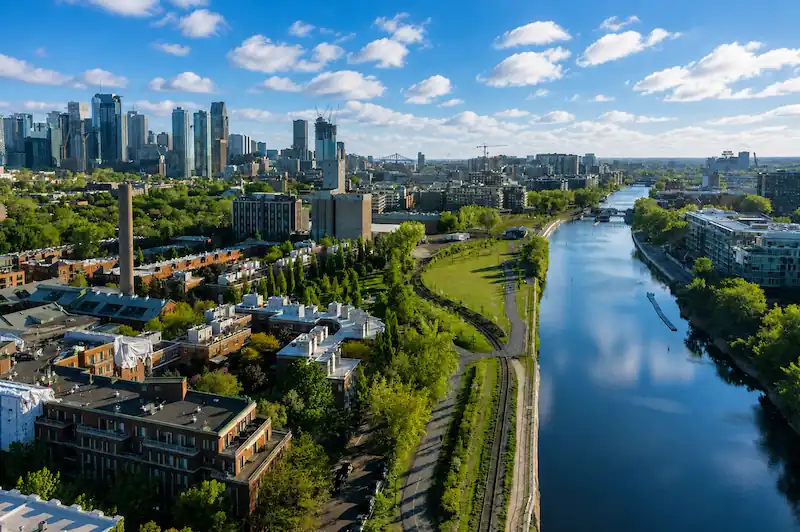
Griffintown and the Lachine Canal work best for travelers who want a newer, calmer, slightly more spacious Montreal base. The area does not carry the historic weight of Old Montreal or the dense local character of the Plateau, but it offers modern rooms, apartment-style stays, canal paths, Atwater Market access, and easier breathing space. It is close enough to the center to remain practical, yet the mood shifts once you reach the water. The canal adds a horizontal rhythm to the stay, especially in late afternoon, and the area can make sense for families, groups and longer trips that need space more than old-city charm.
Why stay here: Stay here when you want a modern base near the canal, newer accommodation, apartment-style comfort, and access to both Downtown and the Old Port without sleeping in the densest visitor streets.
Best for: Modern stays, apartment-style comfort, canal access, families, groups, longer trips, design-conscious travelers and quieter central-adjacent bases.
Pros
Good for modern hotels, apartment-style stays, larger layouts and longer stays.
Easy access to the Lachine Canal, Atwater Market and calmer walking or cycling routes.
Quieter feel than Old Montreal or Downtown while staying central-adjacent.
Useful for families, groups, design-conscious travelers and canal walkers.
Often easier to manage by taxi or rideshare than more congested old-city blocks.
Good compromise when one traveler wants convenience and another wants space.
Cons
Less atmospheric than Old Montreal and less local-feeling than Plateau Mont-Royal or Mile End.
Some blocks can feel newly built, quiet or transitional rather than deeply rooted.
Not the best choice for classic first-time sightseeing entirely on foot.
Restaurant density varies by exact location within the area.
You need to check whether the stay is genuinely near the canal, Downtown, Old Montreal or a less useful in-between block.
Nearby highlights
Direct access to the Lachine Canal for walking, cycling and lower-density breaks.
Easy pairing with Atwater Market for casual food, provisions and canal-side pacing.
Short movement toward Old Montreal, the Old Port and Downtown by foot, taxi, rideshare or transit.
More new-build rooms and apartment layouts than the old city.
Good base when you want calm evenings after busier daytime districts.
Useful for travelers who prioritize space, kitchens and practical comfort over historic setting.
Budget
L'Hotel Particulier Griffintown – A modest guesthouse-style stay in Griffintown with a more residential feel than larger hotels. Why we recommend: It gives budget-conscious travelers access to the area without paying for newer hotel branding. Check availability
Bright Stay in Griffin Town – A simple apartment-style stay for travelers who want basic space in the Griffintown area. Why we recommend: It works when the priority is location and usable room over hotel amenities. Check availability
Séjour agréable à Griffintown 2 chambres – A two-bedroom apartment option suited to small groups or family-style stays. Why we recommend: It provides more sleeping flexibility than a standard budget hotel room nearby. Check availability
Mid
Hôtel Alt Montréal – A modern Griffintown hotel close to the Lachine Canal and Old Port access. Why we recommend: It is the cleanest mid-range hotel choice for travelers who specifically want Griffintown. Check availability
Griffintown Hôtel – Apartment-style accommodation with city views, kitchen facilities, and longer-stay usefulness. Why we recommend: It suits travelers who want more independence than a conventional hotel provides. Check availability
WERFY Luxury Apart-Hotel – A furnished apart-hotel in Griffintown with a more residential format and strong central-adjacent positioning. Why we recommend: It is a good fit when space and autonomy matter more than classic hotel service. Check availability
Upscale
Le Se7t Penthouses – Apartment-style upscale stays with more space and residential amenities than standard rooms. Why we recommend: It is one of the stronger choices for travelers wanting a more premium Griffintown apartment format. Check availability
Sonder at The Richmond – A modern apartment-style stay near Griffintown and the canal, suited to independent travelers. Why we recommend: It offers a cleaner design-led alternative to older central accommodation. Check availability
Le Mount Stephen – An upscale hotel west of downtown, not in Griffintown itself but useful for travelers wanting high-end comfort near the central-west axis. Why we recommend: It is the best nearby luxury fallback when Griffintown’s own upscale inventory is too apartment-led. Check availability
Where to stay in Montreal for a first visit
For a first trip, the best area depends on whether you want atmosphere immediately or convenience across the whole city. Most first-timers should choose Old Montreal or Downtown. Plateau Mont-Royal is the smarter alternative only if your trip is more about restaurants, cafés and neighborhood texture than classic sightseeing efficiency.
Choose Old Montreal for the most memorable first impression, heritage hotels, the Old Port, Notre-Dame Basilica and easy old-city evenings.
Choose Downtown if you want the most convenient area to stay in Montreal for metro access, museums, shopping, rail links, winter movement and family logistics.
Choose Plateau Mont-Royal if your first trip is more food-and-neighborhood focused than landmark-driven, and you are comfortable not sleeping beside the main sights.
Avoid Little Italy, Mile End or far-north apartment stays for a very short first visit unless you already know you want a local, food-led base.
For a weekend or three days, staying too far from Old Montreal, Downtown or a metro line usually creates more friction than it saves.
If you split the trip between sightseeing and food, Old Montreal plus a planned Plateau/Mile End evening often works better than sleeping in the wrong area for every day.
TripStyle
BestArea
Why
Classic first visit
Old Montreal
It gives the strongest sense of arrival and keeps the historic core outside the door.
Easy logistics
Downtown Montreal
It has the best hotel supply, metro access, rail access and winter practicality.
Food and local rhythm
Plateau Mont-Royal
It places restaurants, cafés, parks and side streets at the center of the stay.
Where to stay in Montreal with family
Families usually do best in Downtown, Old Montreal, or apartment-style stays near Griffintown. The right choice depends on room size, elevators, transport convenience, stroller access, calm evenings, bad-weather movement and whether the children are old enough to enjoy cobbled streets and long walks.
Downtown is the easiest family base because it has larger hotels, suite options, elevators, transit access, pools, services, and simpler bad-weather logistics.
Old Montreal works well with older children if cobbled streets, higher prices and visitor density are not an issue.
Griffintown is useful for families who want apartment-style space, kitchens, calmer evenings and canal walks rather than a dense visitor setting.
Plateau Mont-Royal can work for families who enjoy parks, cafés and local streets, but hotel choice is narrower and many properties are smaller.
Little Italy is better for longer family stays than short sightseeing trips because apartment layouts and market access matter more there.
For strollers, check cobbles, stairs, elevators, metro distance, winter sidewalks and whether the exact hotel block makes arrival easy.
FamilyNeed
BestArea
WatchOut
Lowest friction
Downtown Montreal
Choose a block close to metro and restaurants, not just any downtown address.
Atmosphere with older kids
Old Montreal
Cobbles, higher rates and luggage movement can be annoying.
Space and kitchens
Griffintown / Lachine Canal
Check exact canal/Downtown/Old Montreal access before booking.
Where to stay in Montreal for nightlife and restaurants
Montreal nightlife is not concentrated in one hotel district. The best stay depends on whether you want restaurants, wine bars, festivals, late terraces, live shows, or a quieter room after the evening is over. The smartest base often puts you near the evening you want but not directly above the loudest corridor.
Plateau Mont-Royal is the strongest base for travelers who want restaurants, bars, terraces and a lived-in evening atmosphere.
Mile End is better for low-key food, cafés, wine bars and independent neighborhood evenings than late-night intensity.
Old Montreal works well for polished dinners, date nights and atmospheric evening walks, but it can feel more visitor-facing.
Downtown and Quartier des Spectacles are practical for festivals, concerts, comedy, theatre and event-led nights.
Little Italy is food-oriented rather than nightlife-heavy, better for relaxed evenings than bar-hopping.
Choose a side street rather than the loudest corridor if sleep matters; the best nightlife area is not always the best hotel block.
EveningStyle
BestArea
SleepTip
Restaurants and terraces
Plateau Mont-Royal
Stay near the action, not directly on the noisiest strip.
Festivals and shows
Downtown / Quartier des Spectacles
Prioritize a hotel with easy late return routes.
Atmospheric dinners
Old Montreal
Good for polished evenings, less for local bar-hopping.
Where to stay in Montreal on a budget
Montreal is often better value than Toronto or Vancouver, but the best-value areas depend heavily on dates, events and hotel supply. Budget travelers should focus less on the cheapest listing and more on whether the location prevents expensive taxis, wasted time, bad transit access or a frustrating first impression.
Downtown usually has the broadest budget and mid-range supply, especially if you are flexible on style and exact block.
The Plateau can offer strong budget value through hostels, guesthouses and simpler local stays, but availability is limited.
Old Montreal is rarely the cheapest good base, though occasional smaller hotels, hostels or apartment-style stays can work outside peak periods.
Mile End and Little Italy can be good value for apartment-style stays, especially on longer trips where kitchens and local food access matter.
Griffintown can offer space, but newer buildings are not always cheaper once fees and location trade-offs are considered.
Avoid choosing a far-out cheap stay without checking metro access; transport friction can erase the saving and weaken the trip.
BudgetMove
Area
TradeOff
Best broad hotel supply
Downtown Montreal
Less charm, better logistics.
Best local-value feel
Plateau Mont-Royal
Limited inventory and fewer full-service hotels.
Best longer-stay value
Mile End or Little Italy
More apartment logistics and less sightseeing efficiency.
Where to stay in Montreal for couples
Couples should choose the base by evening mood. Old Montreal is the most romantic and immediately atmospheric, Plateau Mont-Royal is better for restaurants and local street life, Mile End is quieter and more food-led, and Downtown is practical when comfort, service and easy movement matter more than neighborhood charm.
Choose Old Montreal for boutique hotels, stone streets, polished dinners and short romantic stays.
Choose Plateau Mont-Royal for restaurants, terraces, cafés, parks and a less visitor-facing evening rhythm.
Choose Mile End for a low-key couple’s trip built around bakeries, coffee, independent shops and slow mornings.
Choose Downtown if you want upscale hotels, service, shopping, museums and the easiest logistics.
Choose Griffintown if you want a modern apartment-style stay with more space and quieter evenings.
Avoid choosing only by hotel design if the surrounding streets do not support the kind of evening you want.
CoupleStyle
BestArea
Why
Romantic first trip
Old Montreal
The setting does more work than any other neighborhood.
Food and local evenings
Plateau Mont-Royal
Restaurants, terraces and side streets create a better everyday rhythm.
Quiet modern comfort
Griffintown / Lachine Canal
More space and calmer evenings suit slower stays.
Where to stay in Montreal for luxury and boutique hotels
Luxury in Montreal divides into two different logics: heritage atmosphere in Old Montreal and full-service convenience Downtown. The Plateau, Mile End, Little Italy and Griffintown can be more characterful or spacious, but they have less traditional luxury hotel depth.
Old Montreal is the best area for boutique luxury, heritage buildings, romantic design and a strong sense of place.
Downtown is better for full-service luxury, large hotels, business-class amenities, rail access and shopping.
Griffintown and the canal can work for upscale apartment-style comfort rather than classic hotel service.
Plateau and Mile End are better for characterful stays and local rhythm than formal luxury depth.
Book early for premium Old Montreal hotels during summer, autumn weekends, festivals and Formula 1.
Read room details carefully in heritage hotels; charm, room size and elevator convenience do not always move together.
LuxuryNeed
BestArea
TradeOff
Boutique atmosphere
Old Montreal
Higher rates and more visitor-facing streets.
Full-service comfort
Downtown Montreal
Less neighborhood charm.
Upscale space
Griffintown / Lachine Canal
More modern than atmospheric.
Where to stay in Montreal for a longer stay
For five days, a week, or longer, the best area is often not the most obvious first-time base. Longer stays benefit from repeatable food routines, markets, parks, kitchens, calmer streets and a neighborhood where returning at the end of the day feels natural.
Plateau Mont-Royal is the best long-stay base if you want restaurants, parks, cafés and daily local rhythm.
Mile End is excellent for slow food-led stays, especially if breakfast, bakeries and small shops matter.
Little Italy works well when Jean-Talon Market, kitchen use and calmer residential streets are central to the stay.
Griffintown and the canal are useful for apartment-style space, modern buildings and lower-density movement.
Downtown remains practical for long stays if transport, services and central access matter more than local texture.
Old Montreal is often worth paying for on short stays, but longer trips may get better value and rhythm elsewhere.
Length
BestBase
Why
5 days
Plateau, Downtown or Old Montreal
You can choose by trip style rather than pure sightseeing efficiency.
1 week
Plateau, Mile End, Little Italy or Griffintown
Markets, kitchens, parks and routine become more important.
Work/leisure stay
Downtown or Griffintown
Transport, room layout and practical comfort matter daily.
Where to stay in Montreal without a car
Most visitors should stay in Montreal without a car. The best car-free bases are not simply central; they are areas with good metro access, walkable food options, and realistic routes to the places you actually plan to visit.
Downtown is the easiest no-car base because it combines metro access, hotels, rail links, museums, shops and indoor movement.
Old Montreal works well without a car if most of your first-trip sightseeing is concentrated around the old city, the Old Port and downtown.
Plateau Mont-Royal works without a car if you are comfortable walking and using the metro for Old Montreal and museums.
Mile End and Little Italy can work well without a car for longer stays, but check the exact distance to a metro station.
Griffintown varies by exact block; some stays are easy for Downtown/Old Montreal, while others rely more on walking or rideshare.
Avoid suburban or airport-area stays unless you have a specific reason; they usually weaken a city-focused trip.
CarFreePriority
BestArea
Why
Most practical
Downtown Montreal
Best transport and hotel infrastructure.
Atmospheric short stay
Old Montreal
Many first-visit sights are walkable.
Local walking trip
Plateau / Mile End
Great once you accept more metro use for classic sights.
Where to stay in Montreal in winter
Winter changes the accommodation decision because cold, ice, snow and shorter daylight make small distances feel larger. A charming base can still work, but metro access, indoor routing, elevators, room comfort and nearby food become more important than they are in June or September.
Downtown is the best winter base for most visitors because transport, hotels, museums, shopping and Underground City links reduce weather friction.
Old Montreal is atmospheric in winter but cobbles, ice and shorter outdoor walks make hotel comfort and restaurant proximity more important.
Plateau and Mile End are rewarding in winter if you plan around cafés, restaurants and shorter walks, but they are less frictionless than Downtown.
Griffintown can work well if you want modern rooms and space, but check transit and winter walking routes carefully.
Little Italy is better for longer winter stays than short first trips because market access and local routines matter more than sightseeing efficiency.
In winter, do not book only for charm; book for warmth, transport, room quality and easy food within a short walk.
WinterNeed
BestArea
Why
Lowest weather friction
Downtown Montreal
Transit, indoor links and hotels reduce cold-weather inconvenience.
Atmospheric winter stay
Old Montreal
Beautiful but requires care with cobbles and walking conditions.
Restaurant/café winter rhythm
Plateau or Mile End
Works if you keep days shorter and warm stops frequent.
Where to stay by trip length and travel style
The shorter the trip, the more your base should reduce friction. The longer the stay, the more it makes sense to trade immediate centrality for neighborhood rhythm, food access, parks, markets, kitchens or apartment-style space. Montreal rewards matching base to behavior: a two-night first-timer and a one-week food traveler should not sleep in the same place by default.
Label
Stay
Avoid
Why
1 night
Downtown or Old Montreal
Plateau, Mile End, Little Italy or any stay far from arrival/departure logistics
With one night, the base should either deliver immediate atmosphere or make arrival, dinner and departure easy.
2 nights
Old Montreal or Downtown
Little Italy, far-north apartment stays or poorly connected bargain hotels
With only two nights, location should make the city immediately legible and keep transfers minimal.
3 days
Old Montreal for atmosphere, Downtown for convenience, Plateau for local flavor
A base that requires taxis for both sightseeing and dinner
Three days can handle one characterful base, but not a location that fights every plan.
4 to 5 days
Plateau, Mile End, Downtown, Old Montreal or Griffintown depending on trip style
Choosing only for landmarks if food, neighborhoods and markets are important
With more time, the stay can reflect how you want to live the city, not just what you want to see.
1 week
Plateau, Mile End, Little Italy or Griffintown
Overpaying for Old Montreal if you will spend most days elsewhere
Longer stays benefit from markets, cafés, parks, kitchens, quieter streets and repeatable local routines.
First trip with kids
Downtown or a spacious Old Montreal / Griffintown property
Small walk-up apartments without clear transit, elevator or stroller details
Room layout, elevators, weather-proof movement and easy transport matter more than neighborhood romance.
Food-first trip
Plateau, Mile End or Little Italy
Defaulting to Downtown unless convenience is the top priority
Montreal’s food identity is easier to feel when breakfast, bakeries, markets and dinner streets are near the base.
Winter trip
Downtown first, Old Montreal if atmosphere matters, Plateau/Mile End only with good metro access
Poorly connected charm stays that require long exposed walks
Winter makes transport, warmth, elevators, indoor routes and nearby food more valuable.
Return trip
Plateau, Mile End, Little Italy or Griffintown
Defaulting to the same central base if you already know the old city
A second visit is when Montreal’s local texture becomes more valuable than immediate landmark access.
How to choose the right hotel in Montreal
Once you choose the neighborhood, the exact hotel block still matters. Montreal rewards small location decisions: one side street can mean calmer sleep, easier metro access, better evening food, smoother luggage movement, or a stronger first impression. Read the hotel like a base, not just a room.
Topic
WhatToDo
WhatToAvoid
WhyItMatters
Street-level location
Check the exact block, not just the neighborhood label.
Booking a hotel because it says Old Montreal, Downtown, or Plateau without checking the surrounding streets.
The same district can shift from calm and useful to noisy, commercial, or inconvenient within a few blocks.
Metro access
Prioritize a short, simple walk to the metro if you plan to cross districts often.
Assuming a neighborhood is convenient because it looks close on the map.
Montreal’s best areas are spread enough that poor transit access can make a good hotel feel tiring.
Room format
Use suites and apartment-hotels for families, longer stays, and market-heavy trips.
Paying for a tiny central room when space would materially improve the stay.
Montreal has strong markets and neighborhood food, so a kitchen or sitting area can be genuinely useful.
Old building character
Choose heritage hotels in Old Montreal when atmosphere matters, but read room and elevator details carefully.
Assuming old-city charm automatically means practical comfort.
Historic buildings can deliver the best sense of place but sometimes involve smaller rooms or less frictionless luggage movement.
Noise
Favor side streets near restaurants rather than rooms directly above the busiest nightlife or terrace corridors.
Booking the loudest possible address because it seems more central.
Montreal’s evening energy is part of the appeal, but it does not need to be under your window.
Winter stays
Value transport access, indoor facilities, and shorter walking segments more highly in winter.
Choosing a charming but poorly connected stay for a cold-weather trip.
Snow, ice, wind, and shorter daylight change how far a comfortable walk feels.
Boutique vs chain
Choose boutique hotels for Old Montreal and local character; choose chains or larger hotels for service reliability and family logistics.
Treating design and convenience as the same thing.
The best hotel type depends on whether the stay needs atmosphere, space, predictability, or support services.
Family logistics
Check elevators, room size, sofa beds, kitchenettes, pool access, stroller access and nearby casual food before booking.
Choosing the most atmospheric room if the building layout makes every departure harder.
Montreal is very family-friendly when the base is easy, but cobbles, stairs and winter sidewalks can quickly become tiring.
Food access
Choose Plateau, Mile End, Little Italy or a well-located Old Montreal/Downtown block if restaurants and cafés are central to the trip.
Assuming every central hotel has strong food immediately nearby.
A good Montreal stay often depends on breakfast, coffee and dinner being easy, not only attractions being close.
Event dates
Book earlier and widen acceptable areas during festivals, Formula 1, summer weekends and autumn demand peaks.
Waiting for last-minute deals if you care about the neighborhood.
On compressed dates, the best areas disappear before the entire city sells out.
Apartment-style stays
Use apartments for longer stays, groups, families and market-led trips, especially in Mile End, Little Italy and Griffintown.
Booking an apartment without checking check-in logistics, fees, stairs and exact transit access.
Apartment space can be a major advantage in Montreal, but only when the location and access are clear.
FAQ: where to stay in Montreal
These answers focus on the real accommodation decisions: best areas, first-time bases, family logistics, budget trade-offs, nightlife, safety, walkability, winter, hotels, apartments, and whether centrality is worth paying for.
What is the best area to stay in Montreal for a first visit?
Old Montreal is the best area for a first visit if you want atmosphere, walkability and immediate access to the city’s historic core. Downtown is better if convenience, transit, museums, rail access and family logistics matter more. Plateau Mont-Royal works for first-timers who prefer restaurants, cafés and local streets over classic sightseeing efficiency.
Where should I stay in Montreal for 3 days?
For three days, stay in Old Montreal if this is your first trip and you want the strongest sense of place. Stay Downtown if you want the easiest logistics across several districts. Choose Plateau Mont-Royal only if the trip is centered on cafés, restaurants, walking and neighborhood texture rather than maximizing classic sights.
What is the most convenient area to stay in Montreal?
Downtown Montreal is the most convenient area overall because it has the strongest hotel supply, metro access, Central Station, museums, shopping, Underground City links and easy movement toward other districts. It is less atmospheric than Old Montreal or the Plateau, but it reduces friction better than any other base.
Is Old Montreal a good place to stay?
Yes. Old Montreal is one of the best places to stay for first-time visitors, couples, short trips and boutique hotels. It is atmospheric and walkable, but it is usually more expensive and less local-feeling than Plateau Mont-Royal, Mile End or Little Italy.
Is Downtown Montreal a good place to stay?
Yes, especially for families, business travelers, winter trips, museum visits, rail arrivals and visitors who want maximum convenience. Downtown is not the most charming area, but it has the most hotel choice and the best practical access across the city.
Should I stay in Old Montreal or Downtown?
Choose Old Montreal for atmosphere, boutique hotels, old streets, the Old Port and a memorable first impression. Choose Downtown for transport, hotel choice, museums, shopping, winter convenience and easier family logistics. On a short first trip, these are the two safest bases.
Should I stay in Plateau Mont-Royal or Mile End?
Choose Plateau Mont-Royal if you want a broader restaurant, café, park and evening base with more neighborhood variety. Choose Mile End if you want a smaller, food-led, creative area built around bagels, bakeries, coffee, independent shops and slower routines. Both are less efficient than Old Montreal or Downtown for classic sightseeing.
Where should families stay in Montreal?
Families usually do best Downtown because room options, elevators, transit, services and bad-weather logistics are easier. Old Montreal works well with older children, while Griffintown can be useful for apartment-style space and canal walks. Check elevators, room layout, stroller access and nearby casual food before booking.
Where should couples stay in Montreal?
Couples should choose Old Montreal for romantic atmosphere, boutique hotels and polished dinners; Plateau Mont-Royal for restaurants, terraces and local evenings; Mile End for low-key food and slow mornings; or Downtown for comfort, service and easy logistics.
Where should I stay in Montreal for nightlife?
Plateau Mont-Royal is the strongest base for restaurants, bars, terraces and a lived-in evening atmosphere. Downtown and Quartier des Spectacles work better for concerts, festivals and shows. Mile End is more low-key and food-focused, while Old Montreal is better for polished dinners and atmospheric walks.
Where can I stay in Montreal on a budget?
Downtown usually has the widest range of budget and mid-range hotels, while the Plateau can offer good-value hostels or guesthouses. Mile End, Little Italy and Griffintown may work for apartment-style stays, especially on longer trips. Avoid very cheap locations far from the metro because transport friction can erase the saving.
What are the safest areas to stay in Montreal?
Old Montreal, Downtown, Plateau Mont-Royal, Mile End, Little Italy and Griffintown are all commonly used by visitors, with normal big-city awareness. The better question is often the exact block, late-night route, lighting, transport access and how comfortable the walk back feels after dinner.
Is it worth paying more to stay central in Montreal?
For two or three nights, paying more for Old Montreal or Downtown can be worth it because the trip becomes easier and more immediately rewarding. For five days or longer, a more local base such as the Plateau, Mile End, Little Italy or Griffintown can offer better rhythm, space and value.
Where should I stay in Montreal without a car?
Downtown is the easiest no-car base because it combines metro access, hotels, rail links, museums and shopping. Old Montreal also works well without a car for classic sightseeing. Plateau, Mile End and Little Italy can be excellent without a car on longer stays, but check the exact walking distance to the metro.
Do I need a car in Montreal?
No for most city trips. A car is usually more useful for regional day trips than for staying in Montreal itself. Parking, traffic and old-city streets can add friction, while the metro, walking, taxis, rideshares and seasonal cycling cover most visitor needs.
Where should I stay in Montreal in winter?
Downtown is the best winter base for most visitors because transport, hotels, indoor links, museums and nearby food reduce weather friction. Old Montreal is atmospheric in winter but less practical with cobbles and ice. Plateau or Mile End can work if you prioritize cafés and restaurants and stay near transit.
Where should I stay in Montreal for restaurants and food?
Plateau Mont-Royal is the best all-round restaurant base, Mile End is strongest for bagels, cafés, bakeries and low-key food, and Little Italy is best for Jean-Talon Market and food-led longer stays. Old Montreal is good for polished dinners, while Downtown is convenient but requires more selectivity.
Is Mile End a good place to stay in Montreal?
Mile End is excellent for food-focused travelers, repeat visitors and slow local stays, but it is not the easiest base for first-time sightseeing. Hotel supply is limited and many stays are apartment-style, so it works best when neighborhood rhythm matters more than full-service hotel convenience.
Is Little Italy a good area to stay in Montreal?
Little Italy is a good area for longer stays, market lovers and food-first travelers who want Jean-Talon Market nearby. It is less ideal for a short first visit because Old Montreal, Downtown and major museums require more transit or taxi movement.
Is Griffintown a good place to stay in Montreal?
Griffintown is a good choice for modern hotels, apartment-style stays, families, groups, canal walks and travelers who want more space near the center. It is less atmospheric than Old Montreal and less local-feeling than the Plateau or Mile End, so the exact block matters.
Which Montreal area is best for boutique hotels?
Old Montreal is the best area for boutique hotels because many properties sit in heritage buildings close to the old city and the Old Port. Downtown has stronger full-service and luxury hotel options, while Plateau and Mile End have more limited boutique-style inventory.
Which Montreal area is best for apartment-style stays?
Mile End, Little Italy and Griffintown are often the most logical areas for apartment-style stays, especially for longer trips, groups, families and food-led visits. Downtown also has suite hotels and apartment-hotels if convenience matters more than neighborhood immersion.
Where should I stay near the Montreal train station?
Stay Downtown if you want easy access to Central Station. This is the most practical choice for rail arrivals, departures, business trips, winter travel and visitors combining Montreal with Quebec City, Ottawa or Toronto.
Where should I stay near the Old Port of Montreal?
Stay in Old Montreal if you want to be near the Old Port, waterfront walks, Notre-Dame Basilica, Saint-Paul Street and the most atmospheric historic setting. Griffintown can also work if you want a more modern, quieter base with access toward the canal and old city.
What area should I avoid staying in Montreal?
For most visitors, the issue is less about avoiding a named area and more about avoiding a poorly connected base. Be cautious with very cheap stays far from the metro, properties on noisy corridors if you need sleep, and apartment listings that do not clearly explain check-in, stairs or exact location.
What is the best area to stay in Montreal for a one-week trip?
For one week, consider Plateau Mont-Royal, Mile End, Little Italy or Griffintown rather than defaulting to Old Montreal. Longer stays benefit from cafés, markets, kitchens, parks, quieter streets and repeatable neighborhood routines.
What is the best area to stay in Montreal for festivals?
Downtown and the Quartier des Spectacles are the most practical for festival-led trips, concerts and public events. Old Montreal can still work for atmosphere, while Plateau Mont-Royal is better if you want restaurant and bar evenings after festival time.
Choose the base that matches how you want Montreal to function day by day, not just the area with the strongest name.
Continue planning your Montreal trip
Once your base is clear, use the Montreal city guide, things to do guide, and itinerary pages to shape the rest of the stay around the neighborhood you choose: Old Montreal for the classic opener, Downtown for logistics, the Plateau and Mile End for local rhythm, Little Italy for food, and Griffintown or the canal for space and calmer pacing.
Turn the right neighborhood into the right itinerary
Once you know where to stay in Montreal, the next step is structuring the rest of your trip around that base. Use the planner to build a route that fits your pace, priorities, and how you actually want your days to unfold.