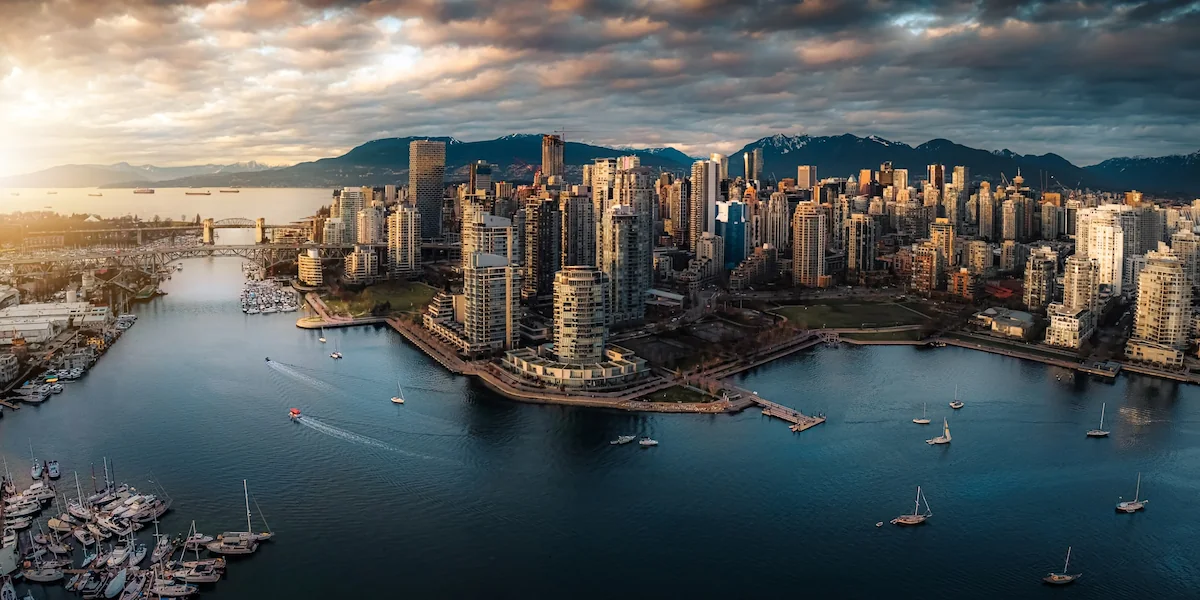
Find the best area to stay in Vancouver based on how your trip will actually work day to day: fast downtown logistics, calm harbour views, restaurant-led evenings, Stanley Park access, beach rhythm, Gastown atmosphere, North Shore nature, cruise convenience, airport transfers or a longer residential stay. Vancouver looks compact on a map, but water, bridges, Stanley Park, cruise traffic, mountain weather, hotel compression and transit corridors make base choice unusually important. The smartest Vancouver hotel area is not always the most central one; it is the neighborhood that protects your repeated movements between the airport, Canada Place, Downtown, False Creek, Stanley Park, beaches, food districts, ferries and the North Shore.
Best areas
Downtown Vancouver is the safest first-time base; Coal Harbour is best for calm waterfront hotels, cruise convenience and Stanley Park access; Yaletown is strongest for restaurants, couples and evenings; the West End is best for families, walkers and longer central stays; Gastown adds heritage texture but needs block-by-block judgment; Kitsilano suits slower beach-led and repeat visits; North Vancouver / Lonsdale is the strategic nature-facing alternative for North Shore access.
Booking timing
Book early for May–September, Alaska cruise dates, long weekends, major concerts, Canucks games, conference periods, summer Fridays and any trip requiring a specific central neighborhood. Vancouver hotel choice compresses first by location, then by price: the best-positioned rooms in Downtown, Coal Harbour, Yaletown and the West End often disappear before the city looks fully sold out.
Where to stay in Vancouver: the fast answer
Downtown Vancouver – Best for: first-time visitors and short stays · Vibe: central, vertical, practical, hotel-heavy · Stay here if: you want the most convenient base for transit, tours, shopping streets, and quick access to several waterfront edges. · Avoid if: you want a softer residential feel or a neighborhood that feels distinct from the business core.
Coal Harbour – Best for: waterfront calm and premium stays · Vibe: polished, quiet, scenic, controlled · Stay here if: you want easy Stanley Park access, harbour views, and a calmer hotel environment near the convention centre. · Avoid if: you want late-night energy, independent shops, or broad budget choice.
Yaletown – Best for: restaurants, couples, and evening ease · Vibe: social, compact, polished, dining-led · Stay here if: you want a walkable base with restaurants, False Creek access, and a more animated evening rhythm. · Avoid if: you are looking for the lowest rates or the quietest streets.
West End – Best for: families, walkers, and longer stays · Vibe: leafy, residential, beach-adjacent, relaxed · Stay here if: you want Stanley Park, English Bay, Robson Street, and calmer residential blocks within one stay. · Avoid if: you need the fastest possible movement to meetings, tours, or airport-linked transit.
Gastown – Best for: heritage streets, design hotels, and dining texture · Vibe: historic, atmospheric, uneven, restaurant-focused · Stay here if: you want older buildings, bars, design shops, and a less polished version of central Vancouver. · Avoid if: you want the easiest family base or a uniformly calm area after dark.
Kitsilano – Best for: beach atmosphere, repeat visits and slower stays · Vibe: local, coastal, residential, active · Stay here if: you want a more lived-in west-side stay with beaches, cafés, and less downtown intensity. · Avoid if: you are staying only two or three nights and need maximum logistical efficiency.
North Vancouver / Lonsdale – Best for: North Shore nature, families and a calmer alternative base · Vibe: waterfront, mountain-facing, practical, quieter · Stay here if: you want SeaBus access to Downtown plus easier access to Capilano, Lynn Canyon, Grouse Mountain, Deep Cove and North Shore trails. · Avoid if: you want nightlife, the largest hotel choice, or the simplest first-time sightseeing base entirely on the downtown peninsula.
How to choose the right Vancouver base
Choosing where to stay in Vancouver is mostly a decision about time, water, bridges, weather and evening rhythm. The city looks compact, but the downtown peninsula, False Creek, Stanley Park, the North Shore, Kitsilano, Richmond and the airport corridor create very different travel patterns. The right base is the one that makes your repeated movements easier, not just the one that looks most central on a map.
Choose Downtown if this is your first Vancouver trip and you want the broadest transit, tour, airport and sightseeing logic.
Choose Coal Harbour when water, quiet streets, cruise convenience and Stanley Park access matter more than restaurant density.
Choose Yaletown if evenings are part of the trip and you want restaurants, bars and False Creek close together.
Choose the West End when you want a softer central base with Stanley Park, English Bay, Robson Street and family-friendly walking routes.
Choose Gastown for atmosphere only if you are comfortable with a more uneven central edge and you check the exact block carefully.
Choose Kitsilano when beach life, cafés and a residential west-side rhythm outweigh maximum sightseeing efficiency.
Choose North Vancouver / Lonsdale when the trip is longer, nature-facing or family-oriented, and SeaBus access feels like an advantage rather than a compromise.
Treat Richmond as a food or airport strategy, not the default Vancouver base, unless your priority is airport convenience or Chinese dining rather than central sightseeing.
How Vancouver’s map affects where you should stay
Vancouver’s hotel logic is shaped by the downtown peninsula, False Creek, the West End, the North Shore and the airport corridor. A hotel may look close on the map, but bridges, parks, transit lines, cruise traffic and waterfront edges change how the stay feels. The smartest base is usually the one that reduces your most repeated movement, not the one that appears most central in a straight line.
The downtown peninsula is the most efficient base because many visitor routes begin or pass through it.
Water makes the city more scenic but also creates movement funnels, especially around bridges and False Creek crossings.
The West End feels close to everything on foot, but transit can be less direct than from central Downtown.
Kitsilano and the west side are appealing for longer stays, but they are less efficient for short, first-time trips.
Coal Harbour is central but quiet because it faces the water rather than the busiest restaurant corridors.
Gastown is central on the map, but the eastern edge requires more careful street-level judgment.
North Vancouver / Lonsdale works when the SeaBus and North Shore access become strengths rather than compromises.
Richmond is useful for airport access and food, but usually not the best all-purpose base for a first Vancouver trip.
Hyper-central convenience – Downtown Vancouver gives the broadest access to transit, hotels, shopping, tours and cross-city movement, making it the safest first-time base.
Waterfront calm – Coal Harbour and parts of the West End trade some restaurant density for quieter streets, harbour walks, Stanley Park access and softer mornings.
Evening and dining cluster – Yaletown and Gastown work best when dinner, bars and a walkable return to the hotel are central to the stay.
Residential beach logic – The West End and Kitsilano make Vancouver feel more lived-in, but Kitsilano requires more tolerance for daily movement away from Downtown.
North Shore strategy – North Vancouver / Lonsdale changes the trip from downtown-first to nature-facing, with SeaBus access, waterfront space and easier movement toward Capilano, Lynn Canyon, Grouse Mountain and Deep Cove.
Cruise and airport logic – Coal Harbour and Downtown are strongest for Canada Place, while Richmond and the airport corridor are tactical choices for early flights, late arrivals or food-focused repeat visits.
Best areas to stay in Vancouver
Vancouver’s best areas to stay are not interchangeable hotel zones. Each one changes the trip: how fast mornings begin, how evenings end, how often you cross water, whether the city feels like a downtown stop or a waterfront stay, and how easily you reach Stanley Park, False Creek, the North Shore, beaches, airport links or food districts. The best area is the one that matches the daily structure of the trip.
Downtown Vancouver
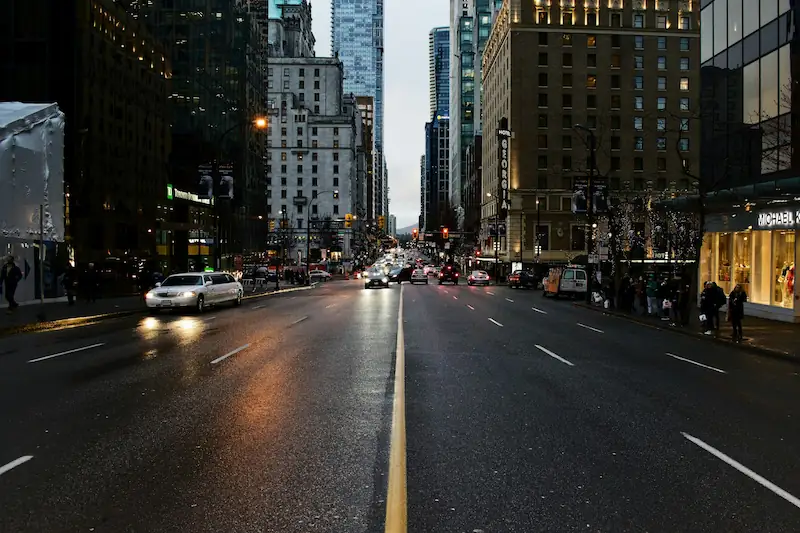
Downtown Vancouver is the most efficient place to stay if you want the city to work with minimum friction. It places you close to SkyTrain and Canada Line connections, shopping streets, tour pickups, restaurants, stadiums, the convention centre, the cruise terminal edge, and several key hotel clusters. The atmosphere is practical rather than deeply local, with glass towers, office traffic and busy pavements defining much of the day. At street level, the rhythm is fast by Vancouver standards, especially around Robson, Granville, Burrard and the central business district. Default first-time and short-stay base. Downtown should be treated as the friction-reduction choice for visitors who need airport access, transit, tour pickups, cruise-adjacent logistics, shopping, events and quick movement toward several waterfront edges.
Why stay here: Stay here when convenience is the priority and you want to spend less time solving the map. It remains the best area to stay in Vancouver for first-time visitors, short trips, car-free travel, cruise-adjacent stays and anyone planning tours or day trips.
Best for: First-time visitors, short stays, transit users, cruise-adjacent stays, business travelers, and anyone who wants the most convenient area to stay in Vancouver.
Pros
Best overall base for a first Vancouver trip.
Strongest concentration of hotels across budget, mid-range, and upscale categories.
Easy access to SkyTrain, Canada Line, buses, waterfront, shopping, and tour pickups.
Works well for 2-night, 3-day, and business-plus-leisure stays.
Less risky than choosing a peripheral base when time is limited.
Best area for Canada Line airport access when your hotel sits near a useful station.
Strongest fallback choice if weather forces a shift from outdoor plans to museums, shopping, food and transit-friendly activities.
Cons
Can feel corporate or generic compared with the West End, Gastown, or Kitsilano.
Rates rise quickly in summer and around major events.
Some streets are busy or noisy, especially close to nightlife corridors.
Hotel quality varies sharply, so the exact block matters.
Nearby highlights
Walkable access to Robson Street for shopping, casual food and everyday convenience.
Fast movement to Waterfront Station for the SeaBus, SkyTrain and North Shore connections.
Easy reach of the Vancouver Art Gallery, Canada Place and central cultural stops.
Good base for tour pickups to Whistler, Victoria, Capilano or the North Shore.
Short walk or quick transit to Yaletown, Gastown, Coal Harbour and the West End.
Useful for pre-cruise or post-cruise nights when you still want Vancouver to be walkable.
Budget
Hotel Willo - previously known YWCA Hotel – A practical budget stay near BC Place and Stadium-Chinatown Station, with simple rooms and strong transit access. Why we recommend: One of the few lower-cost central hotels that still keeps the city genuinely walkable. Check availability
Victorian Hotel – A heritage-style budget-to-mid option between Downtown and Gastown, with compact rooms and old-building character. Why we recommend: It gives more atmosphere than many budget hotels while keeping a useful central address. Check availability
Days Inn by Wyndham Vancouver Downtown – A straightforward central hotel close to Waterfront Station, the convention centre, and the harbour edge. Why we recommend: It suits travelers who value location over design and want to control costs downtown. Check availability
Mid
EXchange Hotel Vancouver – A polished downtown hotel close to Waterfront Station, the convention centre, and the financial district. Why we recommend: It is unusually strong for travelers who want a central stay that still feels considered. Check availability
L'Hermitage Hotel – A refined central hotel near Vancouver City Centre Station, with apartment-like comfort and an outdoor pool. Why we recommend: It works well for couples or longer stays that need more calm than a standard chain hotel. Check availability
Hyatt Regency Vancouver – A reliable large hotel in the central business district with strong access to transit, shopping, and office towers. Why we recommend: It is one of the safer mid-range choices when location, room consistency, and logistics matter most. Check availability
Upscale
Wedgewood Hotel & Spa - Relais & Chateaux – An intimate luxury hotel beside Robson Square, with classic interiors and a more personal scale than the largest downtown properties. Why we recommend: It brings boutique character to a very central address without sacrificing comfort. Check availability
Rosewood Hotel Georgia – A landmark upscale hotel near the Vancouver Art Gallery, with heritage architecture and polished rooms. Why we recommend: It is one of the strongest luxury choices for travelers who want centrality with a sense of place. Check availability
Fairmont Hotel Vancouver – A grand central hotel with historic scale, large public spaces, and easy access to downtown shopping and cultural stops. Why we recommend: It is useful when you want a classic full-service hotel rather than a design-led boutique stay. Check availability
Coal Harbour
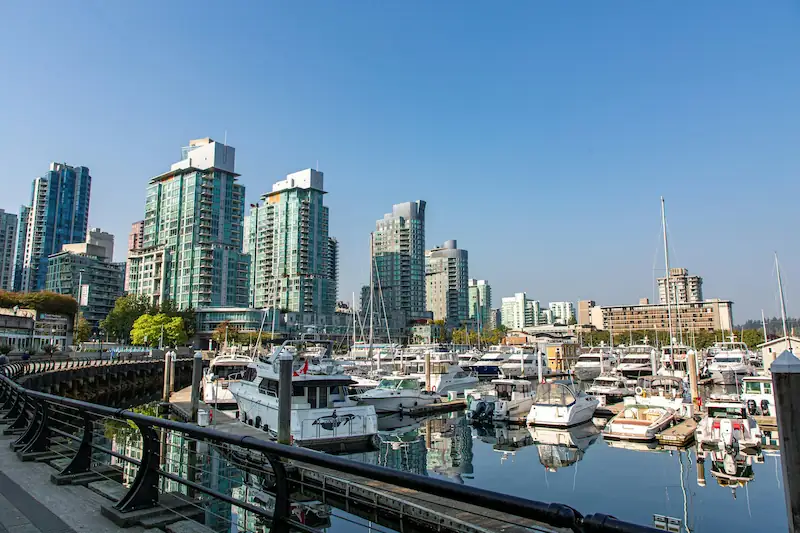
Coal Harbour is Vancouver’s calmest premium base, where the stay turns toward marina paths, floatplanes, glass towers, and the North Shore mountains. It is still central, but the mood is quieter than Downtown or Yaletown, especially early in the morning along the seawall. Hotels here work best when you want views, park access, convention-centre convenience, or a more composed arrival into the city. The trade-off is that the area can feel polished and residential rather than socially dense. Premium waterfront and cruise-convenience base. Coal Harbour is the right area when the hotel experience, harbour views, Stanley Park access and calm morning walks are part of the trip.
Why stay here: Stay here when Vancouver’s waterfront setting is central to the trip. Coal Harbour is one of the best areas to stay in Vancouver for couples, premium stays, cruise-adjacent nights, calm access to Stanley Park and polished harbour-front logistics.
Best for: Couples, premium travelers, cruise-linked stays, quiet central stays, waterfront walkers, and visitors who want Stanley Park close.
Pros
Excellent access to Stanley Park, the seawall, marina paths, and harbour views.
Quieter than many central areas while still close to Downtown.
Strong choice for premium hotels and convention-centre stays.
Good for early walks, waterfront running, and lower-noise evenings.
Efficient for cruise departures and harbour-facing itineraries.
One of the easiest areas for pre-cruise stays near Canada Place.
Strong fit for travelers who want the room, view and morning walk to be part of the experience.
Cons
Limited budget accommodation compared with Downtown or the West End.
Less independent restaurant and nightlife density than Yaletown or Gastown.
Can feel too polished for travelers seeking local texture.
Water-view rooms command a clear premium.
Nearby highlights
Immediate access to Coal Harbour seawall walks toward Stanley Park.
Short walk to the Vancouver Convention Centre, Canada Place and the cruise terminal.
Calm harbour atmosphere without leaving the central hotel zone.
Good base for floatplane departures, waterfront transfers and early morning walks.
Strong North Shore views when weather and visibility cooperate.
Easy return to a quieter hotel area after dinner in Downtown, Gastown, Yaletown or the West End.
Budget
Days Inn by Wyndham Vancouver Downtown – A basic central option a short walk from Coal Harbour, Waterfront Station, and the convention centre. Why we recommend: It is one of the most practical lower-cost choices near the harbour without moving far from the water. Check availability
Barclay Hotel – A simple heritage hotel on Robson Street, close enough to Coal Harbour for travelers prioritizing value. Why we recommend: It keeps costs lower while still allowing access to Coal Harbour and the West End on foot. Check availability
Hotel Willo - previously known YWCA Hotel – A no-frills central stay with strong transit and stadium access, better for savings than harbour atmosphere. Why we recommend: It is useful when Coal Harbour prices are too high but a central base still matters. Check availability
Mid
Pinnacle Hotel Harbourfront – A well-located harbourfront hotel with easy access to the seawall, convention centre, and Coal Harbour marina. Why we recommend: It offers the core Coal Harbour logic without reaching the top luxury tier. Check availability
Coast Coal Harbour Vancouver Hotel by APA – A modern hotel in Coal Harbour with practical rooms, a pool, and good access to waterfront paths. Why we recommend: It is a strong mid-range choice for travelers who want the area’s calm without overpaying for full luxury. Check availability
Carmana Hotel & Suites – A suite-style hotel near Robson and Coal Harbour, useful for longer stays or travelers wanting more room. Why we recommend: It gives apartment-style comfort in a location that works for both Downtown and the waterfront. Check availability
Upscale
Loden Vancouver – A boutique luxury hotel in Coal Harbour with a quiet scale, polished service, and easy waterfront access. Why we recommend: It is one of the best choices here when you want calm design rather than a large luxury hotel. Check availability
Fairmont Pacific Rim – A high-end waterfront hotel near Canada Place, with harbour views and a strong full-service luxury profile. Why we recommend: It is the clearest choice for a premium Vancouver stay built around views and service. Check availability
Pan Pacific Vancouver – A large waterfront hotel above Canada Place, directly useful for cruises, conventions, and harbour-facing stays. Why we recommend: It is especially practical when arrival, departure, or waterfront access is part of the trip design. Check availability
Yaletown
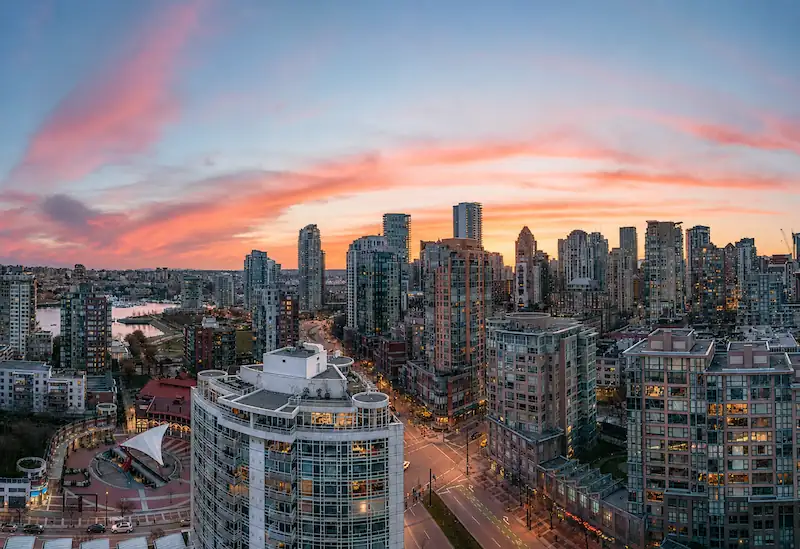
Yaletown is the best Vancouver base when evenings matter as much as daytime logistics. The neighborhood mixes converted warehouse façades, restaurant terraces, glass residential towers, and quick access to False Creek. It feels more social than Coal Harbour and more polished than Gastown, with a compact rhythm that suits couples, dining-focused travelers, and weekend stays. At dusk, the streets around Mainland and Hamilton pick up a low terrace murmur that makes staying nearby feel genuinely useful. Evening, dining and couple-friendly central base. Yaletown is the best choice when dinners, cocktails, False Creek and a polished social rhythm are central to the trip.
Why stay here: Stay here if you want restaurants, bars, False Creek, stadium access and central convenience without the full business-district feel. Yaletown is one of the best neighborhoods to stay in Vancouver for couples, food-led short trips and travelers who want evenings to be easy.
Best for: Couples, restaurant-focused stays, weekend trips, nightlife-light travelers, False Creek access, and visitors who want a social but controlled base.
Pros
Excellent evening dining and bar access without needing taxis.
Walkable to False Creek ferries, the seawall, and Granville Island connections.
Good balance between central convenience and neighborhood identity.
Strong for couples and polished weekend stays.
Easy access to Downtown, stadiums, and transit.
Cons
Not the cheapest area, especially on weekends and event nights.
Some hotels sit closer to stadium traffic than the calmest Yaletown streets.
Can feel more polished than local.
Nightlife noise can matter depending on the exact address.
Nearby highlights
Easy dinner planning around Mainland Street, Hamilton Street and nearby downtown restaurants.
Quick access to the False Creek seawall for morning walks or runs.
Short ferry connections toward Granville Island, Olympic Village and the south shore.
Close to BC Place and Rogers Arena for events without a long return journey.
Walkable access to Downtown while feeling less office-led.
Strong base for couples who want restaurants, False Creek and a polished evening rhythm.
Budget
Hotel Willo - previously known YWCA Hotel – A practical lower-cost hotel close to BC Place, with easy access to the eastern edge of Yaletown. Why we recommend: It is the best budget compromise near Yaletown when location matters more than style. Check availability
Ramada by Wyndham Vancouver Downtown – A simple downtown hotel on Granville Street, close enough to Yaletown for budget-focused travelers. Why we recommend: It can work when Yaletown rates are high and you still want central evening access. Check availability
Quality Inn & Suites Downtown Vancouver – A basic central hotel near the Granville entertainment zone and within reach of Yaletown restaurants. Why we recommend: It is mainly a value play for travelers who accept a busier location. Check availability
Mid
Rosedale on Robson Suite Hotel – A suite-style hotel near Yaletown, Robson Street, BC Place, and downtown restaurants. Why we recommend: It is especially useful for travelers who want more space without leaving the central grid. Check availability
Georgian Court Hotel, WorldHotels Elite – A polished hotel near BC Place and the edge of Yaletown, with practical access to events and restaurants. Why we recommend: It is a strong choice when stadium access and central dining both matter. Check availability
Hampton Inn & Suites by Hilton Vancouver-Downtown – A reliable chain hotel near BC Place, Rogers Arena, Yaletown, and central transit. Why we recommend: It gives dependable room quality in one of the most practical locations for event-linked stays. Check availability
Upscale
OPUS Vancouver – A design-forward boutique hotel in Yaletown, close to restaurants, bars, and the Canada Line. Why we recommend: It is the defining Yaletown choice for travelers who want the neighborhood’s social energy at the door. Check availability
Hotel BLU – A modern upscale hotel near BC Place, Yaletown, and the entertainment district, with a clean contemporary feel. Why we recommend: It works well for travelers who want comfort, access, and a less corporate style. Check availability
JW Marriott Parq Vancouver – A large upscale hotel beside BC Place and the casino complex, close to Yaletown and False Creek. Why we recommend: It is the strongest choice here when event access, big-hotel facilities, and polished rooms matter. Check availability
West End
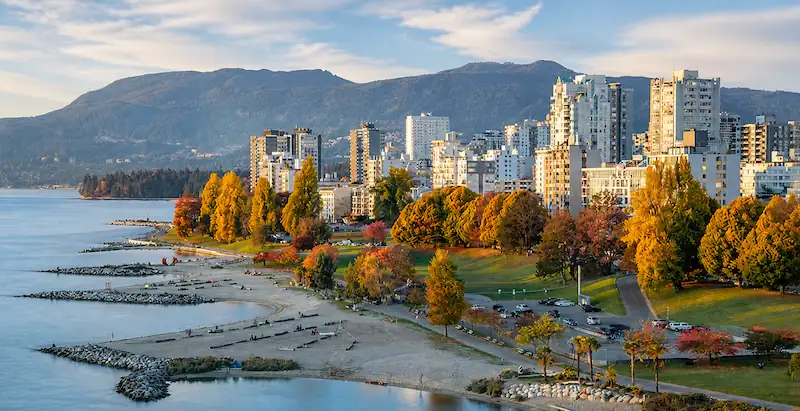
The West End is where Vancouver becomes softer, greener, and more residential without losing central convenience. It sits between Downtown, Stanley Park, English Bay, and Robson Street, which makes it unusually useful for travelers who want to walk rather than constantly plan routes. The area has older apartment blocks, tree-lined streets, beach access, casual restaurants, and a calmer pace than the business core. In the evening, the movement toward English Bay gives the neighborhood a relaxed coastal cadence. Soft central and family-friendly base. The West End is the best compromise between central access, Stanley Park, English Bay, residential streets and casual daily rhythm.
Why stay here: Stay here if you want a central base that feels less transactional than Downtown. The West End is one of the best areas to stay in Vancouver with family, for walkers, for LGBTQ+ nightlife around Davie Village, and for longer stays that need everyday comfort.
Best for: Families, walkers, longer stays, beach access, Stanley Park, quieter central stays, and visitors who want a lived-in base.
Pros
Excellent access to Stanley Park, English Bay, Robson Street, and the seawall.
More residential and relaxed than Downtown or Yaletown.
Good for families, walkers, and travelers who want quieter evenings.
Strong mix of casual food, beach access, and practical services.
Often better value than Coal Harbour while still close to the water.
Best central area for blending Stanley Park, English Bay, casual food and calmer residential blocks.
Often the most forgiving base for families who need easy outdoor breaks.
Cons
Transit access can be less direct than Downtown or Yaletown depending on the exact hotel.
Hotel stock includes older properties, so room quality needs careful checking.
Not ideal for late arrivals if you want the simplest airport-to-hotel route.
Less polished than Coal Harbour and less social than Yaletown.
Nearby highlights
Walkable access to Stanley Park without needing transit or taxis.
Easy evening movement to English Bay for sunset and casual dining.
Robson Street nearby for shopping, cafés and everyday convenience.
Residential side streets that make the stay feel calmer than Downtown.
Good access to the seawall for running, cycling and slow waterfront walks.
Davie Village adds an LGBTQ+ nightlife layer without making the whole area feel like a nightlife zone.
Budget
Barclay Hotel – A simple historic hotel on Robson Street, useful for budget-focused stays near the West End and Downtown. Why we recommend: It is one of the most accessible lower-cost options in a genuinely useful part of the city. Check availability
Tropicana Suite Hotel – An older suite-style property on Robson Street, offering space and location over polish. Why we recommend: It can make sense when room size and West End access matter more than contemporary design. Check availability
The Sylvia Hotel – A historic hotel directly by English Bay, with traditional rooms and immediate beach access. Why we recommend: It is one of the few characterful lower-to-mid options that puts the bay at the door. Check availability
Mid
Blue Horizon Hotel – A well-located Robson Street hotel with spacious rooms, city views, and good access to the West End. Why we recommend: It is a strong mid-range choice when you want space, location, and easy walking routes. Check availability
Sonder The Sunset – A suite-style stay in the West End, useful for longer visits and travelers who prefer more independence. Why we recommend: It supports a more residential Vancouver rhythm better than a standard hotel room. Check availability
Sandman Suites Vancouver on Davie – A suite hotel on Davie Street with practical access to the West End, English Bay, and central nightlife. Why we recommend: It is useful when you want more room and a livelier West End address. Check availability
Upscale
The Sutton Place Hotel Vancouver – A full-service upscale hotel near Robson Street and the West End edge, with classic rooms and central access. Why we recommend: It gives upscale comfort close to West End walking routes without moving fully into Coal Harbour pricing. Check availability
La Grande Residence at the Sutton Place Hotel – A residence-style upscale option with larger layouts, useful for longer stays and families wanting more space. Why we recommend: It stands out when apartment comfort matters but a central hotel service model is still preferred. Check availability
Shangri-La Vancouver – A refined luxury hotel close to Robson Street, the West End, and Coal Harbour, with spacious rooms and polished service. Why we recommend: It is a strong choice for travelers who want luxury near both shopping streets and calmer waterfront access. Check availability
Gastown
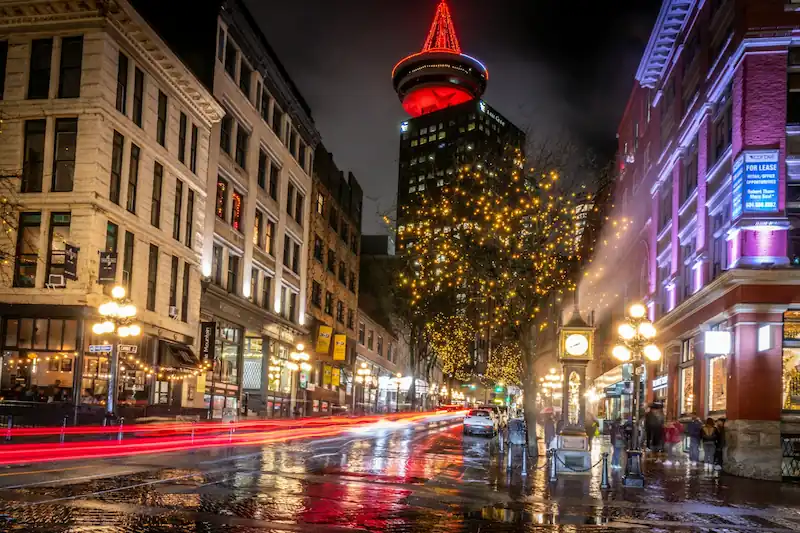
Gastown is the most textured central place to stay in Vancouver, with brick façades, older streets, design shops, restaurants, bars, and a more uneven urban edge. It is close to Downtown and Waterfront Station, but it does not feel as smooth or predictable as Coal Harbour or Yaletown. The attraction is atmosphere: older materials, tighter streets, and a sense of Vancouver before the glass towers took over. Street by street, the mood can change quickly, especially after dark. Character and dining base with caveats. Gastown is useful when heritage streets, restaurants and design hotels matter, but it requires more street-level judgment than the smoother central zones.
Why stay here: Stay here if you want character, restaurants and central access with more urban edge. Gastown can be one of the best areas to stay in Vancouver for design-minded travelers and dining-focused couples, but it is not the easiest or safest-feeling choice for every first-time visitor.
Best for: Design-minded travelers, couples comfortable with urban texture, restaurant-focused stays, and visitors who want a central base with character.
Pros
Strongest heritage-street atmosphere in central Vancouver.
Good restaurant, bar, café, and design-shop access.
Close to Waterfront Station and Downtown without feeling corporate.
Useful for travelers who prefer texture over polish.
Good for short stays when you know the exact hotel location.
Cons
The surrounding area can feel uneven, especially near the Downtown Eastside edge.
Not the best choice for many families or nervous first-time visitors.
Some streets are noisy at night.
Hotel choice is more limited than Downtown or the West End.
Not ideal for travelers who want a uniformly polished immediate hotel environment.
Nearby highlights
Easy access to Gastown restaurants, bars, cafés and design shops.
Short walk to Waterfront Station for SeaBus and SkyTrain connections.
Close to Canada Place, the convention centre and the harbour edge.
More old-building atmosphere than most central Vancouver hotel zones.
Good base for exploring Chinatown and the historic eastern core with context.
Useful for evening dining when you do not want a long ride back.
Budget
Victorian Hotel – A compact heritage hotel between Downtown and Gastown, with period character and a useful central position. Why we recommend: It is one of the best-value ways to stay near Gastown without losing walkability. Check availability
Hotel Willo - previously known YWCA Hotel – A practical lower-cost hotel near Stadium-Chinatown Station and within reach of Gastown by foot or transit. Why we recommend: It is better for cost control than atmosphere, but the location remains workable. Check availability
Days Inn by Wyndham Vancouver Downtown – A simple hotel near Waterfront Station, Canada Place, and the western edge of Gastown. Why we recommend: It gives a lower-cost central fallback when Gastown-specific hotels are limited. Check availability
Mid
Skwachàys Lodge – An Indigenous-owned boutique lodge near Gastown and Chinatown, with art-led rooms and cultural purpose. Why we recommend: It offers a more distinctive stay than most mid-range central hotels. Check availability
Delta Hotels by Marriott Vancouver Downtown Suites – A suite-style hotel close to Waterfront Station, Gastown, and the central business district. Why we recommend: It is practical for travelers who want more space near Gastown without choosing a nightlife-heavy street. Check availability
The St. Regis Hotel – A compact, independently run central hotel close to Gastown, Waterfront Station, and Downtown shopping. Why we recommend: It is a reliable middle ground between location, service, and old-city access. Check availability
Upscale
EXchange Hotel Vancouver – A polished hotel near Waterfront Station and the western edge of Gastown, with strong design and central access. Why we recommend: It is the safest upscale-style choice if you want Gastown nearby but prefer a more controlled address. Check availability
Hotel Le Soleil by Executive Hotels – A boutique-leaning central hotel within walking distance of Gastown, Downtown, and the convention centre. Why we recommend: It gives a more characterful alternative to large central chains while staying logistically easy. Check availability
Fairmont Waterfront – A full-service upscale hotel near Canada Place, Waterfront Station, and the harbour edge above Gastown’s western side. Why we recommend: It works when you want Gastown access but prefer luxury, views, and a smoother immediate environment. Check availability
Kitsilano
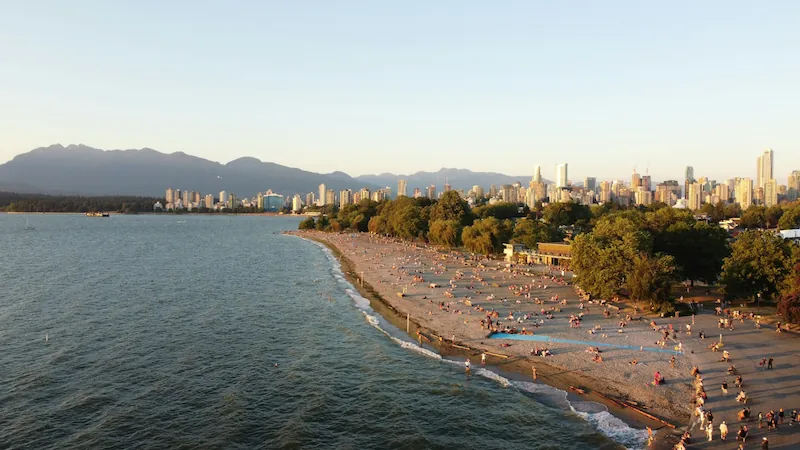
Kitsilano is the Vancouver base for travelers who want the city to feel coastal, local, and slower rather than central and efficient. It sits across False Creek from Downtown, with beaches, cafés, low-rise residential streets, yoga studios, and wide views back toward the skyline and mountains. Staying here changes the trip: mornings feel more residential, evenings can drift toward the beach, and downtown becomes a deliberate crossing rather than the default setting. The trade-off is hotel supply, which is limited compared with the downtown peninsula. Beach-led and repeat-visitor base. Kitsilano is best when the trip is long enough for cafés, beaches, UBC, Vanier Park and west-side rhythm to outweigh central efficiency.
Why stay here: Stay here when the trip is long enough for beach time, cafés and west-side rhythm to matter. Kitsilano is best for return visitors, families on slower trips, UBC-linked plans, beach-focused travelers and anyone who wants a local-feeling stay more than maximum sightseeing efficiency.
Best for: Longer stays, return visitors, beach time, families, cafés, calmer local texture, and travelers who do not need to be central every day.
Pros
Best base for beach atmosphere and a more local west-side rhythm.
Good for longer stays, families, and travelers who want cafés and parks nearby.
Easy access to Kits Beach, Vanier Park, and the south side of False Creek.
Less intense than Downtown, Yaletown, or Gastown.
Strong for travelers who have already done central Vancouver before.
Best fit for a Vancouver stay that includes UBC, Museum of Anthropology, VanDusen, beaches or west-side family time.
Cons
Limited hotel stock directly in Kitsilano.
Less efficient for first-time short stays.
More dependent on buses, taxis, bikes, or longer walks to reach the downtown core.
Not the best base for tour pickups or early departures.
Nearby highlights
Easy access to Kitsilano Beach for morning walks, summer swimming and sunset views.
Close to Vanier Park, the Museum of Vancouver and the waterfront path toward Granville Island.
More everyday café and residential rhythm than the downtown hotel zones.
Strong access to west-side neighborhoods and UBC compared with Downtown.
Good fit for pairing Kits Beach, Vanier Park, Granville Island and UBC without returning to Downtown every few hours.
Better for a 5-day or 7-day Vancouver stay than a compressed first-time weekend.
Budget
Douglas Guest House – A guesthouse-style stay near the Broadway corridor, useful for travelers who want west-side access and lower costs. Why we recommend: It is a better fit for budget travelers who prefer local texture over downtown hotel density. Check availability
Windsor Guest House – A small guesthouse near Broadway and Cambie, with a quieter residential feel and transit access. Why we recommend: It offers a calmer lower-cost alternative to central budget hotels. Check availability
Cambie Lodge – A modest guesthouse option near the Broadway-Cambie area, positioned between west-side movement and central transit. Why we recommend: It works when value and residential calm matter more than being directly on Kits Beach. Check availability
Mid
Granville Island Hotel – A waterfront hotel on Granville Island, close to Kitsilano, False Creek, and the south-shore walking routes. Why we recommend: It is one of the best alternatives when you want west-side atmosphere with stronger hotel infrastructure. Check availability
Holiday Inn Vancouver-Centre Broadway, an IHG Hotel – A practical hotel near Broadway and Vancouver General Hospital, with transit access toward Downtown and the west side. Why we recommend: It is useful for travelers who need a reliable hotel near Kitsilano without relying on limited beach-area stock. Check availability
Park Inn & Suites by Radisson Vancouver – A straightforward Broadway-area hotel with practical access to Granville Island, Kitsilano, and central Vancouver. Why we recommend: It is a sensible compromise when west-side access matters but full waterfront pricing does not. Check availability
Upscale
Level Vancouver Yaletown - Seymour – A serviced apartment-style upscale stay across False Creek from Kitsilano, with more space than a standard hotel room. Why we recommend: It is a strong choice when Kitsilano itself lacks the right hotel but a longer-stay layout matters. Check availability
OPUS Vancouver – A boutique upscale hotel in Yaletown, well placed for False Creek crossings toward Granville Island and Kitsilano. Why we recommend: It works when you want design and dining access while still keeping the west-side route open. Check availability
JW Marriott Parq Vancouver – A large upscale hotel near False Creek, with strong access to Yaletown, events, and crossings toward the west side. Why we recommend: It is a useful upscale alternative when direct Kitsilano hotel choice is too limited. Check availability
North Vancouver / Lonsdale
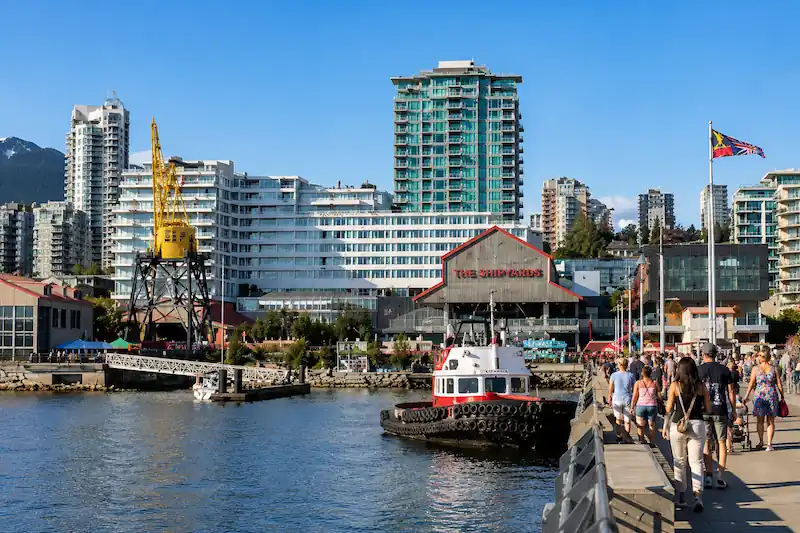
North Vancouver / Lonsdale is the strategic alternative for travelers who want Vancouver to feel more mountain-facing and less downtown-hotel driven. The area around Lonsdale Quay and the Shipyards has SeaBus access to Waterfront Station, harbour views back to the skyline, restaurants, family-friendly waterfront space and better positioning for the North Shore. It is not the most obvious first-time base, but it becomes much more compelling when Capilano, Lynn Canyon, Grouse Mountain, Deep Cove or North Shore trails are central to the trip. The stay feels calmer, more residential and more landscape-led than the downtown peninsula. Nature-facing alternative base. North Vancouver / Lonsdale is strategic when repeated access to Capilano, Lynn Canyon, Grouse Mountain, Deep Cove, Shipyards and North Shore trails matters more than downtown immediacy.
Why stay here: Stay here if you want a quieter waterfront base with easy SeaBus access to Downtown and stronger access to North Shore nature. It is the best Vancouver area for travelers who care more about mountains, forests and family-friendly space than nightlife or the largest hotel choice.
Best for: Nature-focused travelers, families, North Shore activities, calmer waterfront stays, repeat visitors, longer trips and travelers who like the idea of using the SeaBus as part of the stay.
Pros
Best base for repeated North Shore access, including Capilano, Lynn Canyon, Grouse Mountain and Deep Cove.
SeaBus makes Downtown reachable without driving or bridge traffic.
Calmer waterfront feel than Downtown, Yaletown or Gastown.
Good fit for families, longer stays and travelers with a nature-heavy Vancouver plan.
Lonsdale Quay and the Shipyards add food, views and evening atmosphere without a dense downtown feel.
Cons
Less efficient for first-time visitors focused mainly on Downtown, Granville Island, Gastown and Kitsilano.
Hotel choice is narrower than on the downtown peninsula.
Evenings are quieter and less varied than Yaletown, Gastown or the West End.
Some plans still require bridge, bus or rideshare logistics, especially for Deep Cove or trailheads.
Nearby highlights
SeaBus access between Lonsdale Quay and Waterfront Station.
Lonsdale Quay Market and the Shipyards District for food, views and low-pressure evenings.
Better access to Capilano Suspension Bridge, Lynn Canyon and Grouse Mountain than most downtown bases.
Useful positioning for Deep Cove, Mount Seymour and North Shore trailheads.
Harbour views back toward Downtown Vancouver and Canada Place.
Good family-friendly open space around the waterfront compared with denser central hotel zones.
Budget
North Vancouver Hotel – A simple value-oriented hotel on the North Shore, better for car-based or North Shore-focused trips than downtown sightseeing. Why we recommend: It can work when you want lower rates and practical access to North Shore roads rather than a polished waterfront stay. Check availability
SureStay Hotel by Best Western North Vancouver Capilano – A straightforward motel-style option near Capilano Road, useful for budget travelers prioritizing North Shore access. Why we recommend: It suits travelers who care more about Capilano, Grouse or road access than central atmosphere. Check availability
Econo Lodge Inn & Suites North Vancouver – A basic North Vancouver stay near Capilano Road and major North Shore routes. Why we recommend: It is a practical cost-control option when the trip is car-based or nature-facing. Check availability
Mid
The Lonsdale Quay Hotel – A practical hotel directly around Lonsdale Quay, with immediate SeaBus, market and waterfront access. Why we recommend: It is the clearest mid-range choice when you want the North Vancouver / Lonsdale logic without losing easy Downtown access. Check availability
Holiday Inn & Suites North Vancouver, an IHG Hotel – A reliable hotel near North Shore road connections, useful for families and travelers with nature-oriented plans. Why we recommend: It gives chain consistency and practical access to North Shore routes when Lonsdale itself is not essential. Check availability
Pinnacle Hotel at the Pier – A modern hotel close to Lonsdale Quay and the Shipyards, with strong harbour and SeaBus logic. Why we recommend: It works well for travelers who want a polished North Vancouver base that still feels connected to the city. Check availability
Upscale
Seaside Hotel North Vancouver – A polished boutique-style hotel in the Shipyards District, close to waterfront restaurants and SeaBus access. Why we recommend: It is the strongest choice when you want North Vancouver to feel like a deliberate, stylish base rather than a compromise. Check availability
Pinnacle Hotel at the Pier – A full-service North Vancouver option with harbour-facing logic and easy movement around Lonsdale. Why we recommend: It is useful for travelers who want facilities, location and a more complete hotel setup near the SeaBus. Check availability
Crystal's View Bed & Breakfast – A small premium guesthouse-style option in North Vancouver, better suited to quiet stays than central logistics. Why we recommend: It fits travelers who want a softer, residential North Shore stay rather than a conventional hotel district. Check availability
Where to stay in Vancouver for first-time visitors
For a first trip, the best area to stay in Vancouver is usually the one that reduces routing friction. Downtown, Coal Harbour, Yaletown, and the West End all work, but they create different versions of the same city.
Choose Downtown if you have 2 or 3 nights and want the simplest access to transit, tours, waterfront, shopping, and restaurants.
Choose Coal Harbour if your first Vancouver impression should be calm, scenic, and close to Stanley Park.
Choose Yaletown if you want restaurant access and a more social evening base without leaving the central area.
Choose the West End if you want first-time convenience with more residential softness and beach access.
Avoid Kitsilano for a very short first stay unless you already know you want a slower, beach-led trip.
Use Gastown selectively: it has character, but it is not the easiest first-time base for everyone.
Choose North Vancouver / Lonsdale only if your first trip is deliberately nature-heavy and you like the SeaBus logic.
Do not choose Richmond as a first-time base unless airport convenience or food is more important than central sightseeing.
TravelerType
BestArea
Why
Shortest first trip
Downtown Vancouver
It minimizes transfers and keeps the broadest range of plans within reach.
First trip with views
Coal Harbour
It gives immediate access to water, Stanley Park, and the harbour.
First trip with restaurants
Yaletown
It makes evenings easier without losing central convenience.
First trip with North Shore focus
Coal Harbour or North Vancouver / Lonsdale
Coal Harbour keeps central convenience; Lonsdale improves repeated access to forests and mountains.
Where to stay in Vancouver with family
Families usually do best in Vancouver when the hotel is close to open space, easy food, and simple walking routes. Room size and street calm often matter more than being on the most central block.
The West End is the strongest family choice for many trips because Stanley Park, English Bay, casual dining, and residential streets are close together.
Coal Harbour works well for families who want quiet waterfront paths and premium hotels near Stanley Park.
Downtown is practical for short family stays if transit and tour logistics matter more than atmosphere.
Yaletown can suit families with older children, especially when False Creek, ferries, and stadium events are part of the plan.
Kitsilano is appealing for longer family stays, but the limited hotel stock means you may need to compromise on exact location.
Gastown is usually less family-friendly than the West End or Coal Harbour because the street environment changes more sharply by block.
North Vancouver / Lonsdale is a strong family option on longer trips when the plan includes the Shipyards, SeaBus, Capilano, Lynn Canyon or Grouse Mountain.
Downtown can work with children, but room size, noise and exact block matter more than the neighborhood name.
Need
BestArea
WatchOutFor
Outdoor space close by
West End
Older hotel stock and varied room quality.
Calm premium base
Coal Harbour
Higher rates and fewer budget options.
Maximum convenience
Downtown Vancouver
Busier streets and less neighborhood softness.
Nature and family space
North Vancouver / Lonsdale
Less central for Granville Island, Kitsilano and downtown-only sightseeing.
Where to stay in Vancouver for nightlife and evenings out
Vancouver nightlife is more concentrated and lower-key than in larger North American cities. For most travelers, the better question is not where the clubs are, but where dinner, bars, and the return to the hotel feel easy.
Yaletown is the best overall base for polished restaurants, cocktails, and a controlled evening atmosphere.
Gastown is better for bars, design-led restaurants, and older-street texture, but the area needs more street-by-street judgment.
Downtown works if you want access to Granville Street, venues, concerts, and late transport.
The West End is good for LGBTQ+ nightlife around Davie Street while still feeling residential nearby.
Coal Harbour is not a nightlife area; choose it if you want to sleep somewhere calm after going out elsewhere.
Kitsilano is better for casual evenings than nightlife, with beach walks, pubs, and local restaurants.
EveningStyle
BestArea
TradeOff
Restaurants and cocktails
Yaletown
More polished, less raw or alternative.
Bars and character
Gastown
More uneven at night.
Venues and late-night corridors
Downtown Vancouver
Busier and noisier streets.
Where to stay in Vancouver on a budget
Budget stays in Vancouver are less about finding a cheap neighborhood and more about accepting the right compromise. The cheapest useful choice is usually a simpler hotel in or near the central grid, not a distant base that costs time every day.
Downtown has the broadest budget and budget-adjacent hotel supply, especially if you accept simple rooms.
The West End can offer better value for travelers who want walkability and do not need a new-build hotel.
Yaletown budget stays often mean staying near the edge of the area rather than inside its most desirable streets.
Coal Harbour is rarely the right budget choice unless you find a deal just outside the premium waterfront core.
Gastown can look good on price, but the exact block matters more than the neighborhood name.
Kitsilano has limited hotel stock, so budget travelers may need guesthouses or nearby Broadway-area compromises.
Do not save money by moving too far out if you have only two or three days; daily transfers can erase the benefit.
BudgetApproach
BestArea
WhatYouGiveUp
Lowest central compromise
Downtown Vancouver
Style, quiet, or room size.
Walkable but softer
West End
Newer hotel inventory.
Residential value
Broadway / Kitsilano edge
Immediate downtown convenience.
Where to stay depending on your Vancouver trip length
The shorter the stay, the more central your base should be. Vancouver becomes more flexible after four or five days, when a quieter, beach-led or North Shore-facing area can improve the trip instead of slowing it down.
Label
Stay
Avoid
Why
1–2 nights
Downtown Vancouver or Coal Harbour
Kitsilano, North Vancouver / Lonsdale or distant value areas unless there is a specific reason
With very limited time, airport access, transit, waterfront movement and tour logistics matter more than neighborhood character.
3 days
Downtown Vancouver, Coal Harbour, Yaletown or West End
bases that require repeated bridge, bus or rideshare decisions
A first Vancouver stay works best when Stanley Park, False Creek, restaurants, waterfront walks and transit remain easy.
4 to 5 days
West End, Yaletown, Coal Harbour, Downtown or North Vancouver / Lonsdale if nature-heavy
choosing only by hotel rate without checking daily movement
With a few more days, comfort, evening rhythm, water access and nature plans start to matter as much as raw centrality.
1 week
West End, Kitsilano, North Vancouver / Lonsdale or selected quieter Downtown / Coal Harbour hotels
the busiest central blocks if you want a livable daily rhythm
Longer stays benefit from calmer streets, better room comfort, local food options and repeatable daily routines.
First trip
Downtown Vancouver, Coal Harbour, Yaletown or West End
overcorrecting toward local atmosphere before the city’s core geography is clear
A first Vancouver stay should make the city easier before it makes it more niche.
Return trip
Kitsilano, West End, North Vancouver / Lonsdale, Gastown or Yaletown depending on the focus
defaulting automatically to Downtown if beach, food, character or nature now matter more
Once you know the core city, neighborhood rhythm can become a better filter than pure convenience.
Pre-cruise or post-cruise
Coal Harbour or Downtown Vancouver
areas that complicate luggage, transfers or departure-day timing
Canada Place proximity and smooth morning logistics are more valuable than neighborhood character around cruise days.
How to choose the right Vancouver hotel
In Vancouver, the right hotel is not only about the neighborhood. Exact block, transit access, cruise timing, summer demand, room size, view premiums and parking can change the real value of a stay. Once you know the area, choose the hotel that supports the movements you will repeat most often.
Topic
WhatToDo
WhatToAvoid
WhyItMatters
Exact block
Check the immediate street, not just the neighborhood name.
Assuming all of Downtown, Gastown, Yaletown or the West End feels the same.
Vancouver changes quickly by block, especially for noise, nightlife, comfort and evening return.
Transit access
Prioritize useful access to Canada Line, SkyTrain, Waterfront Station, SeaBus or key bus routes if you are not driving.
Choosing a hotel that looks central but adds repeated transfer friction.
Airport access, North Shore movement, False Creek crossings and day trips can change the real convenience of the base.
Cruise logistics
Choose Coal Harbour or Downtown if Canada Place timing, luggage or embarkation matters.
Booking a more characterful area that complicates the easiest travel day.
For cruise nights, proximity and predictable movement often matter more than atmosphere.
Noise and nightlife
Check recent reviews carefully around Granville Street, Gastown, Yaletown edges and event corridors.
Assuming central convenience automatically means restful nights.
A great location can still be frustrating if the street is loud after dinner or on event nights.
Room size and family setup
Book suites, kitchenettes, connecting rooms or larger layouts early if traveling as a family or staying longer.
Waiting until the best family-friendly room types are gone.
Vancouver hotel supply tightens quickly in summer, around cruises and during major events.
View premium
Pay extra for harbour, mountain or water views only when the view is part of the stay.
Choosing a weaker location just for a partial view.
Views can be memorable in Vancouver, but daily movement usually matters more on short stays.
Parking
Check parking cost, access and in-and-out rules before booking a car-based stay.
Assuming central hotels include easy or affordable parking.
Parking can change the real cost and convenience of a Vancouver hotel, especially for day trips.
Recent reviews
Prioritize recent comments on noise, air conditioning, elevators, bathrooms, bedding and staff responsiveness.
Relying only on star rating, old reviews or polished photos.
Hotel quality varies sharply even inside the same area and price category.
Booking timing
Book early for May to September, Alaska cruise dates, long weekends, conferences, concerts, Canucks games and specific central neighborhoods.
Waiting too long if location, room setup or view category matters.
The best-positioned rooms in Downtown, Coal Harbour, Yaletown and the West End often disappear before Vancouver feels fully sold out.
FAQ: where to stay in Vancouver
These Vancouver accommodation questions cover first-time stays, families, cruise logistics, car-free travel, food, nightlife, budget, luxury, airport access, North Shore nature and the main area trade-offs before booking.
What is the best area to stay in Vancouver for first-time visitors?
Downtown Vancouver is the best default for most first-time visitors because it keeps transit, tour pickups, restaurants, shopping, waterfront walks and cross-city movement simple. Coal Harbour is better if you want a calmer waterfront stay near Stanley Park, while the West End works well if you want central access with a softer residential feel.
Where should I stay in Vancouver with family?
The West End is usually the best family area because Stanley Park, English Bay, casual restaurants and walkable residential streets sit close together. Coal Harbour works well for quieter premium stays, Downtown is practical for short trips, and North Vancouver / Lonsdale is strong if the trip is built around North Shore nature.
Is Downtown Vancouver a good place to stay?
Yes. Downtown Vancouver is the most convenient area for short stays, first visits, car-free trips, airport access, tours, shopping and day-trip logistics. The trade-off is that some streets feel corporate, busy or noisy, so exact hotel location still matters.
What is the safest area to stay in Vancouver?
Coal Harbour, the West End and well-chosen parts of Downtown are among the easiest-feeling areas for most visitors. Safety and comfort still vary by exact block, especially around Gastown, nightlife corridors and station-adjacent streets.
Where should I stay in Vancouver on a budget?
For budget stays, start with simpler hotels in Downtown or the West End before moving farther out. Gastown, Broadway / Cambie and some North Vancouver options can work, but the cheapest hotel is not always good value if it adds daily transit friction.
Where is the best place to stay in Vancouver for nightlife?
Yaletown is the best all-round base for restaurants, cocktails and a polished evening rhythm. Gastown has more character and bars but needs more block-by-block judgment. Downtown works for venues, Granville Street and late transport, while the West End is best for Davie Village.
Is Coal Harbour worth the extra cost?
Coal Harbour is worth the extra cost if you value harbour views, quiet mornings, Stanley Park access, cruise convenience or a calmer premium hotel environment. It is less worthwhile if you want nightlife, budget choice or independent restaurants right outside the door.
Should I stay in Kitsilano?
Stay in Kitsilano if you want beaches, cafés, a west-side residential rhythm and a slower Vancouver stay. It is better for longer trips, families and return visitors than for a very short first visit focused on Downtown, Stanley Park, Canada Place and North Shore logistics.
How early should I book hotels in Vancouver?
Book early for May to September, Alaska cruise dates, long weekends, conferences, concerts, Canucks games and any trip requiring a specific central area or family room. Vancouver hotel supply can compress quickly even before the city feels fully sold out.
Is North Vancouver a good place to stay for visiting Vancouver?
North Vancouver / Lonsdale can be a good base if your trip is nature-heavy, family-oriented or focused on Capilano, Lynn Canyon, Grouse Mountain, Deep Cove or North Shore trails. It is less convenient for a short first trip centered on Downtown, Granville Island and the West End.
Should I stay in Richmond when visiting Vancouver?
Richmond is excellent for Chinese dining and useful for airport logistics, but it is not the best all-purpose base for most first-time Vancouver trips. Stay there if food or flight timing dominates; otherwise, Downtown or Yaletown with Canada Line access is usually more balanced.
Where should I stay in Vancouver before a cruise?
For a Vancouver cruise, Coal Harbour is the easiest choice if you want to stay close to Canada Place, reduce luggage friction and keep the waterfront walkable. Downtown Vancouver gives more hotel range and transit flexibility while still staying practical.
Where should I stay in Vancouver without a car?
Downtown Vancouver is the strongest no-car base because it gives the best overall access to SkyTrain, Canada Line, SeaBus, buses, tour pickups and central walking routes. Yaletown, Coal Harbour and the West End also work well depending on your daily priorities.
Is Yaletown or Coal Harbour better to stay in?
Choose Yaletown if restaurants, cocktails, False Creek and evening ease matter most. Choose Coal Harbour if you want calmer waterfront hotels, Stanley Park access, harbour views, cruise convenience and quieter mornings.
Is the West End or Downtown better for families?
The West End is usually better for families because it gives Stanley Park, English Bay, casual food and calmer residential streets. Downtown is better for very short stays, transit, tour pickups and the broadest hotel choice.
What is the best neighborhood to stay in Vancouver overall?
For most visitors, Downtown is the best overall base because it reduces logistics. Coal Harbour is the best premium waterfront alternative, Yaletown is best for restaurants and evenings, and the West End is best for a softer central stay.
Where should I stay in Vancouver for 2 nights?
For 2 nights, stay in Downtown Vancouver or Coal Harbour. You need a base that keeps airport access, waterfront walks, transit, restaurants and tour logistics simple rather than chasing a more residential or niche neighborhood.
Where should I stay in Vancouver for 3 days?
For 3 days, Downtown, Coal Harbour, Yaletown and the West End are the strongest choices. They keep Stanley Park, False Creek, restaurants, waterfront walks and transit close enough to make the trip feel compact.
Where should I stay in Vancouver for a week?
For one week, consider the West End, Kitsilano, North Vancouver / Lonsdale or a quieter Downtown / Coal Harbour hotel. Longer stays benefit from calmer streets, room comfort, local food options and daily rhythm more than maximum centrality alone.
Is Yaletown a good area to stay in Vancouver?
Yes. Yaletown is a strong area for couples, restaurants, cocktails, False Creek walks, stadium events and polished evenings. It is less ideal if you want the cheapest rates, quiet residential streets or a less curated neighborhood feel.
Is the West End a good area to stay in Vancouver?
Yes. The West End is one of Vancouver’s best central areas for families, walkers, longer stays, Stanley Park, English Bay and a more residential rhythm. It is slightly less direct for some transit-heavy plans than central Downtown or Yaletown.
Is Gastown safe to stay in Vancouver?
Gastown can be a rewarding place to stay for restaurants, design hotels and heritage streets, but it is more uneven by block than Downtown, Coal Harbour, Yaletown or the West End. Check the exact hotel location carefully, especially if you are sensitive to nighttime street atmosphere.
Is Kitsilano a good place to stay for first-time visitors?
Kitsilano can work for first-time visitors on a longer, beach-led or family trip, but it is not the easiest base for a short first stay. Downtown, Coal Harbour, Yaletown or the West End are usually better if you want efficient sightseeing and transit.
Should I stay in Downtown Vancouver or the West End?
Choose Downtown for maximum convenience, transit, tours, shopping and short stays. Choose the West End for a softer central base with Stanley Park, English Bay, residential streets and more relaxed daily rhythm.
Should I stay in Downtown Vancouver or Yaletown?
Choose Downtown for the broadest logistics and hotel choice. Choose Yaletown if restaurants, False Creek, cocktails and a polished evening base matter more than pure transport efficiency.
Should I stay in Coal Harbour or Downtown Vancouver?
Choose Coal Harbour for waterfront calm, Stanley Park access, cruise convenience and premium hotels. Choose Downtown for broader price range, transit, shopping, tour pickups and easier cross-city movement.
Should I stay in Coal Harbour or Yaletown?
Choose Coal Harbour for calm, views, Stanley Park and cruise logistics. Choose Yaletown for restaurants, bars, False Creek ferries and a more social evening rhythm.
Should I stay in the West End or Coal Harbour?
Choose the West End for families, longer stays, English Bay, residential streets and better value. Choose Coal Harbour for premium waterfront hotels, harbour views, Stanley Park access and cruise convenience.
Should I stay in Gastown or Yaletown?
Choose Yaletown for a smoother, more polished stay with easy restaurants and False Creek access. Choose Gastown for heritage streets, bars, design hotels and more character, but only if the exact hotel block feels right.
Should I stay in Vancouver or North Vancouver?
Stay in Vancouver proper for the easiest first-time sightseeing, restaurants, Downtown, Stanley Park and transit. Stay in North Vancouver / Lonsdale if your trip is longer, calmer, family-oriented or built around North Shore nature.
Where should I stay for Stanley Park?
Coal Harbour and the West End are the best areas for Stanley Park. Coal Harbour is more polished and waterfront-focused, while the West End is more residential, family-friendly and close to both Stanley Park and English Bay.
Where should I stay near Canada Place?
Coal Harbour and Downtown Vancouver are the best areas near Canada Place. Coal Harbour is best for premium waterfront and cruise convenience, while Downtown gives broader hotel choice and better transit flexibility.
Where should I stay near Vancouver Convention Centre?
Coal Harbour is the most convenient area for the Vancouver Convention Centre, especially for premium stays and waterfront access. Downtown is the better choice if you want more price range, shopping, restaurants and transit options.
Where should I stay for a Vancouver cruise?
Stay in Coal Harbour for the smoothest cruise logistics and easiest access to Canada Place. Downtown Vancouver is the best alternative if you want more hotel choice, better rates and stronger transit before or after the cruise.
Where should I stay in Vancouver for restaurants?
Yaletown is the strongest base for polished restaurants and easy dinner-to-hotel movement. Gastown works for characterful restaurants and bars, Downtown gives flexibility, and Richmond is the key food excursion for Chinese dining.
Where should I stay in Vancouver for Asian food?
Richmond is the strongest area for Chinese dining and one of the best food destinations in the region. For a first visit, Downtown or Yaletown near Canada Line access may be a better base, letting you reach Richmond without giving up central Vancouver logistics.
Where should I stay in Vancouver for beaches?
The West End is best for English Bay and central beach access, while Kitsilano is best for a more residential beach-led stay. Choose the West End for short or first trips and Kitsilano for longer or slower stays.
Where should I stay in Vancouver for luxury hotels?
Coal Harbour is the strongest luxury area if you want waterfront views, premium service and a calm Vancouver atmosphere. Downtown works better for classic central luxury, shopping, business travel and heritage hotels. Yaletown is better for boutique, dining-led luxury.
Where should I stay in Vancouver for a romantic trip?
Coal Harbour is best for calm waterfront luxury and Stanley Park walks. Yaletown is better for restaurants and cocktails, the West End for sunsets and beach walks, and Kitsilano for a slower beach-led couples trip.
Where should I stay in Vancouver with kids and no car?
The West End is often the best choice with kids and no car because Stanley Park, English Bay, casual food and walking routes are close together. Downtown is more practical for transit-heavy short stays, while Coal Harbour is calmer and more premium.
Where should I stay in Vancouver if I have a car?
With a car, check parking cost and access before choosing a central hotel. Downtown and Coal Harbour can be expensive for parking, while North Vancouver / Lonsdale or some west-side options may work better if your trip includes repeated nature outings.
Where should I stay in Vancouver in winter?
In winter, Downtown, Yaletown and Coal Harbour are practical because they keep museums, restaurants, shopping, transit and rainy-day alternatives close. North Vancouver can work well if snow, skiing or mountain access are part of the trip.
Where should I stay in Vancouver in summer?
In summer, Coal Harbour, the West End and Yaletown are especially strong because waterfront walks, Stanley Park, English Bay, False Creek and outdoor dining are easier to use. Book early, because summer and cruise demand compress the best central hotels.
Where should I stay in Vancouver on a layover?
For a layover with enough time to enter the city, Downtown or Yaletown near the Canada Line usually works best. Stay near the airport only if the timing is tight, the flight is very early, or you do not plan to visit central Vancouver.
Where should I stay in Vancouver for Whistler day trips?
Downtown Vancouver is usually best for Whistler day trips because tours and coaches often depart from central locations. Coal Harbour can also work well if you want a calmer waterfront stay before or after a full excursion day.
Where should I stay for Capilano Suspension Bridge and Grouse Mountain?
North Vancouver / Lonsdale is the best base if you plan repeated North Shore outings. Coal Harbour or the West End are better if you want central Vancouver plus one North Shore day.
Is Richmond a good place to stay when visiting Vancouver?
Richmond is good for airport convenience and Chinese dining, but it is not the best base for most sightseeing-focused Vancouver trips. Use it strategically for late arrivals, early flights or food-first repeat visits.
Is Vancouver easy without a car?
Yes. Vancouver is relatively easy without a car if you stay in Downtown, Yaletown, Coal Harbour or the West End. The Canada Line, SkyTrain, SeaBus, buses, False Creek ferries and walking routes cover most visitor needs.
What area should I avoid staying in Vancouver?
There is no single area everyone must avoid, but be careful with far-out hotels chosen only for price, airport hotels for normal city breaks, and blocks around nightlife or uneven edges if you want quiet or family comfort.
What is the quietest central area to stay in Vancouver?
Coal Harbour is the quietest premium central area, especially near the waterfront and seawall. The West End is also calmer than Downtown or Yaletown, with more residential streets and better access to English Bay and Stanley Park.
Where should I stay in Vancouver for shopping?
Downtown Vancouver is the best shopping base because it keeps Robson Street, Pacific Centre and central retail close. The West End works well for Robson access with more residential calm, while Gastown is better for design shops and browsing.
Where should I stay for Vancouver nightlife?
Yaletown is the best base for restaurants, cocktails and a polished night out. Gastown is better for bars and character, Downtown works for venues and Granville Street, and the West End is best for Davie Village.
Are waterfront hotels in Vancouver worth it?
Waterfront hotels can be worth it if the view, morning walk, cruise access or calmer atmosphere is part of the trip. Do not pay a large premium for a weak location or partial view if you mostly need transit and sightseeing efficiency.
What is the best area for older travelers in Vancouver?
Coal Harbour, Downtown and the West End are often the best areas for older travelers. Prioritize elevator access, quiet rooms, taxi access, short walking routes, nearby restaurants and easy movement to Stanley Park, Canada Place or transit.
Where should I stay in Vancouver for a honeymoon?
Coal Harbour is the strongest honeymoon choice for waterfront luxury, views and calm. Yaletown is better for restaurants and cocktails, while the West End or Kitsilano suit couples who want sunsets, beaches and a softer pace.
Is it better to stay near the airport or Downtown Vancouver?
For almost every city trip, Downtown is better because the Canada Line makes airport access manageable while keeping Vancouver walkable. Stay near the airport only for flight logistics, a one-night transit stay or a food-focused Richmond plan.
What is the best base for a Vancouver and Victoria trip?
Downtown or Coal Harbour works best before or after Victoria logistics because you retain hotel choice, transit, tour pickups and waterfront access. Victoria as a day trip is long, so avoid adding extra base friction.
What is the best base for Vancouver and North Shore nature?
North Vancouver / Lonsdale is best if North Shore nature is repeated. Coal Harbour or the West End are better if you want central Vancouver plus one or two North Shore outings.
Where should I stay if Vancouver hotels are too expensive?
Look first at simpler Downtown and West End hotels, then Broadway / Cambie or North Vancouver if the transport logic still works. Avoid distant savings that force long transfers, expensive rideshares or awkward evenings every day.
Which Vancouver area has the best hotel selection?
Downtown Vancouver has the broadest hotel selection across budget, mid-range and upscale tiers. Coal Harbour is stronger for premium waterfront hotels, Yaletown for boutique and dining-led stays, and the West End for softer central value.
Where should I stay for an event at BC Place or Rogers Arena?
Downtown and Yaletown are the best areas for BC Place and Rogers Arena. Yaletown is better for restaurants before or after the event, while Downtown gives broader hotel choice and easier transit.
Where should I stay for Davie Village?
The West End is the best area for Davie Village and LGBTQ+ nightlife while keeping English Bay, Stanley Park, Robson Street and Downtown walkable.
Is the West End better than Kitsilano?
The West End is better for most visitors because it stays central while adding beach and park access. Kitsilano is better for longer stays, return visits and travelers who deliberately want west-side beach rhythm.
What is the best Vancouver area for remote work or a longer working stay?
The West End, Kitsilano and Downtown suite-style hotels work well for longer working stays. Prioritize room size, laundry, cafés, groceries, transit and quiet over a purely tourist location.
Where should I stay if I want to visit Granville Island often?
Yaletown, Downtown, the West End and Kitsilano / Granville Island edges can all work. Yaletown is especially useful because False Creek ferries make Granville Island easy without requiring a car.
Where should I stay if I care about views?
Coal Harbour is the safest area for harbour and mountain views from hotels, but room category matters. North Vancouver / Lonsdale gives skyline views back toward Downtown, while the West End and Kitsilano offer beach and sunset perspectives.
Where to stay in Vancouver for couples?
Couples should choose based on evening style. Coal Harbour is best for calm waterfront walks and premium hotels, Yaletown for restaurants and cocktails, the West End for beach sunsets, Gastown for design-led atmosphere, and Kitsilano for a slower beach-led stay.
Where to stay in Vancouver before or after a cruise?
For a Vancouver cruise, Coal Harbour is the easiest choice if you want to stay close to Canada Place, reduce luggage friction and keep the waterfront walkable. Downtown Vancouver gives more price range and transit flexibility while still staying practical.
Where to stay in Vancouver without a car?
Downtown Vancouver is the strongest no-car base because it gives the best overall access to SkyTrain, Canada Line, SeaBus, tour pickups and central walking routes. Yaletown also works well if you want restaurants, False Creek ferries and Canada Line access. North Vancouver / Lonsdale can work without a car if you are comfortable using the SeaBus and your trip is focused on the North Shore.
Where to stay in Vancouver for food?
Yaletown is the best base for polished restaurants and an easy dinner-to-hotel rhythm. Gastown works better for bars, design-led restaurants and heritage-street atmosphere, while Richmond is the strongest choice for Chinese dining if food is a major purpose of the trip. Downtown or Yaletown with SkyTrain access can be a better compromise than sleeping in Richmond on a first visit.
Where to stay in Vancouver for luxury hotels?
Coal Harbour is the strongest luxury area if you want waterfront views, premium service and a calm Vancouver atmosphere. Downtown Vancouver works better for classic central luxury, shopping, business travel and heritage hotels. Yaletown is the better choice for a more boutique, dining-led luxury stay.
Where to stay in Vancouver for solo travelers?
Solo travelers should prioritize a base that feels easy after dark, works without a car and offers simple food and transit options. Downtown Vancouver is the most practical choice, Yaletown is strong for restaurants and evening ease, and the West End or Coal Harbour work well if you want a calmer central rhythm. Be more selective with Gastown and avoid remote value hotels unless you are confident about late-night transport.
Where to stay in Vancouver for business travel?
Business travelers usually do best in Downtown or Coal Harbour. Choose Downtown for the financial district, SkyTrain, Canada Line and broad hotel choice; choose Coal Harbour for convention-centre access, premium hotels, calmer mornings and waterfront walks. Yaletown works if restaurants or a weekend extension matter.
Where to stay in Vancouver for longer stays?
For longer stays, prioritize room size, laundry, groceries, cafés, quiet and daily rhythm. The West End is the best central long-stay compromise, Kitsilano is best for beach and local rhythm, and North Vancouver / Lonsdale is strong for nature-focused families.
Where to stay near Vancouver airport?
Stay near Vancouver airport only for early flights, late arrivals, one-night transit stays or Richmond food plans. For a normal city break, Downtown or Yaletown near the Canada Line usually gives better access to Vancouver itself.
Where to stay in Vancouver for nature access?
North Vancouver / Lonsdale is best for repeated access to Capilano, Lynn Canyon, Grouse Mountain, Deep Cove and North Shore trails. Coal Harbour and the West End work better if you want Stanley Park and central Vancouver plus one nature outing.
Downtown vs Coal Harbour: which area should you choose?
Choose Downtown for the broadest logistics, price range, transit and tour access. Choose Coal Harbour for waterfront calm, premium hotels, cruise convenience, Stanley Park access and a quieter central stay.
Downtown vs Yaletown: which area should you choose?
Choose Downtown for maximum convenience and the widest hotel choice. Choose Yaletown if you want restaurants, cocktails, False Creek, stadium access and a more polished evening base.
Coal Harbour vs West End: which area should you choose?
Choose Coal Harbour for premium waterfront hotels, harbour views, cruise convenience and calm. Choose the West End for families, longer stays, English Bay, residential streets and a more relaxed central rhythm.
Yaletown vs Gastown: which area should you choose?
Choose Yaletown for polished restaurants, easy evenings and a smoother central environment. Choose Gastown for heritage texture, bars, design hotels and more character, but check the exact block carefully.
West End vs Kitsilano: which area should you choose?
Choose the West End if you want a central base with Stanley Park, English Bay and walkability. Choose Kitsilano for a longer, slower, beach-led stay with cafés, west-side rhythm and less downtown intensity.
Downtown vs North Vancouver: which area should you choose?
Choose Downtown for a short first trip, transit, tours, restaurants and broad hotel choice. Choose North Vancouver / Lonsdale for a longer, calmer or nature-heavy stay where the SeaBus and North Shore access are advantages.
Vancouver vs Richmond: which area should you choose?
Choose Vancouver for sightseeing, waterfront walks, Stanley Park, Downtown, beaches and broad hotel choice. Choose Richmond for airport logistics or Chinese dining when those priorities matter more than classic Vancouver access.
The best area to stay in Vancouver is the one that makes your repeated movements easier: airport or cruise logistics, Stanley Park, Downtown, False Creek, North Shore nature, beaches, food districts and evening returns.
Continue planning your Vancouver trip
Once your base is clear, use the Vancouver city guide, things-to-do page, and 3-day, 5-day, or 7-day itineraries to shape the rest of the stay around the right neighborhoods, North Shore access, food corridors and daily rhythm.
Turn the right neighborhood into the right itinerary
Once you know where to stay in Vancouver, the next step is structuring the rest of your trip around that base. Use the planner to build a route that fits your pace, priorities, and how you actually want your days to unfold.