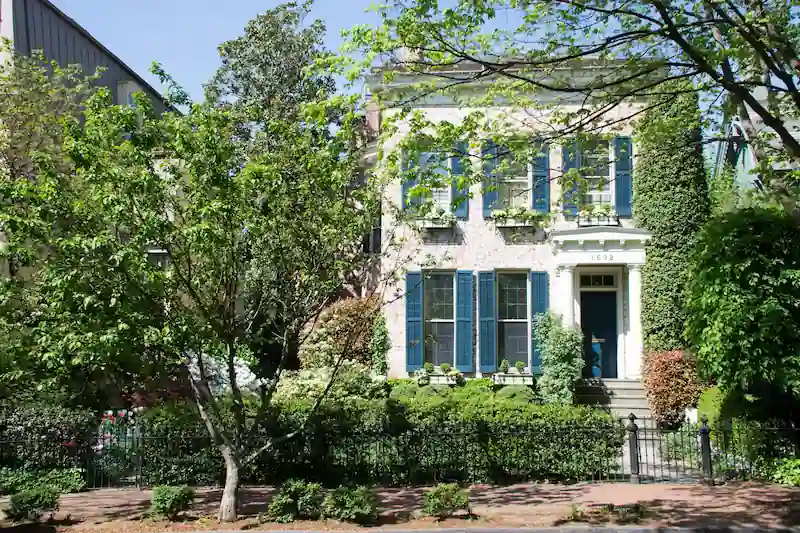
Find the best areas to stay in Boston based on your travel style, trip length, budget, and how you want the city to feel day by day. Boston looks compact, but hotel location still matters: the right base makes the historic core, Back Bay, museums, waterfront, Fenway and dining districts feel connected; the wrong base adds small transfers, awkward evening returns, and avoidable walking friction to almost every day.
Best areas
Back Bay is the best all-round area to stay in Boston for first-time visitors, Beacon Hill is best for historic atmosphere, Seaport is best for newer hotels and easier family logistics, North End is best for food-led historic evenings, South End is best for restaurants and local rhythm, and Fenway-Kenmore is best for ballpark, museum, university and value-led stays.
Booking timing
Book Boston hotels early if exact area matters, especially for May–June, September–October, college graduations, move-in weekends, Red Sox dates, conventions, fall foliage weekends, and family school-break periods.
Best areas to stay in Boston at a glance
Back Bay – Best for: first-time visitors, short stays, museums and walkability · Vibe: classic, polished, central, hotel-rich and highly walkable · Stay here if: you want the easiest Boston base for a first trip, with Copley, Newbury Street, the Public Garden and Fenway all workable · Avoid if: you want the cheapest stay or the strongest local edge
Beacon Hill – Best for: historic atmosphere, couples and refined first trips · Vibe: quiet, brick-lined, intimate and old-Boston · Stay here if: you want charm, Boston Common access and a more residential historic setting · Avoid if: you need broad hotel choice, large rooms or the most convenient family logistics
North End – Best for: historic sightseeing plus food-first evenings · Vibe: dense, lively, old, walkable and restaurant-heavy · Stay here if: you want Freedom Trail access, harbor proximity and dinner streets outside the door · Avoid if: you are sensitive to noise or prefer large modern hotel infrastructure
Seaport – Best for: families, business trips, convention stays and modern hotels · Vibe: newer, waterfront, broad, cleaner-lined and less historic · Stay here if: you want room comfort, easy hotel logistics, harbor walks and a contemporary stay · Avoid if: you want classic Boston character immediately outside the hotel
South End – Best for: restaurant-focused stays, couples and repeat visitors · Vibe: brownstones, dining depth, local rhythm and quieter style · Stay here if: you want a more lived-in base with strong evenings and Back Bay still nearby · Avoid if: you want the most obvious sightseeing geography for a first weekend
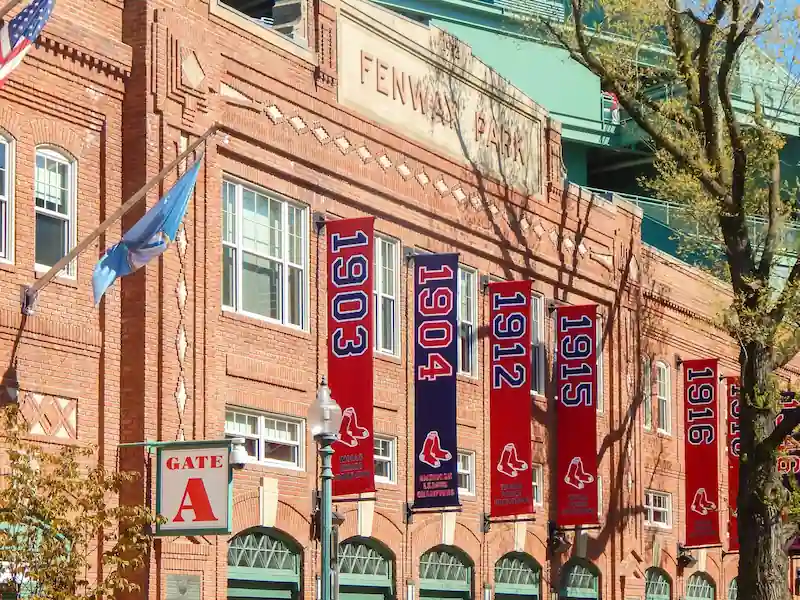
Fenway-Kenmore – Best for: Fenway Park, museums, universities and upper-mid value · Vibe: younger, event-led, practical and less postcard-perfect · Stay here if: you want ballpark access, MFA/Gardner convenience, university visits or better room value · Avoid if: you want old-Boston atmosphere or the simplest landmark-first base
How to choose the right area in Boston
Choosing where to stay in Boston is mostly about reducing friction. The city is compact enough to feel walkable, but its old street pattern, waterfront edges, museum geography, university calendar and expensive hotel market make micro-location unusually important. A good base should match how your days begin, where your evenings end, and whether your trip is historic, museum-led, family-led, food-led, or simply a short first visit.
Back Bay is the safest default for most first-time visitors because it solves the most problems at once: walking, hotels, dining, transit and access.
Beacon Hill is more atmospheric than Back Bay, but less forgiving on hotel choice, room size, luggage logistics and family practicality.
North End is excellent for food-led historic stays, but it is denser, noisier and less hotel-rich than the larger central districts.
Seaport is not the most classic Boston base, but it can be the smoothest answer for newer hotels, family room layouts, conventions and waterfront ease.
South End is best when restaurants, brownstones, cafés and local rhythm matter more than sleeping beside the most obvious landmarks.
Fenway-Kenmore should be chosen for a reason: Red Sox games, MFA/Gardner access, university visits, events or stronger value—not as an automatic first-trip base.
Do not treat Cambridge, Downtown, Waterfront or Charlestown as missing stay cards by default; for most visitors they work better as day-planning layers than primary hotel areas.
For short stays, spend more on the right area before upgrading the room; for longer stays, room size, quiet and neighborhood comfort become more important.
Boston geography for choosing where to stay
Boston looks compact on the map, and in many ways it is, but the city still divides into clear stay geographies. The difference is rarely a huge distance; it is whether your base lets the trip unfold smoothly between old core, Back Bay, museums, waterfront, Fenway, Cambridge and restaurants, or forces repeated small transitions. That is why area choice matters so much here.
Back Bay and Beacon Hill sit in the most natural first-trip orbit, but Back Bay is usually more practical and Beacon Hill more atmospheric.
North End links well with downtown historic Boston, the harbor and food-led evenings, but less naturally with South End or Fenway on foot.
Seaport is close enough to feel central in theory, yet it behaves as its own modern waterfront hotel district.
South End works best when you are happy to live slightly outside the most obvious sightseeing spine in exchange for dining and local rhythm.
Fenway-Kenmore connects well to specific priorities—Fenway Park, MFA, Gardner, universities and events—but is less intuitive as a default sightseeing base.
Cambridge, Charlestown and Jamaica Plain matter for trip planning, but most visitors should treat them as activity layers rather than primary hotel bases.
In Boston, saving 15 minutes each way can make a short trip feel materially smoother, especially in cold, rain or with children.
Historic central core – Beacon Hill and the North End sit closest to the Boston many first-time visitors imagine: older streets, major historic sights, and a stronger sense of place.
Polished all-round central belt – Back Bay works as the city’s most balanced hotel geography, linking sightseeing, shopping, dining, culture, and transit with the least friction.
Modern waterfront cluster – Seaport gives you newer hotels, broader streets, and cleaner logistics, but with a more contemporary feel than traditional Boston.
Residential dining-led cluster – South End is calmer, more local, and stronger for travelers who want neighborhood life and restaurant depth rather than pure tourist efficiency.
Event and access cluster – Fenway-Kenmore works best when Fenway Park, museums, universities, or value-driven hotel choices shape the trip.
Best areas to stay in Boston
These are the Boston neighborhoods that make the most sense for travelers deciding where to base themselves. Each one changes the rhythm of the trip: how much you walk, how quickly evenings come together, how much hotel quality you get for the rate, and whether the city feels historic, polished, local, modern, or purely practical.
Back Bay
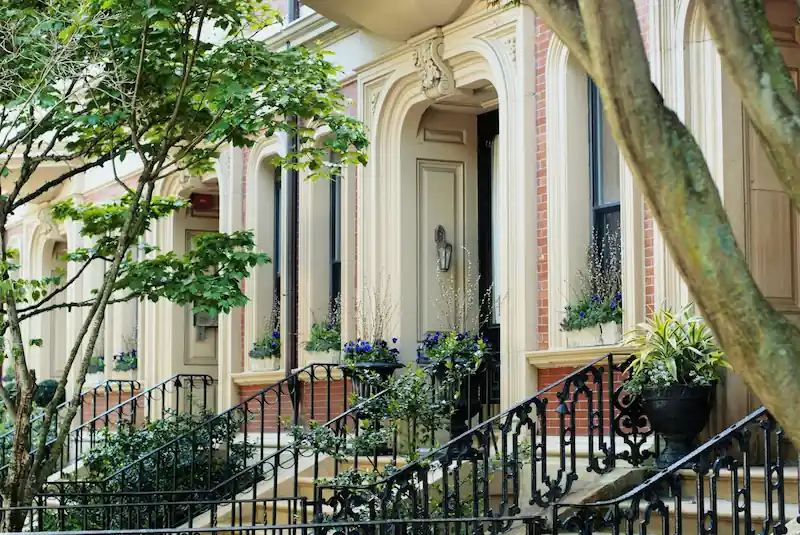
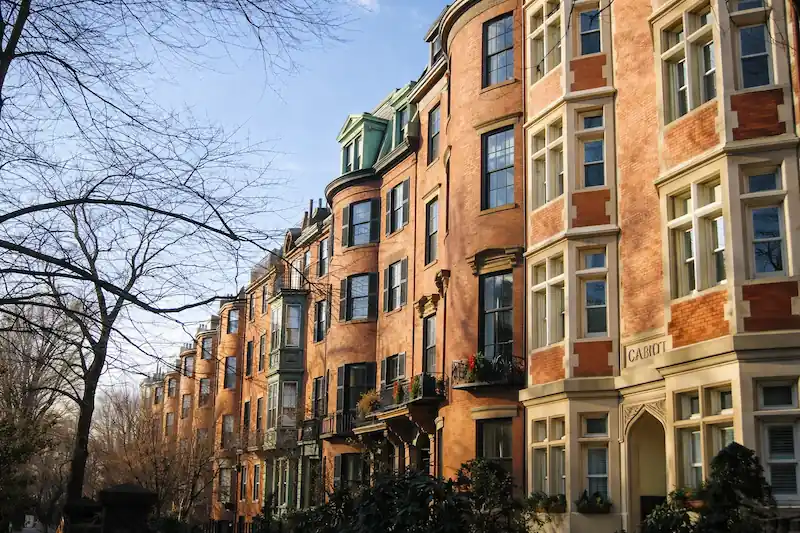
Back Bay is the easiest answer for most Boston visitors because it gives you a polished, central, and highly workable base without forcing the trip into one narrow identity. The streets are broad, the architecture is handsome, hotels are plentiful, and the area holds together well from morning coffee to late dinner. You can move toward Boston Common, the Public Garden, Newbury Street, Copley Square, the Boston Public Library, the Prudential area, South End restaurants, and even Fenway without the city feeling fragmented. For a first-time stay, few parts of Boston reduce friction this consistently.
Why stay here: Stay here if you want Boston to feel simple, elegant, walkable and efficient. It is the strongest all-round base for first-time visitors, 2- to 3-night trips, museum-and-sightseeing stays, and travelers who want fewer location trade-offs.
Best for: first-time visitors, weekend breaks, couples, short museum-and-sightseeing stays, car-free trips, and travelers who want the least complicated Boston base
Pros
Best all-round Boston base for first-time visitors
Excellent walking access to Copley Square, Newbury Street, the Public Garden and central sights
Strong hotel stock across budget, mid-range and upscale categories
Good evening dining without needing to cross the city
Useful transit connections when you do not want to walk
Works for couples, solo travelers, older kids, museum plans and short business-leisure stays
Cons
Usually one of the pricier areas to book well
Parts near the Prudential corridor feel more commercial than intimate
Less atmospheric than Beacon Hill and less local-feeling than South End
Budget rooms can be compact or apartment-style rather than full-service hotel bargains
Nearby highlights
Walkable access to Newbury Street cafés, shops and people-watching
Easy reach to Boston Public Library and Copley Square without planning around transit
Straightforward evening dining and wine-bar options close to the hotel
Fast connection toward the Public Garden, Boston Common and Beacon Hill
Simple crossover into the South End for stronger restaurant depth
Reasonable walk or short ride to Fenway Park, the MFA and the Gardner Museum
Useful centrality for travelers deciding between history, museums, shopping and food
Budget
Copley House – Apartment-style stay in Back Bay with more space than many classic hotel rooms. Best for travelers who value location and flexibility over full-service polish. Why we recommend: One of the few lower-cost Back Bay options that still keeps you properly in the neighborhood. Check availability
Copley House Extended Stay – Practical extended-stay option for longer city breaks or travelers wanting a kitchenette setup. Better for independence than for a classic hotel feel. Why we recommend: Useful when Back Bay matters more than hotel amenities. Check availability
Newbury Guest House – Historic guesthouse on Newbury Street with a more intimate feel than larger Back Bay hotels. Suits couples and shorter stays particularly well. Why we recommend: You get real Back Bay character instead of a generic budget compromise. Check availability
Mid
Hotel AKA Back Bay – Refined hotel in a strong Back Bay position, good for travelers who want comfort and access without going fully luxury. Works well for city weekends and business-leisure trips. Why we recommend: It lands the neighborhood well without requiring top-end rates. Check availability
The Colonnade Hotel – Reliable upper-mid option by the Prudential area with bigger-hotel convenience and a more modern feel. Better for travelers who prioritize comfort and logistics over boutique mood. Why we recommend: A strong practical choice when you want Back Bay to work smoothly. Check availability
Boston Marriott Copley Place – Large full-service hotel with direct convenience in the heart of Back Bay. Best for travelers who like easy hotel infrastructure and predictable service. Why we recommend: One of the most efficient stays here for a short trip with lots of movement. Check availability
Upscale
The Lenox – Classic Back Bay hotel with a warmer, more personal feel than many larger luxury addresses. Strong for couples and first-time visitors who want both character and location. Why we recommend: It balances polish and personality better than many nearby competitors. Check availability
The Eliot Hotel – Elegant boutique-style luxury stay with a quieter, more intimate tone than bigger Back Bay properties. Particularly good if you want a traditional Boston feel with strong service. Why we recommend: More distinctive and less generic than many luxury hotels in the area. Check availability
The Newbury Boston – High-end stay at the Public Garden edge with a more elevated, special-occasion feel. Best for travelers who want the premium end of central Boston. Why we recommend: It gives you one of the strongest luxury positions in the city. Check availability
Beacon Hill
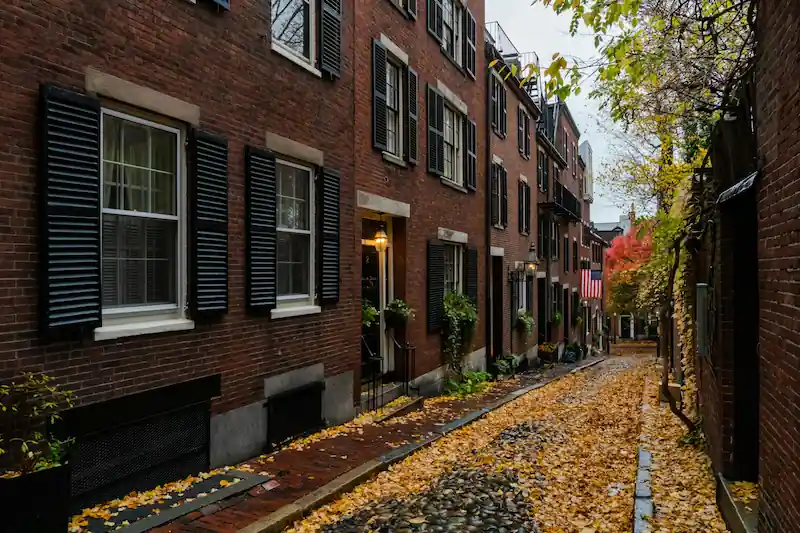
Beacon Hill is where Boston feels most recognizably old, intimate, and residential. Brick sidewalks, narrow lanes, gas-lamp atmosphere, Charles Street, and the Common edge give it a very different mood from the broader avenues of Back Bay. Staying here can make a first trip feel more atmospheric from the moment you step outside, especially early in the morning or after dinner. The trade-off is real: hotel choice is thinner, rooms can be smaller, and the area is less practical for travelers who need easy drop-offs, big-room comfort or broad dining density.
Why stay here: Choose Beacon Hill if you want classic Boston character and a more intimate historic base near the Common. It is best when atmosphere matters as much as pure efficiency.
Best for: historic first trips, couples, refined weekends, slower walkers, and travelers who want old-Boston atmosphere outside the hotel door
Pros
One of Boston’s most distinctive historic settings
Immediate access to Boston Common, the Public Garden, Charles Street and downtown sights
Quieter residential feel than several other central areas
Strong for scenic morning and evening walks
Feels more special than a purely functional hotel district
Good for couples and travelers who want Boston to feel old and close-grained
Cons
Fewer hotel choices than Back Bay, Seaport or downtown edges
Some stays are adjacent rather than deep inside the neighborhood core
Not the strongest area for late-night dining density
Less forgiving for families wanting larger rooms, elevators, parking or simpler hotel infrastructure
Can be expensive relative to room size
Nearby highlights
Easy access to Boston Common and the Public Garden for early or late walks
Quick reach to Charles Street for cafés, shops and lighter neighborhood evenings
Simple walk into downtown historic sites without committing to transit-heavy days
Convenient starting point for Freedom Trail and Black Heritage Trail segments
Faster access to Government Center and downtown than the neighborhood calm suggests
A residential setting that still stays close to the main first-time circuit
Strong emotional payoff for travelers choosing charm over hotel breadth
Budget
Beacon Hill Hotel – Small historic hotel with a true Beacon Hill address and a more intimate feel than larger downtown options. Best for travelers prioritizing setting over hotel scale. Why we recommend: One of the rare stays that puts you properly inside Beacon Hill rather than beside it. Check availability
Wyndham Boston Beacon Hill – Practical hotel on the edge of Beacon Hill and West End, better for location logic than for neighborhood romance. Useful for travelers who want easier pricing in this part of town. Why we recommend: A workable value play when you want Beacon Hill adjacency without boutique pricing. Check availability
Eurostars The Boxer – Compact hotel just beyond the immediate Beacon Hill core, suited to short stays that mix Beacon Hill with North Station and downtown access. More practical than picturesque. Why we recommend: A good compromise when you want this part of the city but not premium Beacon Hill rates. Check availability
Mid
Courtyard Boston Downtown/North Station – Modern hotel with strong transit convenience for stays that want Beacon Hill, North End, and TD Garden access in one radius. Less atmospheric, more efficient. Why we recommend: Useful if you care about this central-west edge location more than boutique charm. Check availability
Boston Omni Parker House Hotel – Historic downtown hotel within easy reach of Beacon Hill and the Common, better for classic-city access than for pure residential quiet. Strong for first-time visitors who want an old-school feel. Why we recommend: It gives you heritage character with a more practical downtown position. Check availability
Canopy By Hilton Boston Downtown – Design-forward central hotel near the Blackstone and downtown edge, good for travelers who want easier access to both Beacon Hill and North End. Better for movement than for postcard quiet. Why we recommend: A sharper modern option when you want this whole central cluster to stay flexible. Check availability
Upscale
The Whitney Hotel Boston – The most natural upscale choice for a Beacon Hill stay, with a polished but not stiff tone and a genuinely strong neighborhood address. It suits travelers who want charm without sacrificing comfort. Why we recommend: It is the clearest luxury expression of Beacon Hill itself. Check availability
The Liberty, a Luxury Collection Hotel, Boston – Large upscale hotel near the Charles River and the Beacon Hill edge, with more drama and infrastructure than boutique alternatives. Good for travelers who want a fuller luxury-hotel setup. Why we recommend: A stronger fit than smaller historic stays if hotel experience matters as much as neighborhood atmosphere. Check availability
XV Beacon – A classic luxury townhouse-style stay close to Beacon Hill and the Common, best for travelers who want old-school Boston polish rather than a large hotel feel. Why we recommend: It completes the Beacon Hill luxury set with a more intimate and heritage-led option. Check availability
North End
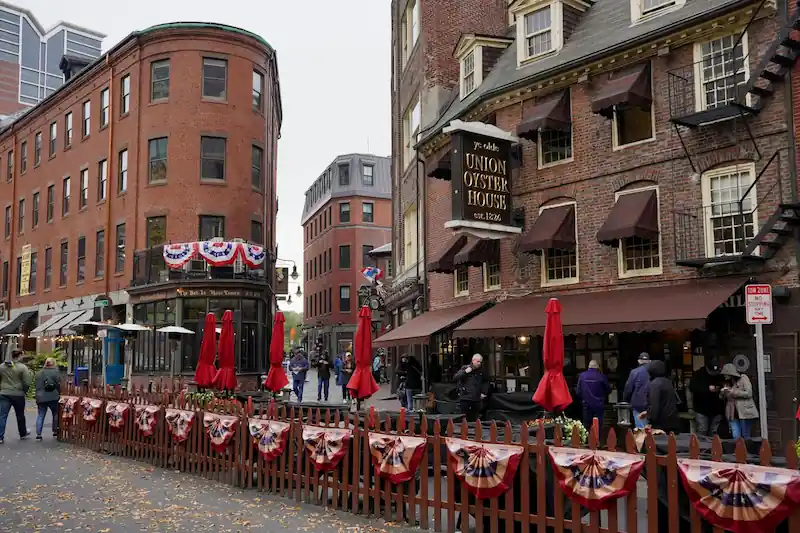
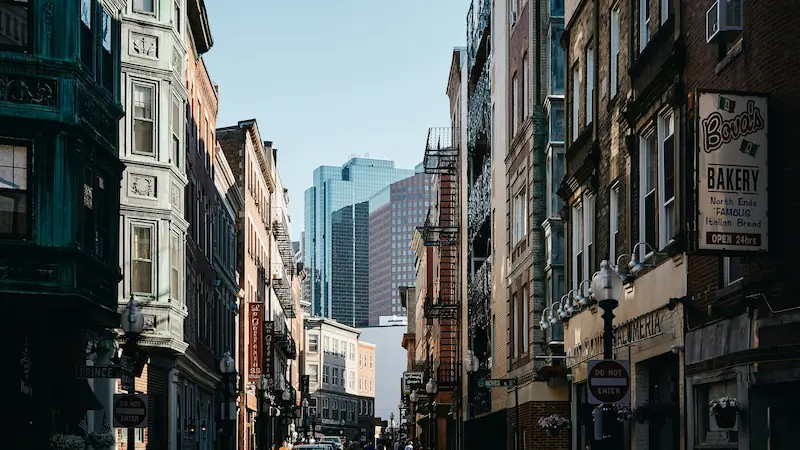
North End works best for travelers who want Boston to feel dense, historic, walkable, and food-led. This is one of the easiest neighborhoods for stitching sightseeing and evening dining together without planning too much in advance. You are close to the harbor, key Freedom Trail sights, downtown, the aquarium side of the waterfront, and some of the city’s most atmospheric streets. The trade-off is a busier, tighter-grained environment with less conventional hotel stock. Staying here feels immediate and characterful, but not spacious or frictionless.
Why stay here: Stay in North End if you want old Boston, strong walkability, food-first evenings and harbor proximity. It is one of the most satisfying bases for travelers who prefer urban density and atmosphere over hotel smoothness.
Best for: food-first stays, Freedom Trail trips, short historic breaks, couples who like urban density, and travelers who want evening life on foot
Pros
Excellent for Freedom Trail-style first-time sightseeing
Very strong restaurant, pastry, café and evening dining density
Easy access to waterfront walks, the Aquarium area and harbor views
Character-rich streets with real historic texture
Works especially well if you want to do a lot on foot
Good base for combining sightseeing with a North End dinner without a late return journey
Cons
Fewer large modern hotels inside the core
Noise and restaurant traffic can be part of the stay
Room sizes and property types vary more than in hotel-heavy districts
Less forgiving if you want the calmest family routine or easiest luggage logistics
Can feel tight on busy weekends and peak dining hours
Nearby highlights
Walkable access to Old North Church and Paul Revere-era landmarks
Easy evening dinners without needing a taxi back
Quick harbor-edge walks that add atmosphere to early or late hours
Short reach to Faneuil Hall, Quincy Market and downtown historic sites
Useful connection toward the aquarium, ferries and waterfront routes
Good base for spontaneous café, pastry and seafood stops
Strong bridge between old Boston and the harbor
Budget
Bricco Suites – Apartment-style stay above one of the neighborhood’s busiest restaurant streets. Best for travelers who want to feel immersed in North End life rather than buffered from it. Why we recommend: It gives you a more local-feeling North End stay than most conventional hotel options. Check availability
Harborside Inn – Simple, reliable base on the edge of the waterfront and downtown, close enough to support a North End-heavy trip. Better for practicality than for neighborhood romance. Why we recommend: A strong lower-cost option when exact North End inventory is limited. Check availability
Courtyard Boston Downtown/North Station – Modern, efficient choice near North Station that keeps North End and TD Garden within easy reach. Useful if you want a cleaner hotel setup than smaller historic properties. Why we recommend: It widens your hotel options without losing the area logic. Check availability
Mid
Boston Yacht Haven – Small waterfront inn with a more distinctive harbor-facing feel than most central Boston stays. Good for couples and travelers who value setting over chain-hotel consistency. Why we recommend: A more memorable waterfront stay than many similarly placed alternatives. Check availability
Battery Wharf Hotel, Boston Waterfront – Waterfront hotel at the North End edge with more room to breathe than inside the tight restaurant core. It balances harbor calm with strong access to the neighborhood. Why we recommend: It gives you North End access without forcing you into its busiest streets overnight. Check availability
Canopy By Hilton Boston Downtown – Modern downtown option near the market and waterfront edge, practical for travelers splitting time between North End, downtown, and the harbor. Less local in feel, more flexible in use. Why we recommend: A smart fit when you want this whole central core within easy walking reach. Check availability
Upscale
Battery Wharf Hotel, Boston Waterfront – The most obviously upscale stay tied to the North End and harbor edge, with a calmer profile than many central Boston hotels. Good for travelers who want more comfort without losing area character. Why we recommend: It is one of the few luxury-leaning addresses that still feels attached to this part of Boston. Check availability
Boston Yacht Haven – A more intimate upscale-style stay where the waterfront setting does much of the work. It suits travelers looking for a quieter, more atmospheric alternative to larger hotels. Why we recommend: More distinctive than a standard downtown luxury hotel. Check availability
The Dagny Boston – Elegant downtown hotel within practical reach of North End, Faneuil Hall, and the waterfront. Strong if you want a polished hotel while keeping this area easy to access. Why we recommend: A better choice than many core-North-End properties if hotel quality comes first. Check availability
Seaport
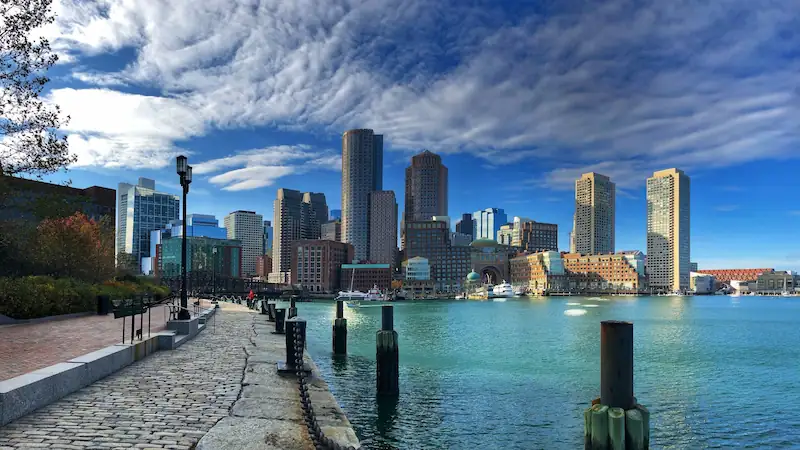
Seaport feels like a different version of Boston: newer, broader, more polished in a contemporary way, and easier from a hotel-product perspective. Streets are wider, room stock is newer, and the area often works well for travelers who want a smoother stay experience rather than the strongest historic atmosphere. It can feel slightly detached from old Boston, but that same distance is what makes it calmer, more organized, and often easier for families, business travelers, convention visitors and late arrivals. If your trip mixes comfort with movement, Seaport is very effective.
Why stay here: Stay in Seaport if you want newer hotels, larger-room odds, cleaner logistics, convention convenience and a modern waterfront base. It is one of Boston’s easiest areas when hotel quality matters more than historic atmosphere.
Best for: modern stays, families, conventions, business-leisure trips, waterfront comfort, and travelers who want better hotel infrastructure
Pros
Newer hotels with stronger room stock and facilities
Good for families, business trips, conventions and travelers wanting easier hotel logistics
Waterfront setting with cleaner, broader urban layout
Strong access to modern restaurants, the convention center and harbor walks
Feels calmer and less cramped than older central districts
Works well when room comfort, elevators, parking or hotel amenities matter
Cons
Weaker historic Boston atmosphere outside the door
Some classic sightseeing still involves more walking, transit or rides than expected
Parts of the area can feel newer and less textured at night
Can be expensive when conventions or waterfront demand are high
Nearby highlights
Direct access to the waterfront and Harborwalk routes
Easy reach to the convention center and modern dining clusters
Better odds of getting larger, newer rooms than in older central districts
Smooth access to Boston Tea Party Ships, Fort Point and downtown by foot or short ride
Convenient for late-arrival or work-heavy trips where hotel comfort matters
Useful if you want Boston with less street-level friction and less density
Good base for travelers who prefer a contemporary stay over historic immersion
Budget
Hampton Inn Boston Seaport District – Straightforward, dependable stay with modern rooms and a practical Seaport location. Best for travelers who want this area without paying for a full upscale address. Why we recommend: One of the most useful value options in a neighborhood that can price high quickly. Check availability
Homewood Suites by Hilton Boston Seaport District – Suite-style hotel with more flexibility for longer stays or travelers who want extra space. Especially useful for families or mixed work-leisure trips. Why we recommend: Better room functionality than many similarly priced Seaport alternatives. Check availability
Element Boston Seaport District – Modern extended-stay style property with a cleaner, more practical setup than older city hotels. Good for travelers who care about room usability and length-of-stay comfort. Why we recommend: A smart choice when you want Seaport convenience without paying for full luxury branding. Check availability
Mid
Aloft Boston Seaport District – Contemporary lifestyle hotel with a more casual tone than the bigger Seaport names. Works well for shorter trips that want style and convenience without heavy luxury pricing. Why we recommend: A good middle ground between practicality and a more modern hotel feel. Check availability
YOTEL Boston – Compact modern hotel with strong Seaport positioning and a more urban, tech-forward style. Best for travelers who prioritize location and a fresh setup over room size. Why we recommend: Its location works particularly well for short city stays in this district. Check availability
Seaport Hotel Boston – Well-located waterfront hotel with broad appeal and a more classic full-service feel than some newer competitors. Strong for both leisure and work-heavy itineraries. Why we recommend: One of the safest all-round Seaport choices if you want the area to simply work. Check availability
Upscale
Omni Boston Hotel at the Seaport – Large upscale hotel with strong facilities, polished public spaces, and one of the easiest luxury-style setups in the district. Best for travelers who want the hotel itself to carry part of the stay. Why we recommend: It gives you Seaport at its most complete and comfortable. Check availability
The Envoy Hotel, Autograph Collection – More design-led and more city-facing than some of Seaport’s larger hotels, with a stronger lifestyle angle. Good for couples or shorter stays wanting a sharper identity. Why we recommend: It has more personality than many hotels in this area. Check availability
Seaport Hotel Boston – Upscale without being showy, with one of the district’s most dependable waterfront positions. It suits travelers who want comfort, service, and location without overcomplication. Why we recommend: A steadier, more broadly useful choice than trendier alternatives. Check availability
South End
South End is one of Boston’s most satisfying bases for travelers who care about how the city feels after the landmarks are done. The neighborhood has a stronger local rhythm, deeper restaurant depth, design-conscious streets, cafés, galleries, and a more residential confidence than the most obvious first-time visitor zones. Brownstones and tree cover soften the pace, but you still stay close to Back Bay and central Boston. It is not the easiest choice for everyone, but it is often one of the best once you know that food, evenings and neighborhood texture matter.
Why stay here: Choose South End if you want a more lived-in Boston with strong dining, brownstone streets and a stylish neighborhood feel. It is especially good for return trips, couples and restaurant-led stays.
Best for: return trips, couples, food-led stays, boutique-hotel travelers, longer stays, and travelers who want a stronger neighborhood feel
Pros
One of Boston’s strongest restaurant neighborhoods
More local, residential and design-conscious atmosphere
Good crossover access to Back Bay and central Boston
Appealing brownstone streets and calmer evenings
Often more interesting for repeat visitors than obvious tourist zones
Good fit for travelers who want Boston to feel lived-in rather than purely visited
Cons
Less instantly practical for classic first-time sightseeing
Hotel inventory is thinner and more uneven than in Back Bay or Seaport
Street-by-street positioning matters a lot here
Some stays are better described as South End-adjacent than deep neighborhood stays
Nearby highlights
Excellent evening dining without needing to plan around tourist zones
Easy crossover into Back Bay for shopping, transit and Copley Square
A more residential pace that makes mornings and late returns feel calmer
Good access to cafés, brunch spots and lower-key neighborhood blocks
Useful if you want Boston Common and central areas nearby but not outside the door
More satisfying for travelers who like choosing a base with character rather than pure convenience
Strong option when the trip is about food, design and brownstone streets
Budget
The Revolution Hotel – Design-conscious hotel with compact rooms and a strong South End location. Best for travelers willing to trade room size for neighborhood quality. Why we recommend: A rare lower-cost stay that still puts you in one of Boston’s most rewarding neighborhoods. Check availability
Hampton Inn & Suites Boston Crosstown Center – Practical hotel deeper in the South End with larger-hotel reliability and easier pricing than the neighborhood’s more stylish addresses. Better for value than for atmosphere. Why we recommend: A useful fallback when you want South End logic with fewer surprises. Check availability
Courtyard by Marriott Boston Downtown – Historic hotel just outside the South End core, workable for travelers splitting time between South End, Theatre District, and Back Bay. More convenient than character-rich. Why we recommend: It broadens the area’s hotel options without losing access to the neighborhood. Check availability
Mid
AC Hotel by Marriott Boston Downtown – Modern hotel with a cleaner, more functional feel than many older Boston properties. Good for travelers who want South End adjacency with newer hotel standards. Why we recommend: A smarter practical choice than many style-led hotels nearby. Check availability
Moxy Boston Downtown – Lively, younger-feeling hotel near the Theatre District edge, workable for travelers who want South End evenings and a central base. Better for energy than for quiet. Why we recommend: A strong fit for shorter stays that lean social and central. Check availability
Hilton Boston Park Plaza – Large, established hotel on the edge of the Common and Back Bay/South End orbit, useful for travelers who want maximum flexibility. More classic full-service than neighborhood-specific. Why we recommend: It is a practical bridge between South End dining and central sightseeing. Check availability
Upscale
Staypineapple, A Delightful Hotel, South End – Boutique hotel with a more intimate South End fit than most larger nearby options. Strong for couples and travelers who want the neighborhood itself to shape the stay. Why we recommend: It feels more rooted in the South End than generic downtown alternatives. Check availability
Hotel AKA Back Bay – Not deep in the South End itself, but well placed for travelers who want South End access while keeping Back Bay convenience. Best for balancing neighborhood evenings with easier logistics. Why we recommend: A more refined compromise than many properties on this edge. Check availability
The Lenox – Classic refined option on the Back Bay side of the South End orbit, best for travelers who want South End access without giving up a more traditional upscale setup. Strong for short, comfortable stays. Why we recommend: It is an easier luxury choice than trying to force a pure South End hotel solution. Check availability
Fenway-Kenmore
Fenway-Kenmore is less about postcard Boston and more about staying where specific parts of the trip get easier. It is the obvious fit for Red Sox games, concerts and ballpark energy, but it also works well for Museum of Fine Arts and Gardner Museum access, university visits, medical-area travel, and travelers who do not need old-Boston charm outside the door every minute. The area feels younger and more event-driven, with a slightly rougher and more practical edge than Back Bay. In return, you often get better value, more flexible room formats, or a hotel style that suits a casual city break.
Why stay here: Stay here if Fenway Park, nearby museums, university visits or upper-mid hotel value are part of the plan. It works best when your stay has a clear reason rather than as a default first-trip base.
Best for: Red Sox trips, museum access, university visits, medical-area travel, event weekends and value-conscious upper-mid stays
Pros
Excellent for Fenway Park and game-day logistics
Good access to MFA, the Gardner Museum and nearby university areas
Often better hotel value than the most obvious central districts
More casual, younger-feeling atmosphere
Works well for event-driven, museum-led or repeat visits
Useful for travelers who want Back Bay nearby without paying pure Back Bay rates
Cons
Less classically Boston in feel than Back Bay, Beacon Hill or North End
Not the strongest all-purpose first-time base
Can feel busier and less polished around event times
Some hotels sit on edges that work better for specific plans than broad sightseeing
Nearby highlights
Walkable access to Fenway Park without relying on late-night transport
Easy reach to the Museum of Fine Arts and Gardner Museum
Useful for travelers mixing Boston with university visits or events
Short crossover to Back Bay for dining, shopping and transit
A more relaxed fit for casual city weekends than Boston’s formal historic core
Often stronger value in room quality than more famous central districts
Good choice when the itinerary already points west of the historic core
Budget
Residence Inn by Marriott Boston Back Bay/Fenway – Suite-style stay that works well for longer weekends, families, or travelers wanting more room near Fenway. More practical than character-led. Why we recommend: It adds space and flexibility in an area where that matters. Check availability
Charlesgate Suites – Smaller all-suite option near Fenway with a more residential-feeling setup than larger chain hotels. Best for travelers who want extra room and less hotel sameness. Why we recommend: A more distinctive stay than standard midscale stock nearby. Check availability
citizenM Boston Back Bay – Compact, design-forward stay at the Back Bay/Fenway edge, ideal for short trips that care more about location and style than room size. Good for solo travelers or couples. Why we recommend: A sharper short-stay choice than many older nearby hotels. Check availability
Mid
The Verb Hotel – Music-led hotel with a more playful identity than most Boston options, directly tied to the Fenway experience. It suits travelers who want the area to feel lively rather than merely convenient. Why we recommend: It is one of the most place-specific stays in the neighborhood. Check availability
Residence Inn by Marriott Boston Back Bay/Fenway – Reliable and functional for travelers prioritizing length of stay, flexibility, or game-day convenience. Best when room practicality matters more than design personality. Why we recommend: A strong all-rounder if you expect to spend real time in the room. Check availability
citizenM Boston Back Bay – Modern and efficient with a strong location for travelers moving between Fenway, Back Bay, and the museum side of town. Better for short urban stays than long hotel-heavy ones. Why we recommend: Its location punches above its room size. Check availability
Upscale
Hotel Commonwealth – The area’s clearest upscale address, with a more polished and substantial feel than the rest of the Fenway hotel stock. Ideal if you want Fenway access without compromising on comfort. Why we recommend: It is the most complete high-end choice in this part of Boston. Check availability
The Verb Hotel – More lifestyle-forward than classic luxury, but strong enough in personality and position to justify choosing it over blander upscale options elsewhere. Best for travelers who want the stay to feel fun and local to the area. Why we recommend: Far more distinctive than many similarly priced city hotels. Check availability
The Eliot Hotel – Elegant Back Bay/Fenway-edge hotel that works well for travelers who want museum access and a more traditional upscale Boston feel than the immediate ballpark district. Why we recommend: A refined fallback when Fenway access matters but you still want classic hotel polish. Check availability
Where to stay in Boston for first-time visitors
For a first Boston trip, the goal is not to find the coolest neighborhood in theory. It is to choose a base that keeps the city legible, walkable and low-friction while still giving you enough atmosphere after dark.
Back Bay is the safest first choice because it balances centrality, hotel range, dining, transit and walkability better than anywhere else.
Beacon Hill is the stronger first-time alternative if historic atmosphere matters more than broad hotel choice or room size.
North End works well for first trips if you want the Freedom Trail, harbor edge and evening dining to shape the stay.
Seaport is a good first-time option only if hotel comfort, newer room stock, conventions or family logistics matter more than traditional city character.
South End is excellent but more specialist: choose it if restaurants and local rhythm are part of the brief.
Fenway-Kenmore is best for first-timers only when Fenway Park, museums, universities or value are specific trip priorities.
On a two- or three-night trip, pay more for better geography before paying more for a better room.
Area
Best for
Trade Off
Back Bay
easiest first trip
less local than South End
Beacon Hill
historic first stay
fewer hotels, less range
North End
walkable food-first first trip
busier, tighter, noisier
Where to stay in Boston with family
Family stays in Boston usually work best when the hotel itself is easy, the room setup is not too tight, and the day does not have to be rebuilt around transit. In practice, that often favors Seaport, selected Back Bay hotels, and suite-style options near Fenway-Kenmore.
Seaport is often the easiest family base because hotels are newer, rooms tend to work better, elevators and drop-offs are simpler, and the district layout feels less cramped.
Back Bay is the best family choice if you want stronger sightseeing convenience without losing too much hotel comfort.
Suite-style or residence-style options matter more in Boston than many families expect, especially for stays longer than two nights.
Fenway-Kenmore can work well for families visiting museums, games or universities, especially when room value and suite formats matter.
North End is enjoyable with older kids who like walking and food, but less forgiving for stroller-heavy or early-night routines.
Beacon Hill is beautiful, but it is not the easiest family hotel market unless atmosphere is the clear priority.
South End can work for families on longer stays if you choose the exact hotel carefully and want quieter evenings.
Area
Works well for
Watch for
Seaport
room comfort and easier logistics
less historic city feel
Back Bay
short family sightseeing trips
higher rates
Fenway-Kenmore
suite-style value and specific plans
weaker classic-Boston atmosphere
Where to stay in Boston for nightlife
Boston nightlife is more neighborhood-specific than all-night-city broad. The best base depends on whether you want restaurant energy, bars you can walk back from, or a more polished evening district.
South End is the strongest choice for restaurant-led evenings and a more adult, stylish night rhythm.
North End works well if your version of nightlife is long dinners, dessert stops, and busy streets rather than club-heavy nights.
Seaport is better for contemporary bars, hotel lounges, and a newer social scene.
Fenway-Kenmore works best around games, concerts, and younger energy rather than refined nights out.
Back Bay is the safest all-round evening base if you want options without committing to one nightlife identity.
If noise bothers you, avoid booking directly over the busiest restaurant strips or event-heavy corners.
Area
Night style
Main caution
South End
restaurants, wine bars, lower-key but strong
less obvious for classic sightseeing
Seaport
modern bars and hotel-led evenings
less textured than older districts
Fenway-Kenmore
game and event energy
can feel noisy and situational
Where to stay in Boston on a budget
Boston is not a city where budget usually means genuinely cheap in the core. The smart move is finding the best location compromise rather than chasing the absolute lowest rate.
Back Bay can still work on a tighter budget if you choose guesthouse or apartment-style options rather than full-service hotels.
Fenway-Kenmore often gives better value in upper-mid and suite-style stays than the more obvious tourist center.
South End has a few workable lower-cost stays, but exact micro-location matters a lot.
North End budget options are limited, so edge locations can be smarter than forcing the core.
Seaport usually is not the cheapest district, but some newer midscale brands can offer stronger value in hotel quality.
For a very short trip, paying slightly more to stay central usually saves enough time and transport friction to be worth it.
Avoid false savings far from the core on a short stay; Boston’s hotel savings can disappear quickly through rides, time loss and evening inconvenience.
Area
Budget angle
Best for
Back Bay
guesthouse and apartment-style value
short trips
South End
practical hotels on the edges
travelers okay with some compromise
Fenway-Kenmore
better-value room stock
event and museum-driven stays
Where to stay in Boston for museums and cultural trips
If museums, civic interiors, and architecture are central to the stay, the best base is the one that makes Back Bay, Fenway, and selected central cultural stops easy to connect without wasting time.
Back Bay is the strongest cultural base overall because it connects easily to Copley, the Boston Public Library, Fenway, and the museum corridor.
Fenway-Kenmore makes sense if the Museum of Fine Arts, the Gardner Museum, or Fenway itself are major anchors.
Beacon Hill works well if your trip leans more historic and civic than museum-heavy.
Seaport only makes sense as a culture base if the ICA and newer waterfront Boston matter to you specifically.
North End is not the strongest museum base, even if it works very well for heritage sightseeing.
On a short cultural trip, do not underestimate the value of sleeping in the smoother Back Bay orbit rather than inside the denser historic core.
If the trip includes both museums and classic sightseeing, Back Bay is usually more balanced than Fenway-Kenmore.
Area
Best for
Main strength
Back Bay
all-round cultural stays
strongest balance of access and hotel choice
Fenway-Kenmore
MFA and Gardner-focused stays
most direct access to the museum corridor
Beacon Hill
historic and civic culture
stronger atmosphere than museum logistics
Where to stay in Boston for couples
Couples usually do best in Boston when the base gives both daytime walkability and a clear evening mood. The answer depends on whether the trip should feel polished, historic, food-led, or contemporary.
Back Bay is the safest couples choice for a refined first trip with easy dining, shopping, the Public Garden and cultural stops nearby.
Beacon Hill is best if charm, quiet streets and old-Boston atmosphere matter more than broad hotel choice.
North End works for couples who want historic density and dinners on foot, but it is less calm.
South End is the strongest choice for restaurant-led couples trips and repeat visits.
Seaport is better for couples who want newer hotels, waterfront views and contemporary bars rather than classic Boston romance.
Fenway-Kenmore suits couples when a game, concert, university visit or museum corridor is part of the trip.
Area
Best for
Trade Off
Back Bay
refined first trip
less intimate than Beacon Hill
Beacon Hill
historic charm
fewer hotels
South End
restaurant-led evenings
less obvious sightseeing base
Where to stay in Boston without a car
Boston is one of the better U.S. cities to visit without a car, but the best no-car base is still the one that keeps your actual itinerary clustered rather than simply close to a station.
Back Bay is the best no-car base for most visitors because walking, transit and dining all remain easy.
Beacon Hill works well without a car if you value old-city walks and do not need large-hotel logistics.
North End is very walkable but tighter for luggage, drop-offs and larger hotel infrastructure.
Seaport works without a car if you are comfortable using short rides or transit for some classic sights.
South End is manageable without a car when the hotel sits on the right edge and your evenings are restaurant-led.
Fenway-Kenmore works without a car for museum, university and ballpark plans, but is less efficient for an all-purpose first trip.
Do not rent a car just for Boston city days; it usually adds parking cost and friction.
Area
No Car strength
Watch for
Back Bay
best all-round walk/transit balance
high hotel rates
North End
dense sightseeing and dining
tight hotel logistics
Seaport
newer hotels and waterfront
less classic walkability
Where to stay in Boston for luxury hotels
Boston luxury works best when the hotel’s style matches the area: classic and polished in Back Bay, intimate and historic around Beacon Hill, waterfront-modern in Seaport, and more lifestyle-led near Fenway or the South End edge.
Back Bay has the strongest luxury hotel logic overall, especially around the Public Garden, Copley and Newbury Street.
Beacon Hill is best for intimate, heritage-led luxury rather than large full-service hotel scale.
Seaport is the strongest choice for newer luxury, facilities, waterfront views and convention-adjacent comfort.
South End luxury is more boutique or edge-based; choose it for restaurants and neighborhood character.
Fenway-Kenmore luxury should be chosen for location purpose, especially Fenway Park, MFA, Gardner or university access.
On special-occasion trips, prioritize exact view, room size and street setting before brand name alone.
Area
Luxury style
Best for
Back Bay
classic central polish
first-time luxury stays
Beacon Hill
historic intimacy
romantic atmosphere
Seaport
modern waterfront comfort
newer hotels and facilities
Where to stay in Boston for longer stays
For four nights or more, Boston hotel choice shifts. Room size, quieter streets, breakfast or kitchenette setups, and sustainable evening rhythm start to matter more than pure landmark proximity.
Back Bay remains the safest longer-stay choice if you want maximum flexibility across the city.
South End becomes more attractive on longer stays because restaurants, cafés and neighborhood rhythm matter more.
Seaport works well for families or business-leisure travelers who want newer rooms and smoother hotel infrastructure.
Fenway-Kenmore can be smart for suite-style stays, university visits, museum-heavy plans or better upper-mid value.
Beacon Hill is beautiful but can feel restrictive if the room is small or the hotel lacks practical amenities.
North End is atmospheric, but longer stays require more tolerance for noise, density and limited hotel formats.
Area
Long Stay advantage
Watch for
Back Bay
flexibility and centrality
price
South End
restaurants and local rhythm
hotel inventory
Seaport
room comfort and logistics
less classic atmosphere
Where to stay in Boston in winter
Winter makes Boston more selective. The best base should reduce exposed walking, keep indoor anchors close, and make evenings easy when daylight is short.
Back Bay is the strongest winter base because it combines hotels, dining, shopping, the library, transit and indoor pauses.
Beacon Hill is atmospheric in winter, but older streets and smaller hotel stock make practical comfort more important.
Seaport works if you want newer hotels and easy indoor comfort, but it can feel windier and less historic.
Fenway-Kenmore works for museum-led winter trips if the MFA, Gardner or university visits are central.
North End is good for dinner-focused winter evenings but less ideal if icy or windy walking bothers you.
South End works for restaurant-led winter trips, especially if you choose a well-positioned hotel near your evening plans.
Area
Winter strength
Watch for
Back Bay
best indoor/outdoor balance
rates around events
Seaport
newer hotels and comfort
wind and less classic atmosphere
Fenway-Kenmore
museum access
less all-purpose first-trip logic
Where to stay in Boston based on trip length
The shorter the trip, the less Boston rewards compromise. Once you have more time, more personality-led neighborhoods start making sense.
Label
Stay
Avoid
Why
1 night
Back Bay or Beacon Hill
testing a specialist area unless the trip has one clear purpose
With one night, the hotel must make the city immediately legible and the evening easy.
2 nights
Back Bay first, Beacon Hill second
staying too far from the central core just for a modest lower rate
On a very short trip, Boston works best when almost everything feels easy from the hotel.
3 days
Back Bay, Beacon Hill, or North End depending on evening style
choosing Seaport unless hotel comfort, family logistics or work are priorities
Three days is enough to appreciate atmosphere, but not enough to waste time on weak geography.
4 to 5 days
South End, Back Bay, or Seaport depending on style
treating first-time convenience as the only criterion
With a little more time, neighborhood quality and room comfort begin to matter more.
1 week
South End, Back Bay, or suite-style stays in Seaport or Fenway-Kenmore
locking yourself into the busiest tourist blocks
Longer stays benefit from a base that feels sustainable, not merely central.
first trip
Back Bay first, Beacon Hill second
making North End or Fenway your default unless you have a clear reason
The best first stay in Boston is the one that makes the city easiest to read.
family trip
Seaport, Back Bay, or suite-style Fenway-Kenmore
choosing the most atmospheric area if the room setup will be stressful
Family comfort often comes from hotel logistics as much as from neighborhood charm.
food-focused trip
South End or North End
sleeping in a purely practical area if evenings are the main event
When dinner shapes the trip, walking back from the right neighborhood changes the whole stay.
museum-focused trip
Back Bay or Fenway-Kenmore
staying in Seaport or North End unless another priority dominates
The MFA, Gardner, Boston Public Library and Back Bay/Fenway orbit reward a west-of-core base.
return trip
South End, North End, Seaport or Fenway-Kenmore
repeating the safest central choice out of habit
Once the main landmarks are less urgent, neighborhood character and hotel fit matter more.
How to choose the right hotel in Boston once you know the area
In Boston, the district gets you only halfway to a good stay. The exact hotel and exact street can still change the trip materially.
Topic
WhatToDo
WhatToAvoid
WhyItMatters
Street-level position
Choose the hotel with the better micro-location, even within the same neighborhood.
Assuming every address inside a famous district works equally well.
A weaker edge-of-neighborhood location can add unnecessary walking and reduce the whole point of the area.
Evening return logic
Ask where you will realistically end most nights, then choose a hotel that makes that return easy.
Choosing a daytime sightseeing base when the trip is actually restaurant- or event-led.
Boston evenings are neighborhood-specific, and a smooth return often matters more than a marginally shorter morning walk.
Quiet versus central
Take a quieter side street if you already remain within easy walking reach of the neighborhood core.
Booking directly on the busiest restaurant strip, event edge or traffic corridor just to feel closer.
Boston neighborhoods are compact enough that a calmer street can improve sleep without costing real convenience.
Room size
Check room format carefully, especially in older central districts and boutique properties.
Assuming a central boutique hotel will feel spacious.
Some of Boston’s best-located hotels trade charm and position for tighter rooms.
Family and suite logistics
Prioritize suite-style, elevator-friendly and newer hotel stock if traveling with children or staying longer.
Choosing the prettiest historic district if the room layout will make the stay harder.
In Boston, family comfort often comes from room usability more than from neighborhood romance.
Transit access
Stay near a useful T line only if it supports your actual itinerary.
Using transit access as a proxy for good location in general.
Boston rewards walking bases more than metro-dependent ones on short trips.
Boutique versus full-service
Choose boutique when neighborhood feel matters, and full-service when reliability, family ease, or easier logistics matter more.
Paying boutique rates if you mainly need room functionality and convenience.
Boston has strong hotels in both styles, but they solve very different stay problems.
Historic hotel appeal
Pick historic addresses for atmosphere when that is part of the trip experience.
Assuming older automatically means better.
Some travelers should buy the character; others will be happier with newer stock.
Event and university calendars
Check graduation, move-in, conventions, Red Sox games and fall weekends before waiting to book.
Assuming Boston hotel prices behave like a normal weekend market.
Rates and availability can tighten quickly even when the city does not look fully booked at first glance.
Short-trip booking logic
For one weekend, spend more on the better location before upgrading room category.
Choosing a nicer room in the wrong area.
The city is small enough that location creates most of the gain on a short stay.
Boston where-to-stay FAQ
These answers cover the practical decisions that most affect where to stay in Boston: first-time convenience, family logistics, budget, museums, nightlife, no-car travel, winter, short stays and neighborhood trade-offs.
What is the best area to stay in Boston for first-time visitors?
Back Bay is usually the best area to stay in Boston for first-time visitors because it combines centrality, hotel choice, walkability, dining, transit and easy access to the Public Garden, Copley Square, Newbury Street, Fenway and central sightseeing. Beacon Hill is the best alternative if historic atmosphere matters more than hotel range.
Where should I stay in Boston for a weekend?
For a weekend, stay in Back Bay if you want the smoothest all-round base, Beacon Hill if you want historic charm, or North End if food and Freedom Trail access are central to the trip. On a short stay, location is usually worth more than a slightly better room farther out.
Is Back Bay the best place to stay in Boston?
For most visitors, yes. Back Bay is not the cheapest or the most local-feeling area, but it is the most balanced. It works for first-time sightseeing, shopping, restaurants, museums, the Public Garden, the Boston Public Library and car-free movement.
Is Beacon Hill a good area to stay in Boston?
Yes, especially for couples and travelers who want old-Boston atmosphere, quiet streets, Boston Common access and a more intimate setting. It is less practical than Back Bay for hotel choice, room size and family logistics.
Is North End a good place to stay in Boston?
North End is a good area to stay if you want historic density, Freedom Trail access, harbor proximity and food-led evenings. It is less ideal if you are sensitive to noise, need large modern hotels, or want the easiest family routine.
Is Seaport a good area to stay in Boston?
Yes, especially for families, business trips, conventions, modern hotels, larger-room odds and waterfront comfort. It is weaker if your priority is classic historic Boston atmosphere outside the hotel door.
Is South End a good area to stay in Boston?
South End is excellent for restaurant-focused stays, couples, repeat visitors and travelers who want a more local-feeling Boston. It is less obvious for a short first trip built around classic sightseeing, but it becomes stronger once evenings and neighborhood texture matter.
Is Fenway-Kenmore a good area to stay in Boston?
Fenway-Kenmore is a good base if Fenway Park, the MFA, the Gardner Museum, universities, events or better upper-mid hotel value are part of the plan. It is not the simplest all-purpose first-time base.
Where should families stay in Boston?
Families usually do best in Seaport, selected Back Bay hotels, or suite-style Fenway-Kenmore properties. Seaport often wins on newer rooms and easier logistics, while Back Bay wins on sightseeing convenience.
Where should couples stay in Boston?
Couples should look first at Back Bay for a polished easy stay, Beacon Hill for historic charm, South End for restaurant-led evenings, North End for dense old-city food energy, and Seaport for modern waterfront comfort.
Where should I stay in Boston without a car?
Back Bay is the strongest no-car base for most visitors because it combines walking, transit and dining well. Beacon Hill and North End are also very walkable, while Seaport and Fenway-Kenmore work best when they match specific trip priorities.
Do I need a car in Boston?
No. For most Boston city stays, a car adds parking cost and friction. Choose a well-located hotel and use walking, the T, taxis or ride-hailing. A car only becomes useful for certain day trips or regional extensions.
Where to stay in Boston on a budget?
Look first at guesthouse, apartment-style or compact options in Back Bay, then selected South End, Fenway-Kenmore or edge-of-core hotels. The best budget strategy in Boston is usually compromising on hotel style, not on location.
Is it worth paying more to stay central in Boston?
Usually yes for trips of one to three nights. Boston is compact, but the right central base saves enough walking, backtracking and evening friction that the extra cost often pays back in time and ease.
What is the safest and most convenient area to stay in Boston?
Back Bay is the most convenient all-round area for most visitors, while Beacon Hill feels particularly residential and comfortable. The smarter question is often exact street and hotel fit rather than broad neighborhood safety alone.
Where should I stay in Boston for nightlife?
South End is strongest for restaurant-led evenings, Seaport for modern bars and hotel lounges, Fenway-Kenmore for games and events, North End for long dinners and dessert stops, and Back Bay for the safest all-round evening base.
Where should I stay in Boston for museums?
Back Bay is the best all-round museum base because it connects well to the Boston Public Library, Copley, Fenway, MFA and Gardner Museum. Fenway-Kenmore is strongest when the MFA, Gardner or university corridor is the main focus.
Where should I stay near Fenway Park?
Stay in Fenway-Kenmore if Fenway Park is central to the trip or you want to avoid late-night transport after a game. Back Bay is the better alternative if you want Fenway access but a more polished and versatile base.
Where should I stay for Harvard or Cambridge visits?
For one Harvard or Cambridge visit, Back Bay usually remains a better Boston base. If the trip is mostly Harvard, MIT or Cambridge-focused, staying in Cambridge can make sense, but it is not necessary for most first-time Boston trips.
Should I stay in Downtown Boston?
Downtown can be practical for historic sights and business needs, but for most leisure travelers Back Bay, Beacon Hill or North End offers a clearer stay identity. Downtown is useful, but not always the most satisfying base.
Should I stay near the Waterfront or Aquarium?
Staying near the Waterfront or Aquarium can work if harbor access, North End, ferries or family attractions are central. For most first-time visitors, North End or Back Bay gives a broader and more balanced base.
Is Seaport too far from Boston attractions?
Seaport is not far, but it behaves like its own district. It is easy for waterfront, conventions, Fort Point and modern dining, but classic Boston sights may require more walking, rides or transit than staying in Back Bay or Beacon Hill.
Where should I stay in Boston in winter?
Back Bay is the best winter base for most travelers because it keeps dining, shopping, transit, hotels and indoor stops close. Seaport works for newer hotel comfort, while Fenway-Kenmore works for museum-led winter trips.
Where should I stay in Boston in summer?
In summer, Back Bay remains the best all-round base, while Seaport becomes more attractive for waterfront air and modern hotel comfort. North End also works well if you want warm-weather evenings and harbor proximity.
Where should I stay in Boston for one night?
For one night, choose Back Bay or Beacon Hill. You need immediate readability, easy dining and simple morning movement. Specialist areas such as South End, Fenway-Kenmore or Seaport make sense only if the trip has a clear purpose.
Where should I stay in Boston for three days?
For three days, Back Bay is the easiest choice, Beacon Hill is best for historic atmosphere, North End works for food and heritage, and Seaport works if family logistics or newer hotels matter. Avoid choosing a specialist area without a reason.
Where should I stay in Boston for a week?
For a week, Back Bay, South End, Seaport or suite-style Fenway-Kenmore stays become strongest. Longer stays benefit from room size, laundry or kitchenette options, quieter streets and a neighborhood rhythm that feels sustainable.
What area should I avoid staying in Boston?
It is less about avoiding whole areas and more about avoiding weak micro-locations. Do not stay far from your actual itinerary just to save a small amount, and be cautious with edge locations that look central on a map but add daily friction.
What is the best luxury area to stay in Boston?
Back Bay is the best luxury area overall, especially around the Public Garden, Copley and Newbury Street. Beacon Hill is better for intimate historic luxury, while Seaport is better for newer waterfront hotels and facilities.
What is the best Boston neighborhood for food-focused travelers?
South End is the best restaurant-led stay area, North End is best for classic Italian-American food and historic evening density, and Seaport is best for newer waterfront dining. Back Bay is the safest all-round choice if food is important but not the whole trip.
In Boston, the best stay is the one that reduces daily friction first, then matches the atmosphere you actually want.
Continue planning your Boston trip
Use the full Boston city guide to understand the city’s district logic, then pair this hotel-area guide with the things-to-do page and itinerary pages so your base, daily clusters and evening plans work together.
Turn the right neighborhood into the right itinerary
Once you know where to stay in Boston, the next step is structuring the rest of your trip around that base. Use the planner to build a route that fits your pace, priorities, and how you actually want your days to unfold.