Find the best areas to stay in New York based on your travel style, how you want to move through the city, and which neighborhoods make the most practical sense for your trip. This guide explains when Midtown is worth it, when downtown works better, when Brooklyn makes sense, and when Lower Manhattan value beats a more famous address. In New York, where you sleep shapes the rhythm of every day more than most first-time visitors expect.
Best areas
Midtown is the most efficient first-trip base, the Upper West Side and Upper East Side are calmer Manhattan choices, SoHo, Greenwich Village and Chelsea work best for stylish or walkable downtown stays, the Lower East Side and Chinatown suit food and nightlife, Williamsburg is best for Brooklyn energy, Brooklyn Heights and DUMBO for scenic decompression, and the Financial District for value and Lower Manhattan logistics.
Booking timing
Book early for spring, fall, Thanksgiving to New Year, major events, fashion weeks, UN General Assembly periods, and any stay where you need a specific neighborhood rather than simply a Manhattan room.
Quick answer: where to stay in New York
Midtown – Best for: first-time efficiency, Broadway, classic landmarks and short stays · Vibe: high-energy, central, relentlessly practical · Stay here if: you want the easiest access to major sights, Broadway, subway lines, Penn Station / Grand Central logic, and classic Manhattan landmarks · Avoid if: you want a quieter, more local version of New York
Upper West Side – Best for: calmer Manhattan stays · Vibe: residential, elegant, easier to decompress in · Stay here if: you want space, a more relaxed pace, and quick access to Central Park and major museums · Avoid if: you want late-night energy or a downtown feel
Upper East Side – Best for: museum-led classic Manhattan · Vibe: polished, composed, quietly affluent · Stay here if: you want Museum Mile, Central Park access, and a refined Manhattan base with calmer evenings · Avoid if: you want nightlife, edge, or a more downtown social rhythm
SoHo – Best for: stylish short stays · Vibe: design-led, walkable, polished downtown · Stay here if: you want shopping, restaurants, and a more curated downtown base with strong city atmosphere · Avoid if: you want lower prices or a calmer evening rhythm
Greenwich Village – Best for: classic low-rise Manhattan · Vibe: leafier, more intimate, more lived-in · Stay here if: you want charm, restaurants, and a base that feels local without being inconvenient · Avoid if: you want the broadest hotel choice or easiest access to every major sight
Chelsea – Best for: modern Manhattan with cultural depth · Vibe: gallery-led, adaptable, quietly design-forward · Stay here if: you want the High Line, Chelsea Market, downtown access, and a less overwhelming base than Midtown · Avoid if: you want old New York charm or the strongest neighborhood intimacy
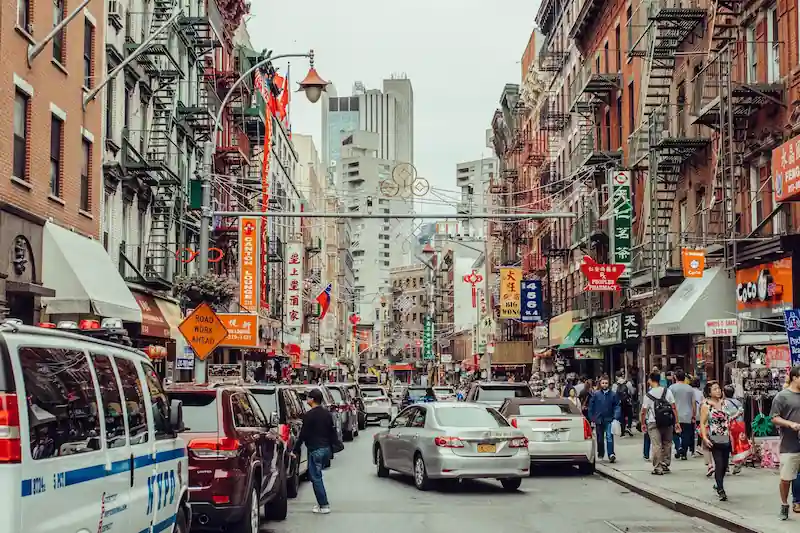
Lower East Side and Chinatown – Best for: food-led downtown stays · Vibe: dense, layered, energetic, historically charged · Stay here if: you want restaurants, nightlife, immigrant-history texture, and real downtown street life · Avoid if: you want quiet nights or a highly polished hotel environment right outside the door
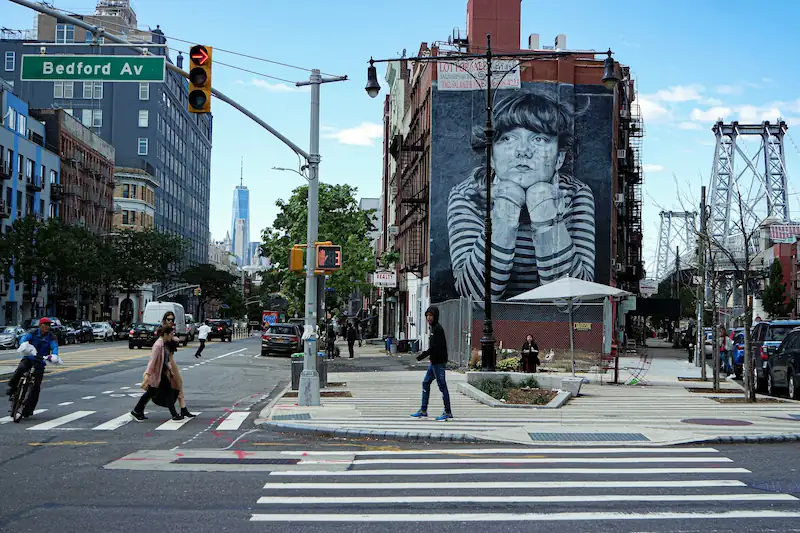
Williamsburg – Best for: return trips and creative energy · Vibe: trend-forward, social, Brooklyn-first · Stay here if: you want restaurants, bars, skyline views, and a less conventional New York base · Avoid if: you want to spend most of your time in central Manhattan
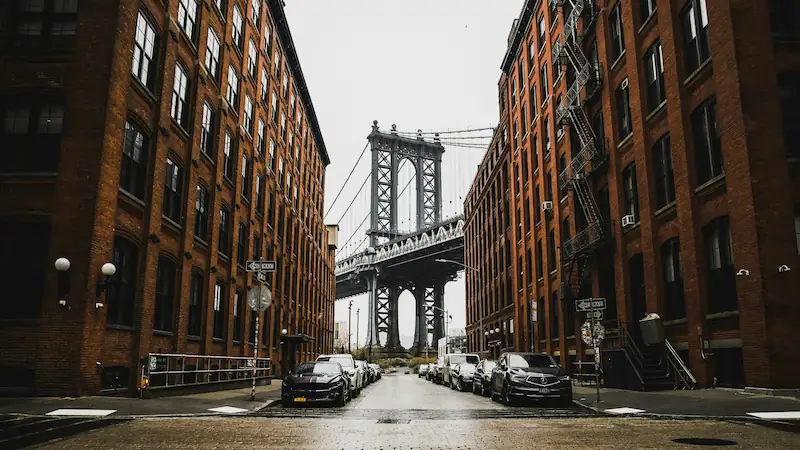
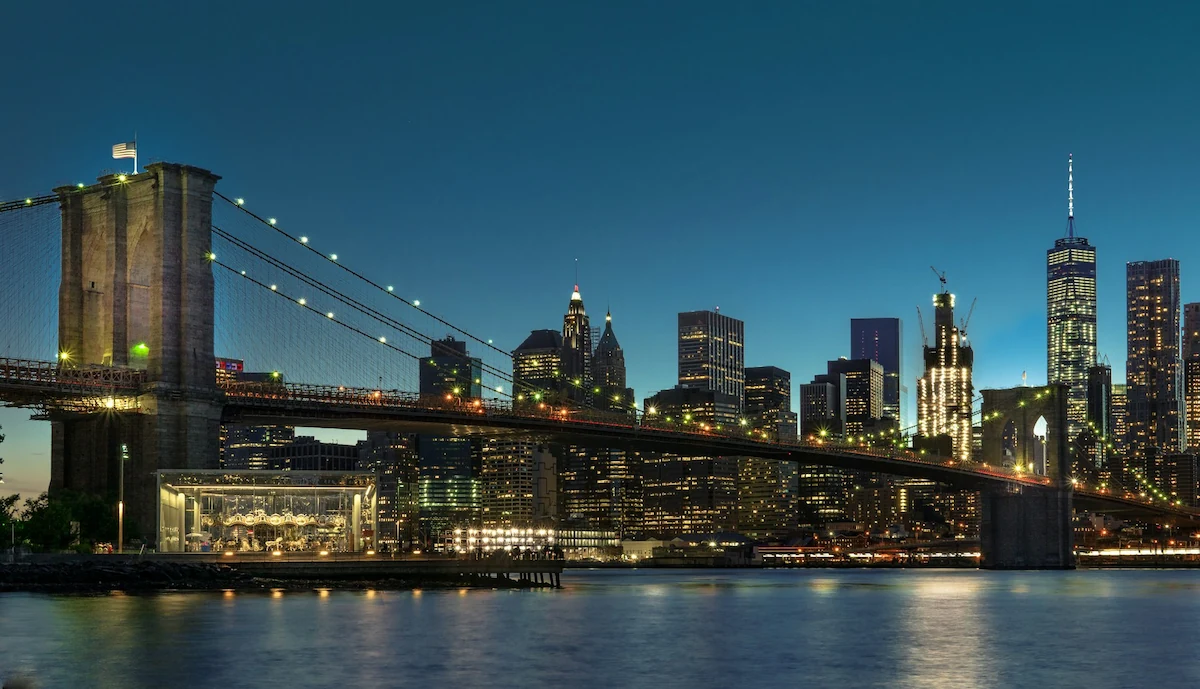
Brooklyn Heights and DUMBO – Best for: scenic Brooklyn with strong skyline payoff · Vibe: composed, visual, calmer than Manhattan · Stay here if: you want skyline views, waterfront walks, and easier decompression after busy city days · Avoid if: you want the broadest nightlife or the fastest Midtown-first movement
Financial District – Best for: value, Lower Manhattan, Brooklyn links and calmer nights · Vibe: orderly, modern, quieter after office hours · Stay here if: you want sharper hotel value, strong subway access, ferry access, and an easier base for Lower Manhattan and Brooklyn Bridge days · Avoid if: you want classic neighborhood life right outside the door late into the evening
How to choose the right area in New York without overpaying for the wrong convenience
Choosing where to stay in New York is less about finding one universally best neighborhood and more about matching the base to the way your days will actually work. Manhattan is not one central zone, Brooklyn is not automatically inconvenient, and a famous district name does not guarantee an easier trip. The strongest New York base is the one that reduces daily friction: fewer transfers, better evenings, easier returns, and less time spent correcting a bad location choice.
Do not treat Manhattan as one uniform central zone: Midtown, uptown, downtown, and Lower Manhattan produce very different trip rhythms.
For a first short stay, pay for logistics before design. Midtown, Chelsea, and well-connected uptown or Lower Manhattan bases often beat cooler but less efficient addresses.
For food, nightlife, and street life, downtown Manhattan and Williamsburg usually feel more rewarding than Midtown after dark.
A hotel two blocks from the right subway line can outperform a trendier address with awkward connections or repeated transfers.
Quiet matters more than many travelers expect in New York; noise fatigue accumulates quickly, especially after long walking days.
Do not choose Brooklyn only because it sounds cheaper. Choose it because you want the Brooklyn rhythm, skyline perspective, or a calmer end to the day.
Use the exact block, not only the neighborhood name: Times Square, SoHo, LES, Williamsburg, and FiDi all have micro-locations that change the experience significantly.
For families, room layout, subway simplicity, and the ability to reset matter more than having the trendiest address.
How New York works geographically from a stay perspective
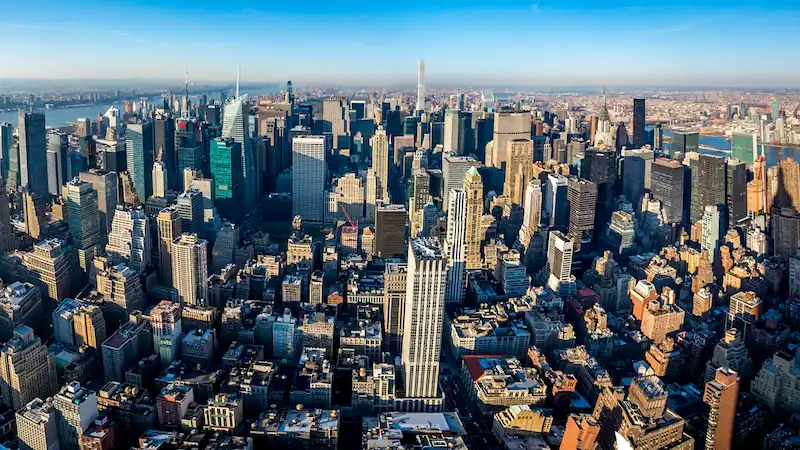
New York feels simple on a map until daily movement starts to accumulate. The real question is not whether a neighborhood is central in theory, but whether it reduces the number of tiring jumps in practice. Manhattan north-south movement can be manageable, but repeated shifts between Uptown, Midtown, downtown, Lower Manhattan and Brooklyn can quietly eat into the trip.
Midtown is the easiest all-round connector because it sits close to major transport overlaps, classic landmarks, Broadway, and several first-trip sights.
Downtown neighborhoods such as SoHo, Greenwich Village, Chelsea, and the Lower East Side are more rewarding on foot, but less efficient for museum-heavy Uptown days.
The Upper West Side and Upper East Side work best when part of your trip already leans toward Central Park, museums, calmer evenings, and more residential Manhattan.
Williamsburg is close enough to Manhattan to be appealing, but still changes the trip’s default rhythm; it is strongest when Brooklyn energy is part of the point.
Brooklyn Heights and DUMBO give you a scenic Brooklyn base with lower movement stress than many travelers expect, especially for Lower Manhattan and bridge-focused days.
The Financial District is better connected than many travelers assume, especially for Lower Manhattan, ferries, Brooklyn crossings, and value-oriented Manhattan stays.
NoMad, Flatiron, East Village, TriBeCa, Long Island City, Harlem, Downtown Brooklyn, and Park Slope can all work for specific trips, but they are better treated as contextual alternatives rather than core stay areas on this page.
Street-level micro-location matters: a well-placed hotel by the right subway line can outperform a better-known neighborhood name.
Classic central Manhattan core – Midtown is the easiest cluster for first trips, Broadway, Fifth Avenue, observation decks, stations, and short stays that need flexible transport.
Uptown cultural and residential core – The Upper West Side and Upper East Side work best for museum-led, calmer Manhattan stays with stronger Central Park access.
Downtown walkable core – SoHo, Greenwich Village, Chelsea, and the Lower East Side work best for restaurant-led, walkable stays where atmosphere matters as much as logistics.
Brooklyn social core – Williamsburg is for travelers who want skyline views, nightlife, restaurants, rooftops, and a less conventional New York base.
Brooklyn scenic core – Brooklyn Heights and DUMBO suit travelers who want skyline payoff, waterfront walks, bridge access, and calmer evenings.
Lower Manhattan value and logistics core – The Financial District is a smart base for travelers who want better hotel value, quieter nights, and strong subway or ferry links.
Contextual alternatives – NoMad, Flatiron, TriBeCa, East Village, Long Island City, Harlem, Park Slope, and Downtown Brooklyn can be useful in specific searches, but they should be compared carefully against the 10 core areas above.
Best areas to stay in New York in depth
These are the New York neighborhoods that work best as real bases, not just famous names on a map. The list is intentionally focused: instead of adding every possible hotel zone, it explains the core stay areas travelers actually compare most often, then handles nearby alternatives such as NoMad, Flatiron, Tribeca, East Village, Long Island City, Harlem, and Downtown Brooklyn in the strategy, intent, and FAQ sections.
Midtown
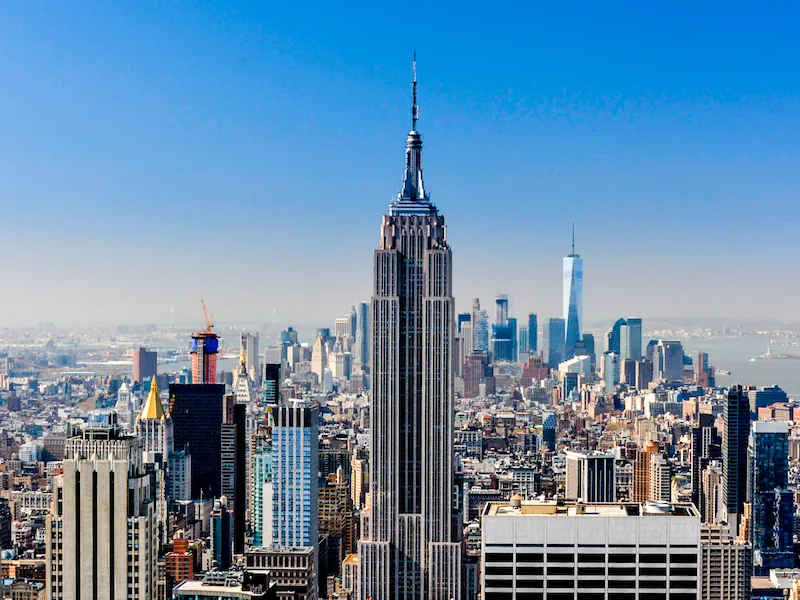
Midtown is the most efficient place to stay in New York if your goal is to see a lot, move easily, and waste as little time as possible. It is not the city at its most charming, but it is often the city at its most useful. Subway connections are broad, landmark density is high, and even tired evenings remain manageable because so much stays within reach. For a first trip, that practicality is often worth more than neighborhood romance.
Why stay here: Stay here if you want the least complicated version of New York logistics. Midtown gives you the strongest all-round access to classic sights, stations, and cross-city movement, especially on shorter trips.
Best for: first trips, short stays, Broadway breaks, landmark-heavy itineraries, train-based arrivals
Pros
Best all-purpose base for first-time visitors
Excellent transport coverage across multiple subway lines
Strong access to Times Square, Bryant Park, Broadway, Fifth Avenue, and major office districts
Huge hotel selection across price bands
Easy to return to the hotel mid-day if needed
Cons
Can feel generic or overly commercial
Street atmosphere is less distinctive than downtown neighborhoods
Noise and crowd density can wear on you quickly
Some central hotels charge heavily for location rather than charm
Nearby highlights
Fast access to classic landmarks without elaborate planning
Very easy Broadway and evening-show logistics
Strong positioning for Bryant Park, Fifth Avenue, Rockefeller Center, and major retail corridors
Convenient for Penn Station and many business itineraries
Good choice when you need to keep cross-city travel simple
Broad hotel inventory makes last-minute problem-solving easier than in smaller districts
Budget
Pod Times Square – Compact but efficient stay that works when location matters more than room size. Why we recommend: It is one of the clearest value options in a very central part of Manhattan. Check availability
Hotel Edison Times Square – Classic Times Square-era hotel for travelers prioritizing Broadway and centrality. Why we recommend: The location is the real advantage here if you want to be steps from the theater district. Check availability
citizenM New York Times Square – Compact, tech-forward rooms with a sharper design feel than many similarly sized Midtown stays. Why we recommend: A better pick than many budget-leaning Midtown hotels if you value modern execution. Check availability
Mid
M Social Hotel New York Times Square – Reliable Midtown West option with easy access to theater, subway, and park-side areas. Why we recommend: It balances location and comfort well for travelers who want classic central Manhattan. Check availability
Park Central Hotel New York – Large-scale Midtown hotel near Central Park South that helps with cross-town movement. Why we recommend: It places you between park access and Midtown convenience without requiring downtown pricing. Check availability
Tempo By Hilton New York Times Square – Newer-feeling Times Square stay with sharper finishes than many nearby alternatives. Why we recommend: A strong mid-range option when you want Times Square access without choosing an obviously tired hotel. Check availability
Upscale
LUMA Hotel - Times Square – Polished boutique-style Midtown stay near Bryant Park with stronger room quality than the average Times Square-adjacent pick. Why we recommend: It is unusually refined for such a central theater-district position. Check availability
Bryant Park Hotel – Distinctive luxury-leaning hotel with one of the best park-side Midtown positions. Why we recommend: It gives you Midtown efficiency with far more character than most nearby addresses. Check availability
The Langham, New York, Fifth Avenue – High-end Midtown option with generous rooms and a more composed luxury feel. Why we recommend: One of the best choices when you want top-tier comfort without sacrificing central utility. Check availability
Upper West Side
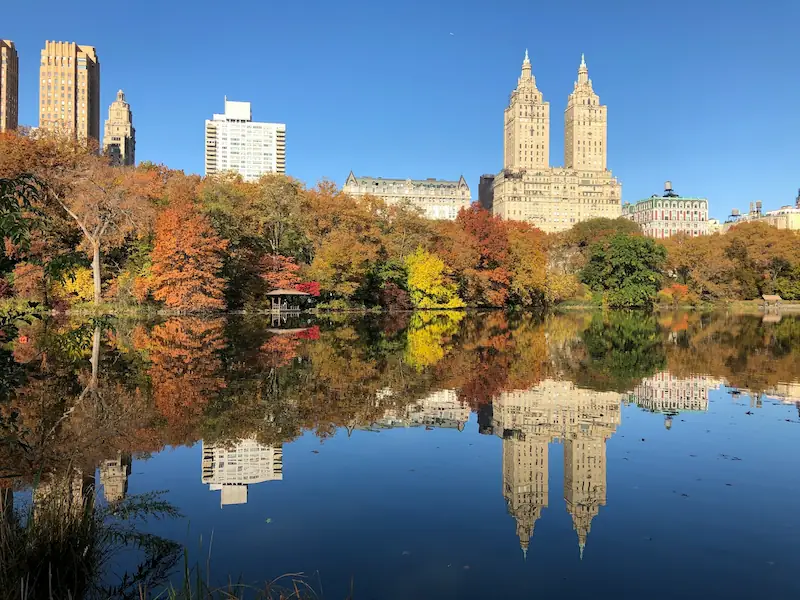
The Upper West Side gives you a calmer, more residential Manhattan without pushing you out of the action. Streets feel broader, the rhythm is steadier, and the blocks near Broadway and Amsterdam Avenue make daily logistics easy without the sensory overload of Midtown. It is one of the few central areas where coming back to the hotel can actually feel restful. This is a strong choice for travelers who want New York to feel livable, not just intense.
Why stay here: Stay here if you want a polished, comfortable Manhattan base with quick access to Central Park, major museums, and dependable subway links. It works especially well when calm evenings matter as much as daytime sightseeing.
Best for: families, museum-focused stays, calmer first trips, longer Manhattan bases
Pros
More relaxed and residential than Midtown
Excellent access to Central Park and Museum Mile via cross-park connections
Good mix of classic hotels, apartment-style stays, and family-friendly options
Easy food and café density without a heavy tourist feel
Generally better for sleep than Times Square-adjacent zones
Cons
Less convenient for downtown-heavy itineraries
Nightlife is quieter and more low-key
Some hotels feel classic rather than contemporary
You may spend more time on the subway if most of your plans are in Lower Manhattan
Nearby highlights
Morning access to Central Park without crossing busy Midtown corridors
Very easy museum days around the American Museum of Natural History and nearby cultural stops
Strong breakfast, grocery, and neighborhood dining options within short walks
Good subway reach south into Midtown and downtown via Broadway lines
A more comfortable base for jet-lagged travelers or multi-day stays
Better odds of getting larger rooms or suite-style layouts than in denser central zones
Budget
West Side YMCA – Basic, no-frills rooms directly by Central Park for travelers who care most about location. Why we recommend: One of the rare genuinely budget-conscious addresses in a prime Upper West Side position. Check availability
Riverside Tower Hotel – Simple rooms near Riverside Park with a quieter residential feel than central Manhattan. Why we recommend: A practical choice when you want Upper West Side access without paying boutique-hotel rates. Check availability
Night Hotel Broadway – Older-style Upper West Side hotel that works best for value-focused city sleepers. Why we recommend: It keeps you in the right neighborhood at a lower entry point than many nearby options. Check availability
Mid
Hotel Belleclaire Central Park – Well-placed hotel on Broadway with easy subway access and good day-to-day convenience. Why we recommend: It balances location, comfort, and neighborhood feel better than many similarly priced Manhattan hotels. Check availability
Hotel Lucerne – Classic Upper West Side stay with a more traditional style and a notably comfortable location. Why we recommend: A dependable mid-range pick if you want the area’s residential character without sacrificing access. Check availability
Hotel Beacon – Suite-friendly hotel with kitchenettes that suits longer stays and families particularly well. Why we recommend: The room layouts are materially more useful than standard Manhattan hotel stock. Check availability
Upscale
Arthouse Hotel – Characterful Upper West Side hotel with more personality than the average chain-led Manhattan stay. Why we recommend: It delivers stronger design identity than many hotels in this part of the city. Check availability
The Wallace Hotel – Refined, quieter luxury-leaning stay on a residential stretch near the park and Broadway. Why we recommend: One of the best options here when you want calm, polish, and a genuinely restful base. Check availability
Trump International New York – Large-room luxury option facing Columbus Circle, useful for travelers who want park-side positioning. Why we recommend: It gives you a more spacious, high-service Upper West Side-adjacent stay with excellent park access. Check availability
Upper East Side
The Upper East Side gives you one of Manhattan’s most composed and classic bases. It is less visibly intense than Midtown, more polished than the Upper West Side, and particularly strong when museums, Central Park, and a more orderly daily rhythm matter. This is not the most nightlife-heavy or spontaneous part of New York, but that restraint is exactly why it works so well for certain travelers. It gives the city a quieter, more elegant frame.
Why stay here: Stay here if you want a refined Manhattan base with direct access to Museum Mile, Central Park, and calmer evenings. It is especially strong for culture-led stays and travelers who want New York to feel polished rather than overloaded.
Best for: museum-first stays, classic Manhattan, refined first trips, quieter couples stays
Pros
Excellent for Museum Mile, The Met, and Central Park access
Calmer and more orderly than Midtown or downtown
Strong fit for museum-led, comfort-led, and classic Manhattan stays
Elegant streetscape and highly legible neighborhood structure
Good choice for travelers who want a more composed version of Manhattan
Cons
Less nightlife and less spontaneous downtown energy
Can feel too polished or quiet for some travelers
Room rates can rise quickly in better-positioned pockets
Less efficient for Lower Manhattan-heavy trips
Nearby highlights
Very easy access to The Met and Museum Mile
Quick park access for calmer starts and evening resets
A more polished and less sensory-heavy daily rhythm than Midtown
Strong café, breakfast, and residential Manhattan atmosphere
Useful for travelers who value order, comfort, and cleaner pacing
A good base when cultural depth matters more than nightlife
Budget
The Gardens Sonesta ES Suites New York – Suite-style option with more functional room layouts than standard Manhattan stock. Why we recommend: A practical Upper East Side option when room function matters as much as the address. Check availability
voco The Franklin New York by IHG – Compact, practical Upper East Side hotel suited to travelers prioritizing neighborhood position. Why we recommend: It gives you the area’s advantages without forcing luxury pricing. Check availability
The Bentley Hotel – Older-style East Side stay that can make sense when rates soften and the location is the main priority. Why we recommend: A usable entry point into a neighborhood that is otherwise often expensive. Check availability
Mid
The Surrey, A Corinthia Hotel – Refined Upper East Side address with stronger design and service than many neighborhood peers. Why we recommend: One of the clearest expressions of the neighborhood’s polished identity. Check availability
Lowell Hotel – Classic luxury-leaning Upper East Side stay with a quieter, more residential feel. Why we recommend: A strong choice when discretion and calm matter more than scene. Check availability
The Carlyle, A Rosewood Hotel – One of the neighborhood’s most emblematic stays, with traditional Upper East Side character. Why we recommend: It embodies the area’s classic Manhattan atmosphere unusually well. Check availability
Upscale
The Mark New York – High-end Upper East Side hotel with a very polished luxury identity. Why we recommend: A benchmark option if you want the area at its most elevated. Check availability
The Pierre, A Taj Hotel, New York – Classic park-adjacent luxury stay with stronger old New York formality than trend-led competitors. Why we recommend: A strong fit for travelers who want ceremony, service, and Central Park proximity. Check availability
Loews Regency New York Hotel – Established East Side luxury stay that remains highly practical for classic Manhattan trips. Why we recommend: It combines high service with a very usable Upper East Side position. Check availability
SoHo
SoHo works best when your ideal New York stay is built around walking, restaurants, shopping, and downtown energy rather than landmark efficiency. The cast-iron streets, boutique density, and polished hotel stock create a version of the city that feels curated, social, and easy to enjoy between plans. It is especially strong for a short city break where atmosphere matters. You pay for that ease and style, but the payoff is a base that feels distinctly New York from the moment you step outside.
Why stay here: Stay here if you want a fashionable downtown base that is more rewarding on foot than Midtown and more immediately polished than many neighboring districts. It is one of the easiest areas for turning hotel time into city time without effort.
Best for: stylish weekends, couples, shopping-heavy stays, repeat visitors who want downtown energy
Pros
Excellent walking access to Nolita, NoHo, Tribeca, and parts of the Lower East Side
Strong restaurant, café, and shopping density
Good hotel design quality relative to many other Manhattan districts
Feels more local and more stylish than standard first-time bases
Very good for short stays with a downtown focus
Cons
Rates are often high for the room size
Can feel busy and performative during peak shopping hours
Less ideal if your trip is centered on Uptown museums and classic landmark sequencing
Night noise can matter on some streets
Nearby highlights
Easy walks between shopping streets, cafés, galleries, and dinner spots
Fast access to downtown neighborhoods that reward spontaneous exploring
Good base for combining Lower Manhattan with evenings that do not require subway planning
Close to multiple subway lines without feeling transit-defined
Better for a street-level New York experience than hotel-corridor Midtown
Useful for food-led trips where lunch, drinks, and dinner are part of the destination logic
Budget
Sohotel – Historic downtown stay with practical access to SoHo, Nolita, and the Lower East Side. Why we recommend: It gives you a rare lower-cost foothold in a high-demand part of downtown. Check availability
SoHo 54 – Straightforward modern hotel on the western side of SoHo with useful downtown connectivity. Why we recommend: A sensible value play when you want the neighborhood name without full boutique pricing. Check availability
Off SoHo Suites Hotel – Suite-style option near the edge of SoHo that helps if you want more space than usual. Why we recommend: One of the better choices for travelers who need room to spread out downtown. Check availability
Mid
Best Western Plus Soho Hotel – Efficient, newer-feeling stay with solid transport links and straightforward functionality. Why we recommend: It is a practical mid-range option in an area where many hotels lean expensive quickly. Check availability
NoMo SoHo – Recognizable downtown hotel with big windows and a more visual, scene-led feel. Why we recommend: The address is excellent for travelers who want the center of SoHo’s mood and movement. Check availability
Hotel Hugo – West SoHo option that works well for restaurant-focused stays and evening movement downtown. Why we recommend: It offers stronger west-side downtown positioning than many similarly priced alternatives. Check availability
Upscale
Soho Grand Hotel – Classic luxury-leaning SoHo hotel with a social lobby and confident downtown identity. Why we recommend: It still feels more rooted in downtown New York than many polished competitors. Check availability
ModernHaus SoHo – Design-forward stay with rooftop appeal and a cleaner, more contemporary aesthetic. Why we recommend: A sharp pick if you want SoHo style with stronger visual payoff than standard luxury stock. Check availability
The Dominick Hotel – High-end SoHo base with larger rooms, elevated views, and a more full-service feel. Why we recommend: It is one of the few downtown hotels that combines SoHo location with real luxury scale. Check availability
Greenwich Village
Greenwich Village is one of the easiest parts of New York to like because it still feels like a neighborhood first and a hotel zone second. Low-rise streets, restaurant depth, and a more intimate scale make it feel less transactional than much of Midtown. It works especially well for travelers who want classic Manhattan charm without moving too far out of the core. The trade-off is that hotel choice is tighter and the district is less central for a long landmark checklist.
Why stay here: Stay here if you want a more atmospheric Manhattan base with strong dining, walkability, and a sense of local texture. It is one of the best areas for travelers who want New York to feel human-scale after dark.
Best for: couples, second trips, food-led stays, classic Manhattan atmosphere, low-rise neighborhood feel
Pros
One of Manhattan’s most pleasant areas to walk without an agenda
Excellent food, cafés, and evening atmosphere
Feels more local and more intimate than Midtown
Strong access to West Village, Chelsea, and SoHo on foot
Very good for couples and return visitors
Cons
Hotel inventory is more limited than in Midtown
Prices stay high because supply is tight
Less efficient for heavy Uptown and museum itineraries
Some of the best-feeling streets are not the easiest for quick taxi movement
Nearby highlights
Easy dinners and evening walks without planning transport around the night
Quick access to Washington Square Park and surrounding café culture
Natural connections to West Village, Chelsea, and SoHo on foot
A more memorable street experience than standard business-district stays
Strong fit for slower itineraries with fewer daily jumps
Useful when neighborhood feel matters more than landmark count
Budget
Chelsea Inn – Simple townhouse-style stay a short walk from Greenwich Village and Union Square. Why we recommend: A sensible lower-cost option when true Village inventory is limited or expensive. Check availability
West Village Eurohostel – Basic West Village option that prioritizes position over amenities. Why we recommend: It puts you in a highly desirable part of downtown at a comparatively lower entry price. Check availability
Washington Square Hotel – Classic Village address that often lands between budget and mid-range depending on dates. Why we recommend: The location directly by the park is unusually strong for the rate when pricing softens. Check availability
Mid
The Marlton Hotel – Historic boutique hotel with a compact-room profile but exceptional Village positioning. Why we recommend: Few hotels feel this tied to the neighborhood around them. Check availability
Walker Hotel Greenwich Village – Atmospheric hotel with a vintage-inspired style and one of the best central Village locations. Why we recommend: It captures the mood many travelers actually hope for when they picture staying downtown. Check availability
The Standard, High Line New York – Well-known west-side stay that works best for travelers who want Meatpacking and Chelsea access too. Why we recommend: It gives you a more nightlife-ready Greenwich Village orbit than a classic square-side hotel. Check availability
Upscale
Gansevoort Meatpacking – Luxury-leaning hotel with a rooftop focus and a more social west-Village-adjacent profile. Why we recommend: Best for travelers who want the Village area with more energy and more hotel spectacle. Check availability
The Greenwich Hotel – High-end downtown hotel just beyond the Village core with a notably private, refined feel. Why we recommend: It is one of the strongest luxury options for travelers who want downtown polish rather than Midtown formality. Check availability
Walker Hotel Greenwich Village Penthouse Collection – Top-end version of an already well-placed Village address, suited to travelers prioritizing mood and finish. Why we recommend: A strong choice when you want Village character without dropping into generic luxury language. Check availability
Chelsea
Chelsea is one of the easiest districts in Manhattan to turn into a genuinely high-functioning base. It gives you the High Line, Chelsea Market, galleries, and fast access both uptown and downtown, while staying less frenzied than the busiest parts of Midtown. It is not as romantic as the Village or as sceney as SoHo, but it is more flexible than both. For many travelers, that makes it one of the smartest compromises in the city.
Why stay here: Stay here if you want a modern, highly usable Manhattan base with strong transport, good hotel stock, and an easy balance between culture, food, and movement.
Best for: balanced Manhattan stays, modern city breaks, High Line trips, second-time visitors, couples
Pros
Excellent balance of practicality and neighborhood quality
Strong fit for High Line, Chelsea Market, galleries, and west-side Manhattan movement
More adaptable and often less overwhelming than central Midtown
Good hotel inventory across multiple price bands
Very workable for both first trips and second trips
Cons
Less charm than the Village and less polish than prime SoHo
Some stretches feel more functional than atmospheric
Not the strongest choice if your trip is mostly Uptown museums
Street quality can vary block by block
Nearby highlights
Easy access to the High Line, Chelsea Market, and gallery districts
Quick transport both north and south without Midtown overload
Better daily flexibility than more identity-heavy districts
Good fit for travelers who mix culture, food, and walking
Useful location for west-side Manhattan sequencing
A strong compromise between efficiency and atmosphere
Budget
Hilton Garden Inn New York/Manhattan-Chelsea – Straightforward Chelsea stay that works well for practical Manhattan trips. Why we recommend: A dependable entry point into a useful neighborhood without unnecessary premium. Check availability
DoubleTree by Hilton Hotel New York City - Chelsea – Reliable chain-led option with strong everyday functionality. Why we recommend: A sensible choice if consistency matters more than boutique identity. Check availability
Holiday Inn Manhattan 6th Ave - Chelsea by IHG – Practical budget-leaning Chelsea option with solid subway access. Why we recommend: It keeps you central without forcing a stronger design premium. Check availability
Mid
Motto by Hilton New York City Chelsea – Modern compact-room hotel with strong Chelsea placement and sharper execution than older stock nearby. Why we recommend: A good fit when you want Chelsea with a newer, cleaner feel. Check availability
INNSiDE by Meliá New York Nomad – Well-executed west-side Manhattan option with good room comfort and useful location logic. Why we recommend: One of the more balanced choices around Chelsea-NoMad for travelers who want function plus finish. Check availability
The Chelsean New York – Neighborhood-specific stay that works when you want Chelsea identity rather than a generic Manhattan address. Why we recommend: A more place-led option than many chain hotels in the area. Check availability
Upscale
Kimpton Hotel Eventi by IHG – Large-format upscale Manhattan stay with strong access to Chelsea and NoMad. Why we recommend: One of the best choices here when you want comfort, position, and a more elevated room product. Check availability
The Hotel Chelsea – Historic, design-led stay with much stronger identity than typical upscale Manhattan hotels. Why we recommend: A rare hotel where the property itself meaningfully adds to the trip. Check availability
Equinox Hotel Hudson Yards New York City – Luxury-leaning west-side stay with a more modern, amenity-heavy edge. Why we recommend: Best for travelers who want Chelsea orbit with a stronger hotel-as-destination component. Check availability
Lower East Side and Chinatown
The Lower East Side and Chinatown give you one of the strongest neighborhood experiences in New York if food, density, and downtown texture matter more than polish. This is not the city at its easiest or quietest, but it is one of the clearest places to feel older immigrant layers, current nightlife, and lived-in street energy at the same time. For some travelers, that makes it one of the most rewarding bases in the city. For others, it is too noisy, too intense, and too irregular to function as a restful home base.
Why stay here: Stay here if you want restaurants, nightlife, downtown character, and a more textured version of New York than SoHo or Midtown can provide. It is strongest for return trips, food-led stays, and travelers who do not need calm the moment they step outside.
Best for: food-first trips, nightlife, repeat visits, downtown New York texture, local atmosphere
Pros
One of the best food and nightlife districts in the city
Excellent downtown texture and strong sense of lived New York
Good fit for Lower Manhattan, SoHo, Nolita, and Brooklyn access
Stronger local energy than more polished downtown districts
Very high payoff for food-led and repeat trips
Cons
Street noise and late-night energy can be significant
Less polished and less restful than the Upper West Side or Upper East Side
Hotel stock is more uneven than in Midtown or Chelsea
Not the strongest base for park-and-museum-first itineraries
Nearby highlights
Immediate access to Chinatown eating, LES nightlife, and Nolita spillover
Very strong restaurant logic without needing elaborate evening transport
A more layered downtown experience than standard SoHo stays
Useful access to Brooklyn and Lower Manhattan routes
One of the strongest districts for turning dinner into a full neighborhood evening
Better for travelers who want character over polish
Budget
Kasa Lantern Lower East Side – More functional downtown option with practical layouts for travelers who need room efficiency. Why we recommend: A useful lower-entry option in a neighborhood where prices can rise quickly. Check availability
Leon Hotel LES – Straightforward Lower East Side hotel with easy Chinatown and downtown access. Why we recommend: It is a sensible location-first choice in a high-character district. Check availability
The Historic Blue Moon Hotel - NYC – Smaller-scale LES stay with more neighborhood character than chain-led alternatives. Why we recommend: A better fit if you want the district to feel specific rather than generic. Check availability
Mid
Moxy NYC Lower East Side – Social, newer-feeling Lower East Side base suited to travelers who want energy built into the stay. Why we recommend: A strong match for the district’s nightlife and newer hotel logic. Check availability
citizenM New York Bowery – Compact, design-led hotel in a very strategic downtown position. Why we recommend: One of the sharpest choices here if you value modern execution and location over room size. Check availability
UNTITLED at 3 Freeman Alley – Design-forward downtown hotel with stronger boutique character than many practical competitors. Why we recommend: A good fit when you want LES atmosphere without dropping into generic mid-range stock. Check availability
Upscale
Hotel Indigo Lower East Side New York by IHG – Stylish upscale-leaning LES stay with stronger comfort than many nightlife-adjacent alternatives. Why we recommend: It balances location, energy, and room quality better than many district peers. Check availability
The Ludlow Hotel – One of downtown Manhattan’s most coherent stays, with skyline views and strong neighborhood identity. Why we recommend: It feels deeply anchored in the area rather than simply branded to it. Check availability
The Bowery Hotel – High-character downtown luxury option at the edge of the LES, East Village, and NoHo orbit. Why we recommend: A standout choice if you want downtown New York at its most atmospheric and confident. Check availability
Williamsburg
Williamsburg offers a very different New York stay: more skyline views, more Brooklyn social energy, and a stronger sense of being in a neighborhood people actually use rather than simply visit. The hotel scene here skews design-conscious, and the best stays make restaurant-hopping and evening plans feel immediate. It suits travelers who do not mind crossing into Manhattan when needed and who want the base itself to have a personality. This is not the easiest first-trip choice, but it can be one of the most satisfying.
Why stay here: Stay here if your version of New York leans toward bars, restaurants, creative energy, and a more contemporary Brooklyn perspective. It works best when you want the hotel and neighborhood to be part of the trip, not just a place to sleep.
Best for: return trips, creative weekends, nightlife, design-forward stays, Brooklyn-first city breaks
Pros
Strong restaurant and bar density
Excellent skyline views from waterfront hotels and rooftops
More design-forward hotel stock than many classic Manhattan districts
Good for repeat visitors who want a shift in perspective
L train links keep Manhattan accessible when needed
Cons
Less efficient for a classic first-time sightseeing checklist
Transit can feel less forgiving during disruptions
Some stretches get noisy late at night
The neighborhood premium is real, especially on weekends
Nearby highlights
Easy evenings built around bars, live music, and restaurant clusters
Skyline-facing walks and rooftop views that feel distinctly different from Manhattan stays
Fast access to East Village and Union Square via the L train
A stronger sense of neighborhood life than in many Manhattan hotel zones
Good shopping, coffee, and daytime social energy without needing a rigid plan
Useful base for splitting time between Brooklyn and downtown Manhattan
Budget
Pod Brooklyn – Compact, efficient rooms in a smart location for travelers who plan to spend most of the day out. Why we recommend: It is one of the cleanest ways to stay in Williamsburg without paying full boutique rates. Check availability
Moxy Brooklyn Williamsburg – Lively, younger-feeling hotel with a social atmosphere and solid neighborhood positioning. Why we recommend: A good fit when you want Williamsburg energy without stepping into top-tier pricing. Check availability
42 Hotel Williamsburg – Modern option on the wider Williamsburg orbit with a newer-build feel and better value logic. Why we recommend: It can make sense when core Williamsburg prices are running too high. Check availability
Mid
Hotel Indigo - Williamsburg - Brooklyn by IHG – Modern Williamsburg stay with pool access and straightforward hotel functionality. Why we recommend: It gives you the neighborhood at a more accessible price point than many design-led rivals. Check availability
CODA Williamsburg – Style-conscious boutique option near the north side of the neighborhood. Why we recommend: It has more character than standard mid-range Brooklyn hotels without jumping to full luxury. Check availability
The Hoxton, Williamsburg – Well-executed lifestyle hotel with strong food-and-drinks credentials and a social lobby rhythm. Why we recommend: One of the most balanced picks here for design, location, and neighborhood atmosphere. Check availability
Upscale
Wythe Hotel – Converted industrial waterfront hotel with unmistakable Brooklyn identity and skyline views. Why we recommend: It feels more rooted in Williamsburg than many newer luxury entries. Check availability
Arlo Williamsburg – Modern luxury-leaning hotel in North Brooklyn with strong views and a more polished resort edge. Why we recommend: It suits travelers who want Williamsburg energy with better amenities and more visual payoff. Check availability
The William Vale – Statement hotel with balconies, skyline views, and one of the neighborhood’s strongest visual presences. Why we recommend: Few New York stays make the hotel itself feel this much like part of the trip. Check availability
Brooklyn Heights and DUMBO
Brooklyn Heights and DUMBO give you one of the most visually rewarding stays in New York without requiring you to live inside Manhattan’s intensity. The appeal here is not only the skyline, but the calmer pace, the waterfront logic, and the feeling of seeing the city from slightly outside its center. It is an excellent area for travelers who want beauty and decompression to be part of the trip. The trade-off is that it is not the strongest base for nightlife depth or nonstop Midtown efficiency.
Why stay here: Stay here if skyline views, waterfront walks, and a calmer Brooklyn rhythm matter more to you than maximum centrality. It is especially strong for scenic first trips, couples, and travelers who want New York to feel broader and less compressed.
Best for: couples, scenic first trips, skyline-focused stays, calmer Brooklyn bases, waterfront lovers
Pros
One of the strongest skyline and waterfront stay areas in New York
Calmer, more breathable rhythm than most Manhattan districts
Strong fit for Brooklyn Bridge, Lower Manhattan, and scenic walking
Useful contrast to Midtown intensity
Very memorable if visual payoff matters to the trip
Cons
Less nightlife depth than Williamsburg or downtown Manhattan
Hotel inventory is more limited than in Midtown or FiDi
Less practical if most of your time is Uptown museum-led
Some stays are really Downtown Brooklyn-adjacent rather than deeply neighborhood-embedded
Nearby highlights
Easy access to Brooklyn Heights Promenade and Brooklyn Bridge Park
Very strong skyline payoff without Manhattan density
Useful for Brooklyn Bridge walks and Lower Manhattan sequencing
A more decompressed version of the city after long sightseeing days
Good fit for travelers who value visual reward as much as hotel function
A strong alternative to Williamsburg for travelers wanting quieter Brooklyn
Budget
Hampton Inn Brooklyn Downtown – Practical Brooklyn option with good access to Downtown Brooklyn and the bridge/waterfront orbit. Why we recommend: A strong lower-entry Brooklyn choice when you want function over scene. Check availability
Aloft New York Brooklyn – Straightforward modern stay that works well for travelers who want Brooklyn positioning without boutique premiums. Why we recommend: A useful value-oriented option in the wider Brooklyn Heights-Downtown Brooklyn zone. Check availability
Hilton Brooklyn New York – Modern Brooklyn hotel with practical access to multiple transit points. Why we recommend: A dependable choice when you want cleaner stock and Brooklyn positioning at a manageable rate. Check availability
Mid
New York Marriott at the Brooklyn Bridge – Large-format Brooklyn stay with unusually strong access to the bridge and Downtown Brooklyn links. Why we recommend: One of the most practical stays here if comfort and transport logic matter more than boutique mood. Check availability
NU Hotel – Smaller-scale Brooklyn option with a more neighborhood-facing feel than chain-led alternatives. Why we recommend: A better fit if you want a less generic Brooklyn stay. Check availability
Ace Hotel Brooklyn – Design-forward Brooklyn stay that works well for travelers who want broader borough texture, not just skyline views. Why we recommend: A stronger identity pick than many utility-driven Brooklyn hotels. Check availability
Upscale
1 Hotel Brooklyn Bridge – One of New York’s most visually impressive stays, directly tied to the waterfront and skyline experience. Why we recommend: The location itself materially elevates the whole trip. Check availability
The Tillary Hotel Brooklyn – Brooklyn stay with stronger bridge-zone access than many more generic borough hotels. Why we recommend: A useful upscale-leaning option when the bridge and waterfront matter more than scene. Check availability
The William Vale – Not in Brooklyn Heights or DUMBO proper, but sometimes still relevant if you want Brooklyn luxury with stronger visual payoff than inventory closer to the promenade. Why we recommend: A fallback premium Brooklyn pick when you want skyline impact more than strict micro-location purity. Check availability
Financial District
The Financial District is often underestimated because travelers confuse quiet with inconvenient. In reality, it can be one of the smartest New York bases if you value cleaner hotel stock, stronger price-to-quality ratios, and efficient subway access. It is calmer after office hours, but that can be a strength when the rest of the city is already intense. For the right traveler, FiDi is not a compromise; it is a sharper logistical decision.
Why stay here: Stay here if you want lower Manhattan access, better hotel value, and a quieter reset at night while keeping excellent transport links. It is especially effective for downtown-focused stays and travelers who do not need nightlife immediately outside the door.
Best for: value-conscious Manhattan stays, downtown itineraries, business trips, early ferry plans, Brooklyn links
Pros
Often better room value than Midtown or SoHo
Strong access to Lower Manhattan sights, ferries, and multiple subway lines
Generally quieter in the evening than busier Manhattan districts
Good modern hotel stock and reliable chain presence
Easy to combine with Brooklyn plans
Cons
Can feel too businesslike for some travelers
Evenings are calmer and less naturally atmospheric than in the Village or SoHo
Less ideal if your priority is classic Uptown sightseeing
Some blocks empty out more quickly after work hours
Nearby highlights
Easy access to the 9/11 Memorial, Wall Street, Battery Park, and ferry departures
Useful subway positioning for moving both uptown and across boroughs
Good fit for travelers planning Brooklyn Bridge walks or Lower Manhattan mornings
A quieter landing zone after long museum or shopping days elsewhere
Modern hotel inventory often outperforms central Manhattan value-wise
Strong option for travelers splitting time between Manhattan and Brooklyn
Budget
Fairfield Inn by Marriott New York Manhattan/Financial District – Straightforward lower-Manhattan hotel that works well for practical city stays. Why we recommend: It is one of the better-value FiDi options without drifting too far from the core. Check availability
Hilton Garden Inn NYC Financial Center/Manhattan Downtown – Efficient downtown option near Battery Park and key subway access points. Why we recommend: A reliable choice when you want clean execution and strong transport logic. Check availability
Hotel Indigo NYC Financial District by IHG – Modern lower-Manhattan stay with newer-feeling rooms and easy downtown connectivity. Why we recommend: Sharper and fresher than many similarly priced central Manhattan hotels. Check availability
Mid
Aloft Manhattan Downtown - Financial District – Contemporary downtown base that works best for shorter stays and practical itineraries. Why we recommend: It keeps FiDi easy without overcomplicating the booking decision. Check availability
Courtyard New York Downtown Manhattan/Financial District – Dependable Marriott-led option with good access to Battery Park and the subway network. Why we recommend: A steady pick if you want familiarity, functionality, and a useful downtown address. Check availability
Residence Inn New York Downtown Manhattan/Financial District – Suite-style downtown stay with kitchenettes that helps on longer or more practical trips. Why we recommend: One of the stronger FiDi options when room functionality matters, not just the address. Check availability
Upscale
Artezen Hotel – Refined, modern downtown hotel with a calmer feel and stronger room quality than many chain-heavy neighbors. Why we recommend: It offers one of the best quality-to-price balances in Lower Manhattan. Check availability
Gild Hall, A Thompson Hotel, by Hyatt – Polished boutique-style FiDi stay with more character than the area’s standard business hotels. Why we recommend: A good middle ground between neighborhood practicality and a more distinctive hotel feel. Check availability
The Wall Street Hotel New York City – Luxury downtown hotel with a softer, more residential level of calm than the neighborhood name suggests. Why we recommend: One of the best FiDi stays if you want quiet polish without losing location quality. Check availability
Where to stay in New York for first-time visitors
For a first trip, the best base is usually the one that reduces friction. New York rewards range, but range becomes exhausting if every day starts with a complicated transfer or ends far from dinner and transit.
Choose Midtown if your priority is seeing major landmarks, Broadway, Fifth Avenue, observation decks, and multiple neighborhoods in a short trip.
Choose Chelsea if you want a slightly less overwhelming Manhattan base with strong access to the High Line, downtown, Midtown, and west-side movement.
Pick the Upper West Side or Upper East Side if you want a calmer first stay without giving up Manhattan convenience.
Choose SoHo only if your first trip is more about downtown atmosphere, restaurants, shopping, and walking than classic landmark efficiency.
The Financial District works well for first-timers who want good transport and better hotel value, but it is less atmospheric at night.
Avoid making Williamsburg your default first base unless you deliberately want a Brooklyn-first perspective.
For two or three nights, centrality and subway fit matter more than neighborhood cool.
Profile
BestArea
TradeOff
Classic first trip
Midtown
Less charm, maximum efficiency
First trip with calmer evenings
Upper West Side or Upper East Side
Longer rides to some downtown plans
Balanced first trip
Chelsea
Less iconic right outside the door than Midtown
Downtown-style first trip
SoHo
Higher rates and less Uptown convenience
Value-conscious first trip
Financial District
Quieter evenings and more Lower Manhattan bias
Where to stay in New York with family
Families usually do best in neighborhoods that reduce noise, improve room practicality, and make breaks during the day easier. The smartest family base is not always the most famous one.
The Upper West Side is usually the strongest family choice thanks to park access, quieter streets, subway usefulness, and more livable room formats.
The Upper East Side works very well if museums, Central Park, and a cleaner Manhattan rhythm matter.
Midtown is practical for short family stays built around Broadway, Times Square once, observation decks, and classic sights.
Chelsea can work well for families who want a modern Manhattan base without full Midtown intensity.
The Financial District is often better than expected for families because hotels can offer stronger value and calmer nights.
Brooklyn Heights and DUMBO can be excellent for families who want skyline views and decompression, but check subway fit carefully.
Avoid the noisiest Times Square, Lower East Side, and Williamsburg nightlife blocks if early nights matter.
Priority
BestArea
WatchOutFor
Space, calm and park access
Upper West Side
Higher rates near Central Park
Culture and a polished rhythm
Upper East Side
Less downtown energy
Shortest first-trip sightseeing days
Midtown
Noise and smaller rooms
Modern flexible Manhattan base
Chelsea
Block-by-block variation
Value and calmer nights
Financial District
Less evening atmosphere
Where to stay in New York for couples
Couples usually benefit from a base that makes evenings easy. The best choice depends on whether the trip is romantic, food-led, cultural, or skyline-focused.
Greenwich Village is one of the best couple bases if you want low-rise streets, restaurants, bars, and a more intimate Manhattan atmosphere.
SoHo works well for stylish weekends with shopping, restaurants, boutique hotels, and strong downtown walking.
Chelsea is a balanced couple choice when you want access, galleries, the High Line, and a less chaotic Manhattan rhythm.
Brooklyn Heights and DUMBO are strong for couples who value skyline views, waterfront walks, and calmer evenings.
Williamsburg suits couples who want restaurants, rooftops, bars, music, and a more social Brooklyn base.
The Upper East Side is better for polished, museum-led, quieter couple trips than nightlife-led stays.
Midtown is practical for couples focused on Broadway and landmarks, but usually less romantic as a base.
CoupleStyle
BestArea
TradeOff
Romantic low-rise Manhattan
Greenwich Village
Limited hotel inventory
Stylish downtown weekend
SoHo
High rates
Skyline and waterfront calm
Brooklyn Heights and DUMBO
Less nightlife depth
Food, bars and rooftops
Williamsburg
Less efficient for classic Manhattan sightseeing
Where to stay in New York for nightlife
Nightlife stays work best when the neighborhood itself carries the evening. That usually means choosing atmosphere and walkability over pure sightseeing efficiency.
Williamsburg is the strongest choice if bars, live music, rooftop energy, and late dinners are central to the trip.
The Lower East Side and Chinatown are the strongest Manhattan option if you want real downtown nightlife and food energy.
Greenwich Village is ideal if you want restaurants, bars, comedy, jazz, and a classic Manhattan night rhythm rather than full club intensity.
SoHo works for polished downtown evenings, but many nightlife plans will spill into the Village, Nolita, TriBeCa, or the Lower East Side.
Chelsea is useful for west-side bars, galleries, and Meatpacking access, but not as nightlife-dense as the LES or Williamsburg.
Midtown is useful for Broadway and convenience, but it is not the city’s most rewarding nightlife base.
The Financial District is weakest for nightlife-led stays, though it can work if you plan evenings elsewhere and want quiet returns.
Style
BestArea
NoiseLevel
Downtown food and nightlife density
Lower East Side and Chinatown
High
Classic Manhattan evenings
Greenwich Village
Moderate
Brooklyn nightlife and views
Williamsburg
Moderate to high
Polished downtown evenings
SoHo
Moderate to high
Broadway-led nights
Midtown
Moderate to high
Where to stay in New York on a budget
Budget in New York rarely means cheap in absolute terms. It usually means protecting location quality while compromising on room size, style, services, or neighborhood glamour.
The Financial District is one of the smartest places to start if you want better value without leaving Manhattan.
Midtown has huge inventory, but low prices often mean smaller rooms, older stock, noisier streets, or less character.
The Upper West Side can work if you find simpler older hotels and value neighborhood quality over trend.
Chelsea can sometimes outperform SoHo or Greenwich Village if you want a practical Manhattan base without their full premium.
Brooklyn Heights / DUMBO and Williamsburg are not automatically cheaper; weekend and view-driven rates can climb quickly.
SoHo and Greenwich Village are hard places to do budget well because rates rise sharply once micro-location improves.
Long Island City can be a value alternative, but because it is not one of the core areas in this guide, treat it as an off-core option only if subway links and hotel quality are clearly strong.
BudgetGoal
BestArea
Compromise
Best overall Manhattan value
Financial District
Less nightlife outside the hotel
Cheapest central positioning
Midtown
Smaller rooms, more noise, less charm
Better neighborhood feel
Upper West Side or Chelsea
Less downtown convenience or less identity than SoHo
Brooklyn atmosphere
Williamsburg or Brooklyn Heights / DUMBO
Not always cheaper than Manhattan
Where to stay in New York for luxury hotels
Luxury in New York depends on the kind of city you want outside the lobby. The same budget creates very different trips in Midtown, the Upper East Side, SoHo, Williamsburg, or Brooklyn Heights.
Choose Midtown or Fifth Avenue-adjacent hotels when you want classic service, flagship shopping, Broadway, and maximum logistics.
Choose the Upper East Side for old New York polish, Central Park proximity, museums, and a more composed luxury rhythm.
Choose SoHo for design-led downtown luxury with restaurants, shopping, and a more social street atmosphere.
Choose Greenwich Village or nearby TriBeCa-adjacent luxury if you want a more private downtown feel without full Midtown formality.
Choose Brooklyn Heights / DUMBO for skyline-led luxury where the view and waterfront setting are part of the stay.
Choose Williamsburg if you want lifestyle-hotel energy, rooftops, and a younger Brooklyn luxury profile.
Do not assume the most expensive hotel gives the best trip; the right luxury area should match your evenings and daily movement.
LuxuryStyle
BestArea
Why
Classic Manhattan luxury
Midtown or Upper East Side
Service, museums, shopping and park access
Downtown design luxury
SoHo or Greenwich Village
Restaurants, walking and atmosphere
Skyline-view luxury
Brooklyn Heights and DUMBO or Williamsburg
Waterfront views and hotel-as-experience
Quiet polished Lower Manhattan
Financial District
Newer stock and calmer nights
Where to stay in New York for 2 or 3 nights
A short New York stay should be built around friction control. The less time you have, the less you should romanticize a base that adds repeated transfers.
Midtown is the most efficient answer for most 2-night first trips because it keeps classic sights and Broadway close.
Chelsea is a strong alternative if you want access with a slightly less overwhelming street feel.
The Financial District can work well if your trip is Lower Manhattan, Statue of Liberty, Brooklyn Bridge, and value-led.
The Upper West Side or Upper East Side can work for short stays that include Central Park and major museums.
SoHo is worth it for a short stay if downtown restaurants, shopping, and atmosphere are the trip’s priority.
Williamsburg and Brooklyn Heights / DUMBO should be chosen deliberately, not as default first-trip bases.
For a short stay, a good hotel near the right subway line matters more than a bigger room farther out.
TripLength
BestArea
Reason
2 nights first trip
Midtown
Maximum flexibility and minimum planning friction
3 days balanced
Chelsea
Good access with less Midtown overload
Lower Manhattan focus
Financial District
Value and fast access to ferries / Brooklyn Bridge
Museum and park focus
Upper West Side or Upper East Side
Calmer rhythm around Central Park
Where to stay in New York for 5 nights or longer
Longer stays change the answer. You still need transport, but you also need a neighborhood you actually enjoy returning to, buying coffee in, and walking through repeatedly.
The Upper West Side is one of the best long-stay choices because it is calmer, practical, and more livable than the hotel-heavy core.
Greenwich Village works beautifully for longer stays built around restaurants, walks, and a more intimate Manhattan rhythm.
Chelsea is a strong long-stay compromise because it keeps access broad without forcing full Midtown intensity.
Williamsburg works well if you want the neighborhood itself to be part of the trip and do not need Manhattan-first movement every day.
Brooklyn Heights and DUMBO work well if waterfront calm and skyline views matter more than nightlife variety.
The Financial District works for longer stays if value and subway access matter, but some travelers may miss evening atmosphere.
For long stays, prioritize laundry, room function, kitchenettes, and quiet as much as neighborhood branding.
LongStayPriority
BestArea
WatchOut
Livability and calm
Upper West Side
Longer downtown rides
Restaurants and low-rise atmosphere
Greenwich Village
Limited hotel supply
Modern access and flexibility
Chelsea
Variable street quality
Brooklyn neighborhood life
Williamsburg
Transit dependency to Manhattan
Where to stay in New York for business travel
Business travel in New York is usually about reducing transfer risk. The best area depends on whether meetings cluster around Midtown, Lower Manhattan, the west side, or Brooklyn.
Midtown is the safest all-purpose business base for broad Manhattan access, corporate meetings, Grand Central, Penn Station, and client dinners.
The Financial District is best if meetings are downtown, near Wall Street, World Trade Center, or ferry connections.
Chelsea works well for west-side meetings, tech-adjacent trips, and mixed work-leisure stays.
SoHo can work for creative, retail, fashion, or downtown client meetings if rates are acceptable.
Williamsburg is rarely the most efficient business base unless the trip is Brooklyn-focused or leisure-heavy.
For business-leisure trips, choose an area that works for both morning logistics and evening recovery.
Hotel noise and elevator efficiency matter more on business stays than travelers often expect.
BusinessNeed
BestArea
Reason
Broad Manhattan access
Midtown
Most flexible transport and meeting logic
Wall Street / WTC
Financial District
Downtown proximity and stronger value
West-side / mixed leisure
Chelsea
Good access without full Midtown intensity
Creative downtown meetings
SoHo
Better fit for fashion, retail and design-led trips
Where to stay in New York for solo travelers
Solo travelers usually benefit from neighborhoods that make evenings easy, transit straightforward, and food options abundant without needing a formal plan every night.
Midtown is practical for first-time solo travelers who want easy transport and straightforward sightseeing.
Chelsea is one of the best balanced solo bases because it is central, flexible, and less overwhelming than the busiest Midtown corridors.
Greenwich Village is excellent if you want cafés, restaurants, bars, comedy, jazz, and low-rise walking nearby.
SoHo works for solo travelers who want shopping, restaurants, and polished downtown movement.
The Upper West Side works if safety, calm, park access, and a residential rhythm matter more than nightlife.
The Lower East Side and Chinatown are strong for food and nightlife, but choose the hotel block carefully if you are noise-sensitive.
Williamsburg can work well for confident solo travelers who want Brooklyn nightlife and do not mind subway-based Manhattan access.
SoloStyle
BestArea
TradeOff
First-time easy logistics
Midtown
Less personality
Balanced and flexible
Chelsea
Not as atmospheric as the Village
Food and evenings
Greenwich Village or Lower East Side and Chinatown
Higher rates or more noise
Calmer stay
Upper West Side
Less nightlife
Where to stay in New York for food
For food-led stays, the best base is the one that turns dinner into a neighborhood evening instead of a reservation followed by a long ride back.
The Lower East Side and Chinatown are the strongest choice for dense food variety, immigrant food history, nightlife, and downtown energy.
Greenwich Village is excellent for restaurants, bars, cafés, and a more classic Manhattan evening rhythm.
SoHo works well for polished restaurants, shopping-led days, and easy links to Nolita, TriBeCa, Chinatown, and the LES.
Williamsburg is one of the best Brooklyn bases for restaurants, bars, brunch, rooftops, and a more social food-led trip.
Chelsea works well if you want Chelsea Market, galleries, the High Line, and access to several dining zones.
Midtown is better for convenience than food atmosphere, though it can still work well around Broadway and business dining.
Queens food areas such as Jackson Heights and Flushing are important for serious food travelers, but they are better handled as dedicated outings rather than core stay areas for most visitors.
FoodStyle
BestArea
WatchOut
Dense downtown food and nightlife
Lower East Side and Chinatown
Noise
Classic Manhattan restaurants and bars
Greenwich Village
Limited hotel stock
Stylish dining and shopping
SoHo
High hotel rates
Brooklyn restaurants and rooftops
Williamsburg
Less first-trip efficient
Where to stay in New York for museums and culture
Museum-led trips should not default automatically to Midtown. The best base depends on whether your culture plan is uptown, downtown, performance-led, or mixed.
The Upper East Side is the strongest base for The Met, Guggenheim, Museum Mile, Central Park, and a polished museum-first rhythm.
The Upper West Side works well for the American Museum of Natural History, Lincoln Center, Central Park, and calmer cultural days.
Midtown is best if you want MoMA, Broadway, Fifth Avenue, and easy access across multiple cultural zones.
Chelsea is excellent for galleries, the High Line, the Whitney orbit, and a more contemporary west-side cultural trip.
Lower East Side and Chinatown work if you are focused on immigration history, Tenement Museum, food culture, and downtown texture.
Brooklyn Heights / DUMBO can work for Brooklyn Museum or BAM-adjacent trips only if you accept extra movement; otherwise, choose it for skyline and calm.
For a museum-heavy trip, avoid staying somewhere that forces long transfers to every major institution you plan to visit.
CulturePlan
BestArea
Reason
The Met / Museum Mile
Upper East Side
Shortest cultural commute
AMNH / Lincoln Center / Central Park
Upper West Side
Calm and family-friendly
MoMA / Broadway / mixed museums
Midtown
Best central connector
Galleries / Whitney / contemporary west side
Chelsea
Natural area fit
Where to stay in New York for shopping
Shopping trips work best when the base supports both retail routes and recovery. The right area depends on whether you want flagship shopping, downtown boutiques, or a mixed fashion-and-food weekend.
SoHo is the strongest shopping-led base if you want boutiques, brands, cafés, restaurants, and walkable downtown atmosphere.
Midtown works best for Fifth Avenue, department stores, Rockefeller Center, and classic flagship shopping.
Chelsea can work well if shopping is part of a broader west-side trip with galleries, High Line, and downtown access.
Greenwich Village is better for smaller boutiques and restaurants than full retail volume.
Williamsburg suits a more lifestyle-led Brooklyn shopping weekend, but not a classic first-time shopping trip.
The Financial District is generally not the strongest shopping base unless value and transport matter more.
Woodbury Common is a major outlet trip, but it should be treated as a day excursion rather than a reason to choose a specific city base.
ShoppingGoal
BestArea
TradeOff
Downtown boutiques and brands
SoHo
High hotel rates
Flagships and department stores
Midtown
Crowds and less charm
Shopping plus galleries / High Line
Chelsea
Less retail density than SoHo
Brooklyn lifestyle shopping
Williamsburg
Less Manhattan efficiency
Should you stay in Brooklyn for New York?
Brooklyn can be an excellent New York base, but it should be an intentional choice. The question is not whether Brooklyn is good; it is whether a Brooklyn rhythm fits your itinerary.
Williamsburg is best when you want restaurants, bars, rooftops, skyline views, and a more social Brooklyn base.
Brooklyn Heights and DUMBO are best when you want skyline views, waterfront walks, calmer evenings, and good Lower Manhattan links.
Brooklyn is not usually the easiest base for a very short first trip built around Midtown, Broadway, Uptown museums, and classic icons.
Brooklyn works better on longer stays, repeat visits, couples trips, and food/nightlife-led trips.
Downtown Brooklyn can appear in hotel searches, but check whether the address actually gives you Brooklyn Heights / DUMBO atmosphere or simply transit convenience.
Park Slope, Boerum Hill, Fort Greene, and Greenpoint can be excellent local areas, but they are better treated as specific repeat-visitor choices rather than core first-choice hotel zones.
Choose Brooklyn for the perspective, not only for price.
BrooklynGoal
BestArea
WatchOut
Nightlife and restaurants
Williamsburg
Less Manhattan-first efficiency
Skyline and calm
Brooklyn Heights and DUMBO
Less nightlife depth
First short trip
Usually Manhattan
Brooklyn can add avoidable transit
Repeat visit
Williamsburg or Brooklyn Heights and DUMBO
Match subway lines to daily plans
Where to stay in New York for subway and transport convenience
Transport convenience in New York is not just distance to a station. The best base is close to the subway lines you will actually use for your itinerary.
Midtown is the strongest all-purpose transport base because it connects well to Broadway, Fifth Avenue, Penn Station, Grand Central, and many subway lines.
Chelsea gives strong west-side access while still keeping downtown and Midtown movement manageable.
The Financial District is very well connected for Lower Manhattan, ferries, Brooklyn Bridge, and several subway lines despite feeling less central to some travelers.
The Upper West Side is easy if you are near Broadway lines and your trip includes Central Park, AMNH, and Midtown.
The Upper East Side works best when you are close to the Second Avenue subway or Lexington Avenue lines and your itinerary is museum-heavy.
Williamsburg depends heavily on L train fit; it can be excellent or frustrating depending on your daily routes.
Brooklyn Heights and DUMBO can be more convenient than expected if the hotel is close to the right subway cluster.
TransportNeed
BestArea
Risk
Most flexible all-purpose access
Midtown
Noise and crowds
West-side Manhattan access
Chelsea
Block variation
Lower Manhattan and Brooklyn links
Financial District
Less evening atmosphere
Brooklyn with Manhattan access
Williamsburg or Brooklyn Heights and DUMBO
Line-specific dependency
Where to stay in New York for repeat visitors
Repeat visitors can afford to optimize less for landmark efficiency and more for neighborhood feel, food, evening rhythm, and the version of New York they actually want to inhabit.
Greenwich Village is one of the strongest repeat-visitor bases because it makes ordinary evenings feel like part of the trip.
SoHo works well when repeat visitors want downtown style, shopping, and strong restaurant access.
The Lower East Side and Chinatown are excellent if the trip is food-led, nightlife-led, or focused on downtown texture.
Williamsburg is one of the clearest ways to shift the trip away from a Manhattan-only pattern.
Brooklyn Heights and DUMBO work well if you want scenic calm rather than a high-energy base.
The Upper West Side is strong for repeat visitors who want a livable, calmer Manhattan routine.
Midtown is still useful for repeat visitors if the trip is Broadway, work, shopping, or transport-led, but it no longer needs to be the default.
RepeatTripStyle
BestArea
Why
Village rhythm and restaurants
Greenwich Village
Human-scale Manhattan
Downtown style and shopping
SoHo
Walkable, polished and food-rich
Food and nightlife
Lower East Side and Chinatown
Dense downtown energy
Brooklyn perspective
Williamsburg or Brooklyn Heights and DUMBO
Different city rhythm
Where to stay based on trip length and trip style
The right neighborhood changes with the shape of the stay. A two-night first visit needs a different base from a week-long food trip, a family vacation, or a return visit built around Brooklyn and downtown neighborhoods.
Label
Stay
Avoid
Why
2 nights
Midtown, Chelsea, or the Financial District depending on your itinerary
Williamsburg unless you are intentionally doing a Brooklyn-first trip
For a very short stay, centrality, subway fit, and reduced planning friction matter more than neighborhood character.
3 days
Midtown, Chelsea, SoHo, Upper West Side, or Financial District
A base that adds repeated Uptown / downtown / Brooklyn transfers
This is the tipping point where maximum efficiency or a more atmospheric but still workable base can both make sense.
4 to 5 days
SoHo, Greenwich Village, Chelsea, Upper West Side, Upper East Side, or Williamsburg depending on style
Overly touristy Times Square-adjacent streets if you no longer need maximum shortcut convenience
Once the stay lengthens, neighborhood feel matters more because you return to it repeatedly.
1 week
Upper West Side, Greenwich Village, Chelsea, Williamsburg, or Brooklyn Heights and DUMBO
A purely functional Midtown base unless the trip is work-led
Longer stays benefit from a more livable rhythm, better evening comfort, and a base you enjoy using daily.
First trip
Midtown, Chelsea, Upper West Side, Upper East Side, or Financial District
Choosing solely on trendiness
Your first New York trip usually improves more from easier movement than from a cooler hotel address.
Return trip
SoHo, Greenwich Village, Chelsea, Lower East Side and Chinatown, Williamsburg, or Brooklyn Heights and DUMBO
Defaulting back to Midtown out of habit
Once landmark pressure drops, these areas give you a more textured and memorable city experience.
Family trip
Upper West Side, Upper East Side, Chelsea, Midtown, or Financial District
The loudest Times Square, LES, and Williamsburg nightlife blocks
Families benefit from calmer returns, useful room layouts, parks, museums, and fewer late-night noise surprises.
Couples trip
Greenwich Village, SoHo, Chelsea, Williamsburg, or Brooklyn Heights and DUMBO
Purely functional hotel zones unless the itinerary demands them
Couples usually get more value from evening atmosphere, walkability, restaurants, and a base that feels good after dark.
Food-first trip
Lower East Side and Chinatown, Greenwich Village, SoHo, Williamsburg, or Chelsea
Choosing Midtown only for convenience if most dinners are downtown
Food-led stays work best when dinner naturally expands into a neighborhood evening.
Budget-conscious trip
Financial District, Midtown, Chelsea, or Upper West Side
Assuming Brooklyn is automatically cheaper
Better value comes from the right hotel stock and subway fit, not just distance from Midtown.
Luxury stay
Midtown, Upper East Side, SoHo, Brooklyn Heights and DUMBO, Williamsburg, or Financial District
Choosing a luxury hotel whose neighborhood does not match your evenings
Luxury in New York is highly location-dependent; the area outside the hotel shapes the trip as much as the room.
Business-leisure stay
Midtown, Financial District, Chelsea, or SoHo
Bases that complicate morning meetings or station access
The right base should handle work logistics and still give you a useful evening neighborhood.
How to choose the right hotel once you have chosen the area
In New York, the district name gets you only part of the way. The exact block, room type, subway fit, noise exposure, and hotel format often matter just as much as the neighborhood itself. This is especially true in Manhattan, where two hotels a few streets apart can produce very different stays.
Topic
WhatToDo
WhatToAvoid
WhyItMatters
Street noise
Check whether the room faces a side street, courtyard, or upper floor, especially in Midtown, SoHo, Williamsburg, and the Lower East Side.
Assuming every room in a good hotel will be equally quiet.
Noise fatigue accumulates quickly in New York and can change how the whole trip feels.
Subway proximity
Prioritize being a short walk from the line you will actually use most, not just any station.
Booking a hotel that is central on paper but awkward for your daily routes.
A better transit fit reduces friction far more than a slightly flashier address.
Room size expectations
Read the exact room category and square footage carefully before booking, especially in Manhattan.
Assuming mid-range Manhattan hotels will feel spacious by broader US standards.
A small but well-placed room may still be the best choice on short stays, but families and longer stays need more caution.
Times Square proximity
Use Times Square-adjacent hotels when Broadway and short-trip logistics matter, but choose carefully by block and room exposure.
Assuming the most central Times Square address is automatically the best Midtown base.
The convenience is real, but noise, crowds, and generic street feel can wear down the stay.
Brooklyn versus Manhattan
Choose Brooklyn when the skyline, food, nightlife, or calmer rhythm is part of the trip.
Choosing Brooklyn only because it sounds cheaper.
Brooklyn can be excellent, but it changes the default daily geography.
Family room setup
Check beds, sofa beds, suite layouts, kitchenettes, and actual occupancy rules before booking.
Trusting maximum occupancy without reading the room configuration.
New York hotels can look workable online but feel cramped quickly with children.
Luxury hotel logic
Match the luxury style to the area: Midtown for classic convenience, Upper East Side for polish, SoHo for downtown style, Brooklyn for views.
Choosing only by star rating or brand name.
A luxury room in the wrong base can still create a weaker trip than a less grand hotel in the right neighborhood.
Value versus distance
Accept a smaller room in a better base on short stays, but consider FiDi, Chelsea, or the Upper West Side for better value.
Saving money by moving somewhere that forces repeated long rides.
In New York, time and transit fatigue often cost more than the nightly savings.
Airport and station logic
Use Midtown when Penn Station, Grand Central, or broad transit matters; use FiDi when Lower Manhattan, ferry, or Brooklyn access matters.
Picking an area solely because it looks closer to an airport on a map.
Airport travel is only one transfer; your daily city movement matters more across the whole stay.
Seasonality
Book earlier for fall, spring, Thanksgiving, Christmas, New Year, major events, and high-demand weekends.
Waiting too long when you need a specific neighborhood or room type.
New York pricing changes fast, and the best-located rooms disappear before generic inventory does.
Micro-location within each area
Check the exact cross streets and surrounding use: office, nightlife, retail, residential, or waterfront.
Assuming the neighborhood label tells the full story.
A few blocks can change noise, food options, subway access, and the feel of returning at night.
Long-stay practicality
Prioritize laundry access, storage, room layout, quiet, and everyday food options for stays of 5 nights or more.
Choosing purely by iconic location for a longer trip.
Longer stays depend more on daily livability than on landmark proximity.
New York where-to-stay FAQ
These answers cover the practical questions travelers ask when choosing between Manhattan, Brooklyn, uptown, downtown, Midtown, and value-focused hotel zones.
What is the best area to stay in New York overall?
For most first-time visitors, Midtown is the most efficient overall base because it offers the easiest access to Broadway, observation decks, Fifth Avenue, transit, and classic Manhattan sights. For a more atmospheric stay, Chelsea, Greenwich Village, SoHo, and the Upper West Side can be better depending on your priorities.
Where should I stay in New York for the first time?
Midtown is the safest first-time answer if you want maximum convenience. Chelsea is a strong balanced alternative, the Upper West Side and Upper East Side are calmer Manhattan choices, SoHo is better for downtown style, and the Financial District works well if you want value and Lower Manhattan access.
Is Midtown a good place to stay in New York?
Yes, especially for a first short trip, Broadway, classic sightseeing, and easy subway access. It is not the most charming area, and some streets are noisy or generic, but its logistical value is hard to beat.
Is Times Square a good place to stay?
Times Square is convenient for Broadway and first-time sightseeing, but it is noisy, crowded, and not very local. Stay nearby if theater and logistics matter, but choose the exact block carefully and avoid paying only for the name.
Where should families stay in New York?
The Upper West Side is usually the strongest family choice because it offers Central Park access, calmer streets, family-friendly room options, and the American Museum of Natural History nearby. The Upper East Side, Chelsea, Midtown, and the Financial District can also work depending on the itinerary and budget.
Where should couples stay in New York?
Greenwich Village, SoHo, Chelsea, Williamsburg, and Brooklyn Heights / DUMBO are the strongest couple bases. The Village is intimate and restaurant-rich, SoHo is stylish, Chelsea is balanced, Williamsburg is social and skyline-driven, and Brooklyn Heights / DUMBO is calmer and more scenic.
Where should I stay in New York on a budget?
The Financial District often offers the best value-to-location ratio in Manhattan. Midtown has the most inventory, but cheaper rooms may be smaller or noisier. Chelsea and the Upper West Side can also work when pricing is favorable.
Is the Financial District a good place to stay in New York?
Yes, especially for value, Lower Manhattan sights, ferries, Brooklyn Bridge, and quieter nights. It is less atmospheric after office hours than Greenwich Village, SoHo, or the Lower East Side, but it is more convenient and better connected than many travelers expect.
Should I stay in Manhattan or Brooklyn?
Stay in Manhattan for a first short trip focused on classic sights, Broadway, museums, and easy movement. Stay in Brooklyn if you want skyline views, restaurants, nightlife, a calmer rhythm, or a less conventional New York base. Williamsburg and Brooklyn Heights / DUMBO are the strongest Brooklyn choices in this guide.
Is Williamsburg a good place to stay in New York?
Williamsburg is excellent for restaurants, bars, rooftops, creative energy, and skyline views, especially on repeat trips. It is less ideal for a very short first visit centered on Midtown, Broadway, and Uptown museums.
Is Brooklyn Heights or DUMBO a good place to stay?
Yes, especially if you want skyline views, waterfront walks, Brooklyn Bridge access, and calmer evenings. It is a scenic and memorable base, but it is not as nightlife-rich as Williamsburg or as broadly efficient as Midtown.
Is SoHo a good area to stay in New York?
Yes, SoHo is one of the best areas for stylish downtown stays, shopping, restaurants, and walkable neighborhood energy. It is expensive and not the most efficient base for Uptown museums, but it gives the trip a strong downtown identity.
Is Greenwich Village a good place to stay?
Yes, Greenwich Village is one of the best bases for travelers who want restaurants, bars, charm, low-rise streets, and a more human-scale Manhattan experience. Hotel supply is limited, so prices can be high.
Is Chelsea a good place to stay in New York?
Yes, Chelsea is one of the best compromise areas. It offers good transit, the High Line, Chelsea Market, galleries, west-side access, and less sensory overload than Midtown, while still staying highly practical.
Upper West Side or Upper East Side: which is better to stay in?
The Upper West Side is usually better for families, calmer long stays, Central Park, and the American Museum of Natural History. The Upper East Side is better for Museum Mile, The Met, a more polished Manhattan feel, and quieter culture-led stays.
Where should I stay for Broadway?
Midtown is the easiest base for Broadway because theaters, restaurants, subway lines, and late returns are close. Chelsea and the Upper West Side can also work if you want a less intense base with reasonable theater access.
Where should I stay for museums in New York?
The Upper East Side is best for The Met, Guggenheim, and Museum Mile. The Upper West Side works well for the American Museum of Natural History and Lincoln Center. Midtown is useful for MoMA and mixed museum access, while Chelsea suits galleries and west-side cultural days.
Where should I stay for nightlife in New York?
The Lower East Side and Chinatown are the strongest Manhattan choice for nightlife and food energy. Williamsburg is best for Brooklyn nightlife and rooftops. Greenwich Village is better for bars, comedy, jazz, and classic Manhattan evenings.
Where should I stay for food in New York?
Lower East Side and Chinatown, Greenwich Village, SoHo, Williamsburg, and Chelsea are the strongest food-led bases. Queens neighborhoods like Jackson Heights and Flushing are important food destinations, but they are usually better as outings than as core hotel bases for most visitors.
Is Long Island City a good place to stay in New York?
Long Island City can offer value and fast subway access to Manhattan, but it is not included as a core area here because it works best only when the hotel, subway line, and price are clearly strong. It is a practical alternative, not usually the most atmospheric New York base.
Is NoMad or Flatiron a good place to stay?
NoMad and Flatiron can be excellent central alternatives between Midtown, Chelsea, and downtown, especially for design hotels and restaurants. They are handled here as contextual alternatives because Chelsea and Midtown cover much of the same strategic stay logic.
Is Tribeca a good place to stay?
Tribeca is excellent for quiet luxury, restaurants, families, and a polished downtown feel, but hotel supply is limited and pricing is often high. It can be a strong alternative to SoHo or the Financial District if the budget works.
Is Harlem a good place to stay in New York?
Harlem has strong culture, food, music history, and neighborhood identity, but it is usually better for repeat visitors or travelers with a specific reason to stay uptown. For most first-time visitors, Midtown, the Upper West Side, or the Upper East Side are easier.
Where should I stay for a 2-night New York trip?
For two nights, choose Midtown if it is your first trip. Chelsea is a good balanced alternative, while the Financial District works if your plans focus on Lower Manhattan, ferries, Brooklyn Bridge, or value.
Where should I stay for a 5-day New York trip?
For five days, you can choose a base with more personality: Greenwich Village, SoHo, Chelsea, Upper West Side, Williamsburg, or Brooklyn Heights / DUMBO. Midtown is still practical, but neighborhood feel matters more on a longer stay.
Where should I stay in New York at Christmas?
Midtown is the most convenient area for Rockefeller Center, Fifth Avenue windows, Bryant Park, Radio City, and holiday sightseeing. Chelsea, the Upper West Side, and the Financial District can work if you want less constant crowd pressure.
Where should I stay near Central Park?
The Upper West Side and Upper East Side are the best Central Park bases. Midtown near Central Park South is more efficient for sightseeing, but the Upper West Side and Upper East Side feel calmer and more residential.
Where should I stay near the Statue of Liberty ferry?
The Financial District is the most convenient base for Statue of Liberty and Ellis Island ferries, Battery Park, Lower Manhattan, and the 9/11 Memorial. Midtown and Chelsea can still reach the ferry easily by subway.
Where should I stay for the Brooklyn Bridge?
The Financial District, Brooklyn Heights / DUMBO, and parts of Lower Manhattan work best for Brooklyn Bridge access. Brooklyn Heights / DUMBO gives the most scenic stay, while FiDi gives stronger hotel value and Manhattan subway access.
What areas should I avoid staying in New York?
Rather than avoiding whole neighborhoods, avoid mismatches: Times Square if you hate crowds, Williamsburg if your trip is Midtown-heavy, Lower East Side nightlife blocks if you need quiet, and far-off hotels chosen only for price. In New York, the wrong micro-location is often a bigger problem than the wrong broad area.
Is it safe to stay in New York as a tourist?
The core areas in this guide are commonly used by visitors, but normal city awareness still matters. Choose a well-reviewed hotel on a good block, stay near useful transit, and think about how the area feels when you return at night.
Should I change hotels during a New York trip?
Usually no for trips under a week. New York hotel changes cost time and energy. A split stay can make sense if you are deliberately combining Manhattan and Brooklyn on a longer trip, but most travelers are better off choosing one strong base.
What matters more in New York: neighborhood or hotel quality?
For short trips, neighborhood and subway fit usually matter more. For longer stays, hotel comfort, room layout, quiet, and neighborhood feel become equally important. The best answer is a good hotel on the right block in an area that matches your itinerary.
In New York, the best area is not the one with the most famous name; it is the one that makes your days easier and your evenings better.
Continue planning your New York trip
Once you have chosen the right base, plan the rest of the stay with the full New York city guide, the best things to do in New York, and itinerary ideas that match your pace, borough logic, and neighborhood priorities.
Turn the right neighborhood into the right itinerary
Once you know where to stay in New York, the next step is structuring the rest of your trip around that base. Use the planner to build a route that fits your pace, priorities, and how you actually want your days to unfold.