Find the best areas to stay in San Francisco by matching your hotel base to the way the city actually works: hills, fog, waterfront exposure, street-by-street variation, evening food options, and transport resets. In San Francisco, the right neighborhood does more than shorten journeys. It decides whether mornings feel easy, whether evenings have a natural place to land, and whether the city feels coherent instead of tiring.
Best areas
North Beach is the strongest character-led base, Pacific Heights is best for calm and residential polish, the Mission is best for food and nightlife, Nob Hill is the classic first-time base, Hayes Valley is the smartest compact central choice, the Marina District is easiest for families and drivers, and Chinatown is the most atmospheric central option.
Booking timing
Book early for the exact neighborhood and street you want. In San Francisco, the best-value rooms on the right blocks disappear quickly, and a cheaper hotel on an awkward corridor can cost more in transport, noise, and daily effort.
San Francisco at a glance: where to stay
North Beach – Best for: walkable character, food, and a stay that immediately feels like San Francisco · Vibe: compact, lively, café-led, old-school, restaurant-heavy, easy to enjoy on foot · Stay here if: you want evenings to unfold naturally around dinner, cafés, Chinatown, Telegraph Hill, and the waterfront without sleeping in a generic downtown zone · Avoid if: you need large modern rooms, very quiet nights, or a broad choice of full-service hotels
Pacific Heights – Best for: quiet comfort, elegant streets, and a more residential high-end stay · Vibe: calm, polished, scenic, composed, less hotel-heavy, more local-residential · Stay here if: you value sleep quality, refined surroundings, and a slower return after full sightseeing days more than absolute transport convenience · Avoid if: you want nightlife, dense transit, or to walk easily to most headline sights
The Mission – Best for: food, nightlife, murals, bars, and a more local San Francisco base · Vibe: energetic, restaurant-led, creative, uneven by block, less polished and more alive · Stay here if: you want the neighborhood itself to be part of the trip and prefer tacos, bars, cafés, and street life over classic hotel polish · Avoid if: you want calm evenings, cleaner-feeling streets, easier parking, or a first-trip default near the north-side sights
Nob Hill – Best for: classic first trips, short stays, cable-car atmosphere, and central structure · Vibe: historic, elevated, polished, iconic, central without being fully shopping-led · Stay here if: you want a recognizable San Francisco setting with strong hotel choice and good reach to Chinatown, Union Square edges, and downtown movement · Avoid if: you dislike steep returns, want a relaxed neighborhood rhythm, or plan to spend most evenings in the Mission or Marina
Hayes Valley – Best for: stylish short stays, couples, food, culture, and compact daily routines · Vibe: design-conscious, café-led, polished, small-scale, central but less touristy than downtown · Stay here if: you want a pleasant, edited neighborhood base that connects well to culture, dining, Alamo Square, and central transit without feeling like a hotel corridor · Avoid if: you want immediate bay views, Golden Gate access, or the deepest late-night scene
Marina District – Best for: families, drivers, bay walks, easier streets, and a calmer first-trip experience · Vibe: bright, breezy, flatter, casual, practical, more straightforward than the central hills · Stay here if: you want a lower-friction base near the bay, Crissy Field, the Presidio, casual dining, and easier parking logic · Avoid if: you want the strongest local culture, fast cross-city transit, or a stay that feels deeply urban
Chinatown – Best for: dense atmosphere, food, central walking access, and a first trip with more identity than Union Square · Vibe: historic, busy, compact, layered, sensory, highly walkable, culturally distinct · Stay here if: you want a central base that puts North Beach, Nob Hill, downtown edges, and food-led wandering within easy reach · Avoid if: you need quiet nights, larger rooms, predictable upscale hotel stock, or a more residential feel
How to choose the right San Francisco base
The main mistake is treating San Francisco like a normal compact city where the most central hotel automatically wins. Here, hills, fog, late-day wind, block-by-block street feel, and evening dining patterns matter as much as map distance. A smart base should make mornings simple, give you a believable place to return at night, and reduce the number of times you need to cross the city just because the hotel looked convenient on paper.
Choose for daily rhythm, not only attractions: morning coffee, evening dinner, the return walk, and the nearest transit reset shape the stay more than a few minutes of map distance.
Match the base to the trip length: very short stays need Nob Hill, North Beach, Chinatown, or Hayes Valley; longer stays can justify Pacific Heights, the Marina, or the Mission more easily.
Treat hills as a hotel feature: an elegant Nob Hill address can be excellent, but the uphill return is part of the real experience.
Do not assume Union Square is the easiest answer; it can be practical, but it often gives less neighborhood value than Nob Hill, Chinatown, North Beach, or Hayes Valley.
Street quality matters almost as much as district choice. A good block on the edge of a strong neighborhood can outperform a weaker block inside a famous one.
If evenings matter, stay near the neighborhood where you want to eat or drink. Late cross-city returns often feel longer than they look in San Francisco.
Families and drivers should privilege ease and recovery more than symbolic centrality; the Marina and selected Pacific Heights edges can be smarter than a central hill.
Budget travelers should pay attention to total friction, not just room rate: a cheaper hotel can become expensive if every day requires rideshare corrections.
How San Francisco works geographically from a stay perspective
San Francisco is compact on paper but not functionally compact. Hills, waterfront exposure, fog patterns, street-by-street comfort, and transit gaps mean that two hotels a short distance apart can create very different trips. The best way to choose is to think in clusters: classic hill-and-central zones, north-side bay neighborhoods, local food-and-nightlife corridors, and calmer residential bases that trade speed for recovery.
North Beach and Chinatown form one of the most useful walkable seams for first-time visitors because they connect atmosphere, food, hills, and waterfront access.
Nob Hill is central and classic, but its elevation is part of the stay; downhill access can be easy while the return climb changes the evening.
Hayes Valley is not postcard-scenic, but it performs well because it gives small-scale neighborhood quality near central cultural and transport routes.
The Marina feels easier and flatter, with better access to the Presidio and bayfront, but weaker cross-city transit than the central cluster.
Pacific Heights is valuable for calm and comfort, not for speed; it suits travelers who want better surroundings and accept strategic rides.
The Mission is strongest when your trip is food-led or nightlife-led; it is less natural if most days are north-side sightseeing days.
Chinatown is a practical alternative to Union Square because it preserves centrality while adding food, history, and a stronger street identity.
Street quality matters most on edges: Lombard, Van Ness, Mission edges, and downtown seams can feel very different from the neighborhood name.
North-side character cluster – North Beach and Chinatown give the strongest combination of atmosphere, food, walkability, and first-trip usefulness without defaulting to generic downtown lodging.
Classic central hill cluster – Nob Hill works best for travelers who want classic San Francisco atmosphere, stronger hotel choice, and broad central reach while accepting hills as part of the stay.
Stylish central neighborhood cluster – Hayes Valley gives compact daily quality, dining, culture, and useful positioning for travelers who want central access without a hotel-corridor feel.
Calmer bayfront comfort cluster – The Marina District is easier, flatter, and more open-air, especially for families, drivers, and travelers prioritizing practical comfort near the bay.
Residential upscale cluster – Pacific Heights is best for quiet, elegant streets, better recovery, and comfort-led stays rather than fast sightseeing.
Food and nightlife cluster – The Mission is the base for restaurants, bars, murals, and contemporary local energy, particularly for repeat visitors or confident first-timers.
The best areas to stay in San Francisco
These are the neighborhoods that make the most sense for most travelers. They do not solve the same problem. Some reduce transport friction, some improve evenings, some give calmer recovery, and some make the trip feel more local. The right choice depends on trip length, tolerance for hills, hotel expectations, and whether you want San Francisco to feel classic, residential, food-led, or easy by the bay.
North Beach
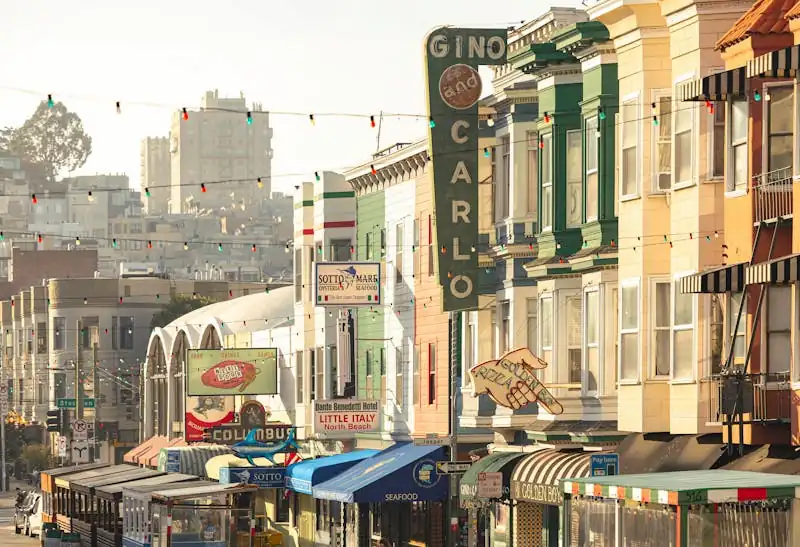
North Beach is one of the easiest San Francisco neighborhoods to enjoy from the moment you step outside. Columbus Avenue, Washington Square, Italian cafés, Coit Tower views, quick movement into Chinatown, and a natural dinner-to-drinks rhythm create a base that feels active without dropping you into a generic hotel district. It is especially strong because it solves two common San Francisco problems at once: it gives the stay character, and it gives evenings a place to land without extra transport. The trade-off is hotel consistency. Rooms are often smaller, buildings older, and the best addresses book fast.
Why stay here: Stay here if you want a walkable, food-led base with real San Francisco texture, strong evening value, and easy access to Chinatown, Telegraph Hill, Fisherman’s Wharf edges, and the northern waterfront without actually staying in the most touristy part of the waterfront.
Best for: walkable character, dining, couples, short stays, and travelers who want San Francisco to feel like a neighborhood rather than a hotel corridor
Pros
One of the most atmospheric places to base a first or second San Francisco trip
Excellent restaurant and café density without needing transport every evening
Easy walking links to Chinatown, Telegraph Hill, Coit Tower, and waterfront edges
Better sense of local identity than generic downtown or convention-led hotel zones
Strong fit for short stays built around walking, eating, and compact north-side sightseeing
Works well for couples and adults who want evenings to feel spontaneous
Cons
Hotel stock skews older, smaller, and more limited than in larger hotel districts
Some blocks are noisy at night, especially near busy restaurant and bar corridors
Room sizes and amenities can be inconsistent for the price
Not the best choice if you need large family rooms or full-service hotel predictability
Nearby highlights
Dinner and cafés around Columbus Avenue without transport planning
Quick access to Chinatown for food, markets, and morning walks
Telegraph Hill and Coit Tower for a compact view sequence
Washington Square as a simple neighborhood anchor
Fisherman’s Wharf and the Embarcadero within reach without staying in the tourist core
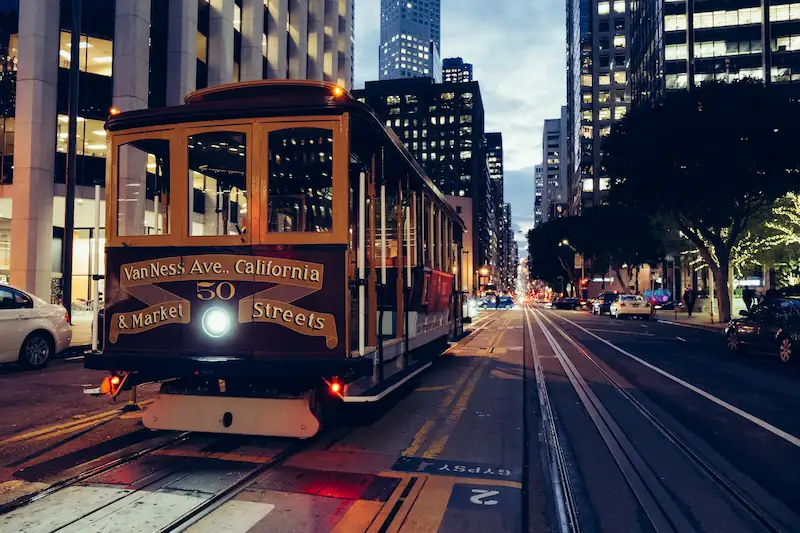
Cable-car and Nob Hill access when you want a classic city segment
Budget
Hotel North Beach – Simple historic budget stay right in the neighborhood core. Best for travelers prioritizing location over in-room comfort. Why we recommend: One of the few genuinely low-cost addresses that puts you inside North Beach rather than near it. Check availability
Europa Hotel – Basic, no-frills option on Columbus Avenue with immediate access to bars, cafés, and restaurants. Why we recommend: You stay for the address, and in this part of San Francisco that still has real value. Check availability
Entella Hotel – Small North Beach hotel with a practical location near Coit Tower and the waterfront edge. Why we recommend: A useful low-friction pick when you want North Beach positioning without paying boutique rates. Check availability
Mid
San Remo Hotel – Historic, compact, and full of old San Francisco personality. Better for travelers who enjoy atmosphere more than space. Why we recommend: It delivers more character than most mid-range alternatives nearby. Check availability
Columbus Inn – Straightforward, comfortable stay near the North Beach and Fisherman’s Wharf edge with parking. Why we recommend: A practical middle-ground choice if you want easier access and less hotel eccentricity. Check availability
Washington Square Inn – Small inn overlooking one of the neighborhood’s best-known public spaces. Better suited to slower, couple-oriented stays. Why we recommend: The setting feels more rooted in North Beach than most hotels in this price band. Check availability
Upscale
Hotel Boheme – Intimate boutique stay with real North Beach identity and a more curated feel than the neighborhood average. Why we recommend: It captures the area’s personality without tipping into generic luxury. Check availability
Argonaut Hotel, a Noble House Hotel – Polished waterfront-adjacent hotel with larger rooms and easier family or comfort-oriented logistics. Why we recommend: A strong upgrade option when you want North Beach access with more reliable hotel standards. Check availability
The Fairmont Heritage Place Ghirardelli Square – High-end residence-style stay on the North Beach and waterfront edge, with far more space than most city hotels. Why we recommend: One of the best picks in this zone if comfort, space, and a premium base matter more than classic inn charm. Check availability
Pacific Heights
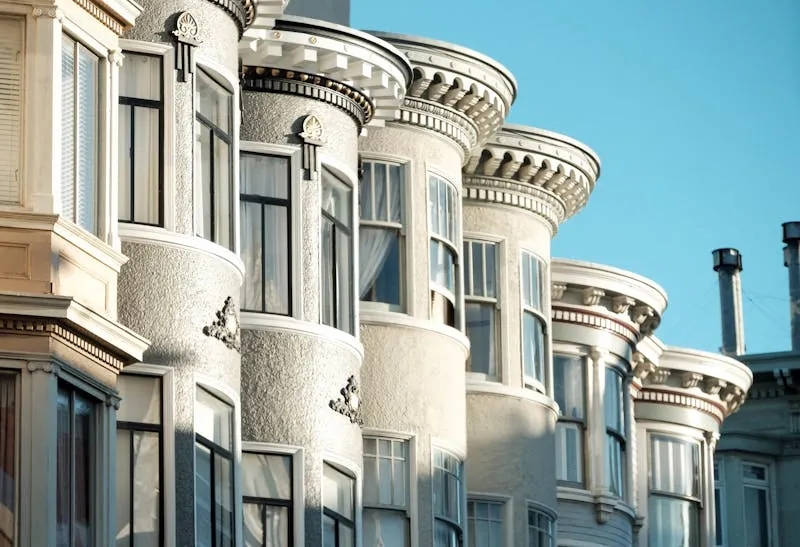
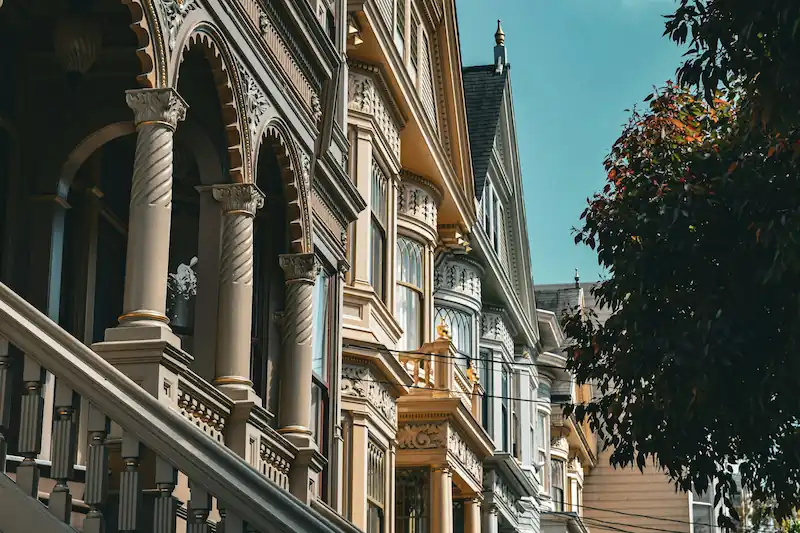
Pacific Heights is the stay for travelers who want San Francisco to feel calmer, more residential, and more composed. The area’s appeal is not maximum sightseeing efficiency; it is street quality, architecture, quieter nights, and a more polished return after long days. It can be excellent for couples, comfort-led travelers, longer stays, and anyone who prefers elegant residential rhythm over hotel-district convenience. The cost is practical: some journeys require rideshare or transit, hills are real, and hotel stock is thinner than in central zones.
Why stay here: Choose Pacific Heights if quiet streets, refined surroundings, better sleep, and a more upscale residential feeling matter more than walking to every first-trip attraction. It is especially strong when the hotel itself is part of the trip quality.
Best for: quiet comfort, upscale stays, couples, longer stays, and travelers who want a refined residential base rather than maximum sightseeing efficiency
Pros
Quieter and more residential than the main tourist hotel zones
Better odds of calm nights, more polished streets, and stronger room quality
Elegant walks around Fillmore, Alta Plaza, Lafayette Park, and residential viewpoints
Good fit for couples, longer stays, and travelers who value recovery at night
Useful access toward the Marina, Japantown, and calmer dining corridors
A stronger emotional reset after full sightseeing days than downtown-heavy bases
Cons
Less efficient for fast, first-time sightseeing if every day is packed
Steep walking and elevation changes are part of the area’s reality
Fewer true hotel clusters and less budget depth than central districts
Not a nightlife base and not ideal for travelers who want everything walkable
Nearby highlights
Fillmore dining and boutique shopping without downtown noise
Alta Plaza and Lafayette Park for scenic neighborhood pauses
Lyon Street steps and bay-facing residential walks
Easy reach toward Japantown or the Marina depending on the exact address
Calmer evenings after long days in the central city
Better sleep and room-quality potential than many more central hotel corridors
Budget
Pacific Heights Inn – Simple, well-placed option on Union Street with unusually practical positioning for the price. Why we recommend: One of the few lower-cost addresses that still places you in a genuinely useful Pacific Heights-adjacent location. Check availability
Inn on Broadway – Basic motel-style stay on a busy corridor, useful for short stays that need parking and access over charm. Why we recommend: A functional choice when location and value matter more than atmosphere. Check availability
Queen Anne – Historic Victorian boutique stay on the Lower Pacific Heights edge with more personality than a typical budget pick. Why we recommend: It gives you more character than most lower-priced alternatives in this part of the city. Check availability
Mid
Hotel Majestic – Old-school hotel with decorative period style and a quieter feel than bigger central properties. Why we recommend: A strong fit if you want neighborhood atmosphere rather than standardized chain design. Check availability
Hotel Kabuki, part of JdV by Hyatt – Design-led hotel on the Japantown side of the district mix, with better amenities than smaller inns nearby. Why we recommend: A more polished mid-range option when you want style without going fully luxury. Check availability
Kimpton Hotel Enso by IHG – Refined, calm hotel with spacious rooms and an easier, less frantic setting than downtown alternatives. Why we recommend: It balances comfort and neighborhood quality well for this side of the city. Check availability
Upscale
Hotel Drisco – One of the strongest high-end residential stays in San Francisco, set deep inside Pacific Heights. Why we recommend: It is unusually well matched to travelers who want the neighborhood itself, not just a nearby hotel. Check availability
Neighbourgood Sutter Mansion – Boutique mansion-style stay with a more intimate, design-forward tone than a large luxury hotel. Why we recommend: A sharper boutique choice if you want character and calmer surroundings over classic corporate luxury. Check availability
Kimpton Hotel Enso by IHG – Upscale boutique-leaning option that suits travelers who want a more contemporary, quieter base. Why we recommend: It feels more considered and more livable than many similarly priced central hotels. Check availability
The Mission
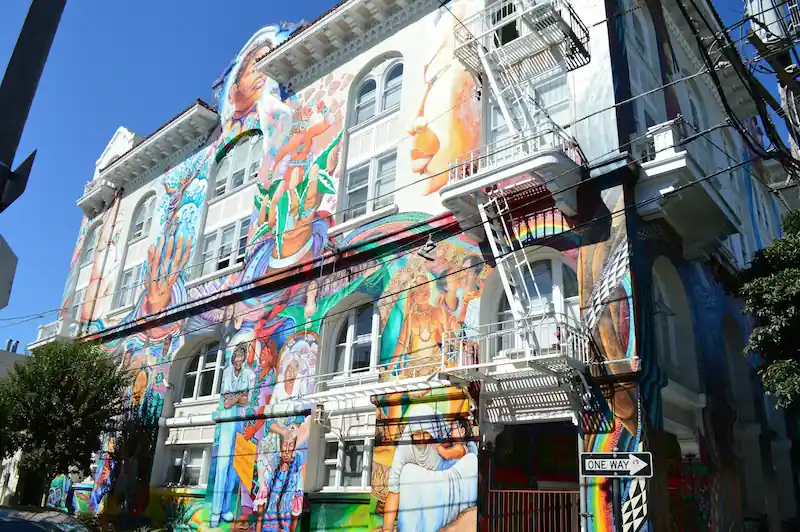
The Mission is the best base when food, bars, murals, cafés, and neighborhood energy are central to the trip. Valencia Street, taquerias, Dolores Park, independent shops, and a strong day-to-night rhythm make it one of the most rewarding places to stay if you want contemporary San Francisco rather than classic postcard San Francisco. It is not the easiest default for a first short visit, and street feel changes noticeably by block. But for travelers who care about eating well, going out, and staying somewhere alive, it can be more memorable than almost any central hotel zone.
Why stay here: Stay in the Mission if restaurants, nightlife, local texture, and a more lived-in city mood matter more than classic north-side sightseeing convenience. It works best for return visitors, food-led travelers, adults, and confident first-timers who want the neighborhood itself to drive the trip.
Best for: food, nightlife, murals, repeat visitors, confident travelers, and anyone who wants a more local stay than the classic first-trip bases provide
Pros
Excellent food, coffee, wine bar, cocktail, and casual dining density
One of the city’s strongest neighborhoods for evenings that do not require much planning
More local energy and contemporary texture than most hotel-heavy districts
Good BART access from key Mission stations for airport and cross-city movement
Strong fit for return visitors, food-led trips, and nightlife-oriented stays
Murals, Dolores Park, and Valencia Street add daytime value beyond dining
Cons
Street quality varies by block more sharply than in calmer districts
Not the cleanest-feeling or most polished base for nervous first-timers
Hotel stock is thinner, more irregular, and less conventional than in Nob Hill or the Marina
Less convenient for classic north-side sights if those dominate the itinerary
Nearby highlights
Valencia Street restaurants, bars, cafés, and independent shops
Mission burritos, taquerias, bakeries, and casual food stops
Dolores Park for a neighborhood pause and city-facing views
Mural corridors such as Clarion Alley and nearby side streets
BART access for airport and cross-city movement
Easy evening spontaneity compared with quieter or more hotel-led districts
Budget
Hotel Sunrise – Landmark Mission budget stay on Valencia Street with the neighborhood at your doorstep. Why we recommend: It is one of the rare truly budget options that actually puts you inside the Mission experience. Check availability
1906 Mission – Simple, design-aware budget stay with strong transport and restaurant access. Why we recommend: A useful choice when you want Mission location without paying boutique pricing. Check availability
San Francisco Inn – Basic value-oriented stay on the SoMa edge, workable for Mission access via quick transit or rides. Why we recommend: It gives lower-cost flexibility when central Mission inventory is limited. Check availability
Mid
Beck's Motor Lodge – Reliable, comfortable option on the Castro-Mission edge with parking and better room consistency than many local alternatives. Why we recommend: A strong practical pick when you want neighborhood energy without sacrificing too much comfort. Check availability
Casa Loma Hotel – Simple, good-value stay west of the Mission with manageable access to both local neighborhoods and central routes. Why we recommend: It works well for travelers who want value and flexibility more than polished amenities. Check availability
Noe's Nest Bed and Breakfast – Small Victorian-style stay on the Mission-Noe Valley side with more warmth and individuality than standard hotels. Why we recommend: A better choice than a generic room if you want character and a quieter neighborhood edge. Check availability
Upscale
Parker Guest House – Highly regarded guesthouse on the Castro edge with a calmer, more intimate atmosphere than most city hotels. Why we recommend: One of the best boutique-style stays for travelers who want this side of San Francisco without nightly chaos. Check availability
Noe's Nest Bed and Breakfast – Character-rich small stay that suits slower, design-conscious trips rather than standard hotel expectations. Why we recommend: Its personality is stronger than most upscale alternatives around the Mission orbit. Check availability
Beck's Motor Lodge – Not luxury, but one of the most dependable higher-comfort options for travelers staying on the Mission-Castro axis. Why we recommend: It offers unusually solid convenience and room quality for this part of the city. Check availability
Nob Hill
Nob Hill remains one of the strongest first-time bases because it blends classic San Francisco atmosphere with practical reach. Cable cars, historic hotels, hilltop views, Chinatown access, and downhill movement toward downtown edges give it a clear city identity without forcing you into the shopping-led feel of Union Square. It is especially effective for 2- to 4-night trips where structure matters. The trade-off is simple: steep streets are not a detail here, and the return to the hotel can feel different from the descent.
Why stay here: Choose Nob Hill if you want a classic, central, hotel-friendly base that helps a first trip feel organized and recognizably San Francisco without defaulting to a less atmospheric downtown stay.
Best for: first-time visitors, short stays, classic San Francisco atmosphere, historic hotels, and travelers who want centrality with more character than Union Square
Pros
One of the safest default choices for first-time visitors
Historic hotel stock and a stronger sense of place than Union Square
Good positioning between Chinatown, downtown edges, cable cars, and central sightseeing routes
Works especially well for 2- to 4-night trips that need structure and range
Classic views, steep streets, and cable-car atmosphere are built into the stay
Better full-service hotel options than smaller neighborhood bases
Cons
Steep climbs are part of daily life and can be tiring by the end of the day
Hotels can be expensive for the room size and age of the building
The exact block and slope matter more than many travelers expect
Less naturally food-led at night than North Beach, Hayes Valley, or the Mission
Nearby highlights
Cable cars and classic hilltop street scenes
Quick downhill reach to Chinatown and the Financial District
Union Square access when needed without sleeping in its busiest hotel core
Grace Cathedral, Huntington Park, and historic hotel lobbies
Easy link into North Beach for dinner if you plan the return well
Good base for a first trip mixing Alcatraz, Chinatown, museums, and waterfront movement
Budget
FOUND Hotel Carlton, Nob Hill – Well-located value option with more style than a bare-bones budget stay. Why we recommend: A useful budget-conscious entry point into Nob Hill without dropping straight into the least appealing hotel zones. Check availability
Nob Hill Motor Inn - Newly Updated Rooms! – Functional motor-inn option on the neighborhood edge, especially useful for drivers. Why we recommend: It remains one of the more practical lower-cost picks when parking and access matter. Check availability
Nob Hill Hotel – Historic, compact, and centrally placed, with more atmosphere than a generic economy hotel. Why we recommend: A good compromise when you want Nob Hill character without luxury pricing. Check availability
Mid
Holiday Inn San Francisco - Golden Gateway – Large, reliable hotel with strong transit access and more room consistency than many historic properties nearby. Why we recommend: A dependable mid-range choice if you want fewer surprises than in smaller old buildings. Check availability
White Swan Inn – Charming inn with a more intimate, decorative feel than standard chain hotels. Why we recommend: A better pick for travelers who want warmth and personality over scale. Check availability
Stanford Court San Francisco – Modernized boutique-style hotel on a prime Nob Hill perch with strong transport logic. Why we recommend: It gives you the location benefits of Nob Hill with more contemporary polish than many peers. Check availability
Upscale
InterContinental Mark Hopkins San Francisco by IHG – Classic high-rise landmark stay with old-school Nob Hill presence and strong views. Why we recommend: It delivers the iconic Nob Hill mood many first-time visitors actually want. Check availability
Fairmont San Francisco – Historic grand hotel at the top of the hill, with real presence and a recognizably San Francisco setting. Why we recommend: Few hotels in the city match its sense of arrival and classic location. Check availability
The Ritz-Carlton, San Francisco – Polished luxury base with strong service and easier access to both Nob Hill and downtown edges. Why we recommend: It is one of the best choices when you want premium comfort without losing location logic. Check availability
Hayes Valley
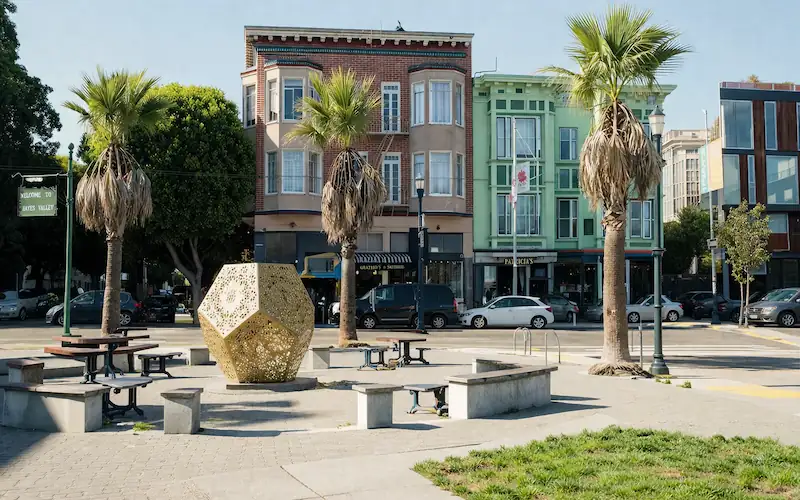
Hayes Valley is one of the smartest compact bases for travelers who want San Francisco to feel stylish, manageable, and easy between plans. It does not deliver bay views or the classic bridge-postcard setting, but it gives you cafés, restaurants, boutiques, performance venues, and a small-scale neighborhood that feels more pleasant than downtown while remaining useful for cross-city movement. It is a particularly strong fit for couples, culture-first short stays, and travelers who want a base that feels edited rather than intense.
Why stay here: Stay here if you want a central-but-neighborhood base with good food, design, culture, and manageable daily routines. It is one of the best choices when you want to avoid both generic downtown and fully residential remoteness.
Best for: stylish short stays, couples, culture-led trips, dining, and travelers who want central usefulness with a smaller neighborhood feel
Pros
Compact, pleasant, and easy to use day to day
Better café, restaurant, and boutique rhythm than downtown hotel corridors
Useful position for culture, Alamo Square, Civic Center institutions, and cross-city resets
Good fit for couples, design-conscious travelers, and shorter stays
Feels curated and livable without becoming too remote
Strong base when dining and daily comfort matter as much as attractions
Cons
No immediate waterfront or Golden Gate scenery
Some nearby edges change quickly in feel, so exact block choice matters
Hotel choice is more limited than in Nob Hill or the Marina
Not the strongest nightlife base if you want late bars and a more energetic scene
Nearby highlights
Hayes Street cafés, restaurants, boutiques, and small public spaces
Opera, symphony, City Hall, and performance-focused evenings nearby
Easy reach to Alamo Square and nearby residential walks
Good rideshare and transit reset position for different parts of the city
A calmer walk-and-stop rhythm than downtown
Useful base for travelers mixing food, culture, and a compact trip footprint
Budget
Hayes Valley Inn – Simple inn right in the neighborhood with strong walk-out-the-door convenience. Why we recommend: It is one of the most direct ways to stay inside Hayes Valley without overpaying. Check availability
Edwardian Hotel – Boutique-style rooms on the neighborhood edge with good tram access and more personality than a standard budget stay. Why we recommend: A practical low-cost option that still feels connected to Hayes Valley life. Check availability
The Annex - Hayes Valley – Lean, modern, value-oriented stay close to City Hall and Hayes Valley dining streets. Why we recommend: A useful pick when you want the area’s location logic at one of the lower price points. Check availability
Mid
Inn at the Opera – Comfortable, arts-district stay that works especially well for culture-focused short trips. Why we recommend: Its positioning is unusually good if performances or Civic Center institutions are part of the plan. Check availability
The Grove Inn – Well-kept small hotel near Hayes Valley and Alamo Square, with a quieter residential feel. Why we recommend: A stronger alternative than bigger central hotels if you want calm and local texture. Check availability
Courtyard by Marriott San Francisco Downtown/Van Ness Ave – Reliable mid-range choice with stronger consistency and more practical amenities than many smaller area hotels. Why we recommend: A smart option when you want Hayes Valley access without boutique-hotel unpredictability. Check availability
Upscale
Neighbourgood Sutter Mansion – Elegant boutique mansion stay with a more residential, design-forward mood than large central hotels. Why we recommend: It offers one of the most distinctive upscale experiences in this side of central San Francisco. Check availability
Hotel Majestic – Historic boutique option that suits travelers who want old-school charm and quieter evenings. Why we recommend: It delivers more personality than most upscale-lite alternatives nearby. Check availability
The Metro Hotel – Small boutique-leaning stay west of Hayes Valley with a calmer, more residential tone. Why we recommend: A better fit than a big hotel if you want intimacy and neighborhood feel. Check availability
Marina District
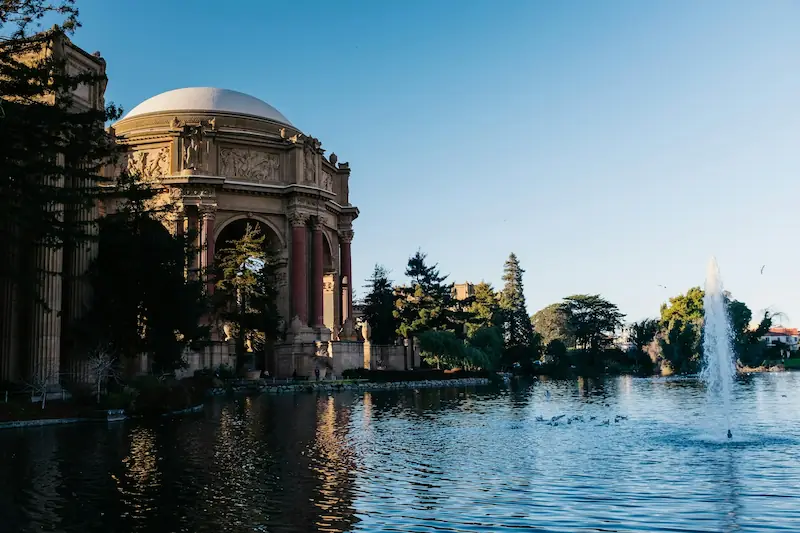
The Marina District is one of the easiest San Francisco bases to understand on arrival. It feels flatter, brighter, cleaner, and more straightforward than many central neighborhoods, with casual dining, bay walks, Marina Green, Crissy Field, and the Presidio within practical reach. It is not the city’s deepest cultural base, and it is not the most efficient for crossing the city repeatedly. But for families, drivers, travelers who want a calmer first trip, or anyone who values practical comfort, it can be one of the least stressful choices.
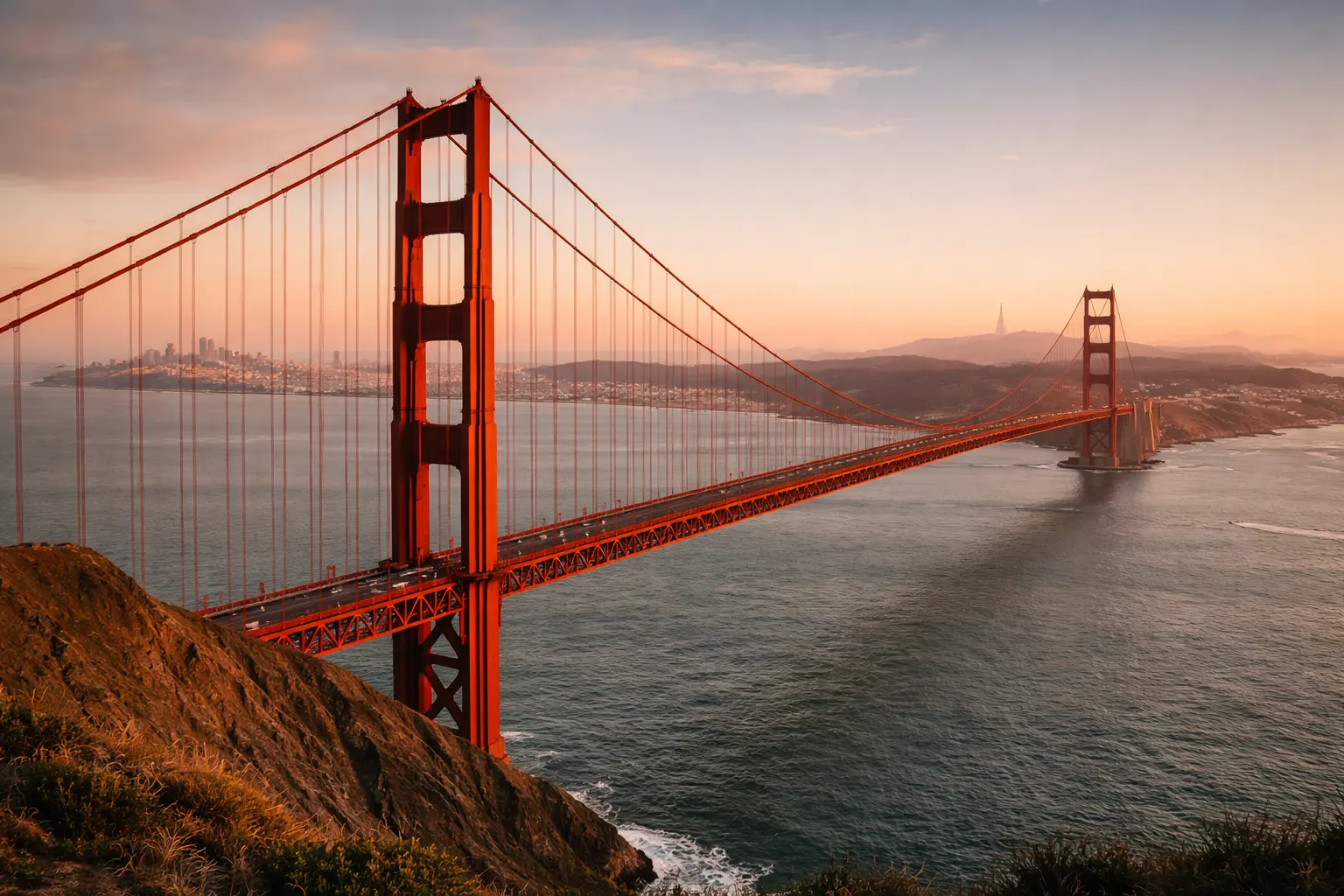
Why stay here: Choose the Marina if you want a lower-friction stay near the bay, easier streets, casual food, parking logic, and access to Golden Gate Bridge approaches, Crissy Field, the Presidio, and family-friendly open space.
Best for: families, drivers, relaxed first trips, bay walks, open-air comfort, and travelers who want a practical base near the Presidio and waterfront
Pros
Flatter and more physically forgiving than central hill districts
Cleaner-feeling and calmer than several more central alternatives
Strong everyday dining, coffee, and casual evening options on Chestnut and nearby streets
Good fit for families, drivers, runners, and bay-walk travelers
Easy access to the Presidio, Crissy Field, Palace of Fine Arts, and Golden Gate approaches
Often more practical for larger rooms and parking than character-led central areas
Cons
Less efficient for deeper cross-city sightseeing and Mission-focused evenings
Can feel more generic or residential-comfort-led than North Beach, Chinatown, or the Mission
Transit reach is weaker than more central or BART-adjacent areas
Nightlife is casual rather than distinctive
Nearby highlights
Marina Green and bayfront walks
Palace of Fine Arts and Presidio approaches
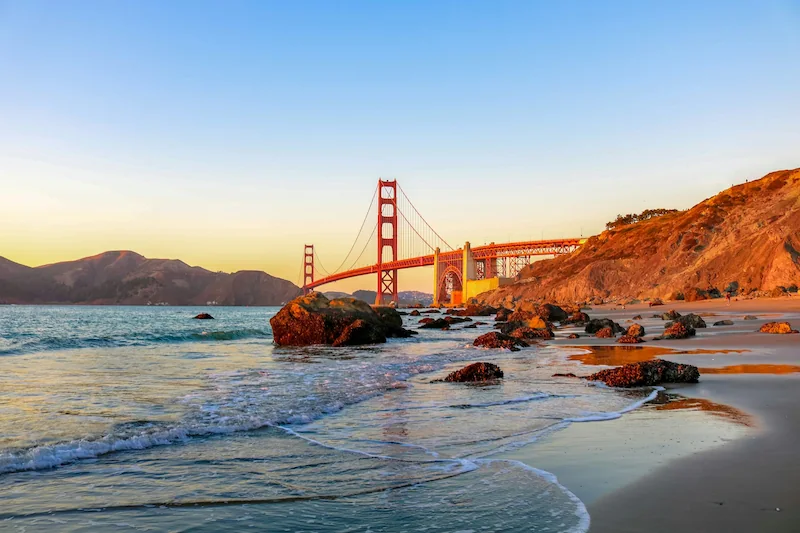
Crissy Field and Golden Gate Bridge views on clearer days
Chestnut Street cafés, casual restaurants, and easy dinners
Fisherman’s Wharf access without staying in the tourist core
Better parking and driving logistics than many central districts
Budget
Seaside Inn – Straightforward value option close to Marina Green and the neighborhood’s main practical streets. Why we recommend: A dependable budget base that actually benefits from the Marina’s ease. Check availability
La Luna Inn, an Ascend Collection Hotel – Simple, low-fuss stay on Lombard with easier access than more hidden neighborhood addresses. Why we recommend: Useful for travelers prioritizing value, parking, and straightforward access. Check availability
SureStay by Best Western San Francisco Marina District – Basic practical option with breakfast and a useful Lombard Street location. Why we recommend: One of the more functional lower-cost choices in this area if simplicity is enough. Check availability
Mid
Signature Inn San Francisco Marina District – Renovated motel-style stay with a practical address for a short Marina-based trip. Why we recommend: A sensible mid-range choice when you want this neighborhood without boutique pricing. Check availability
Francisco Bay Inn – Well-positioned stay on Lombard that works for drivers and travelers moving between Marina and central sights. Why we recommend: Its location logic is stronger than many similarly priced alternatives nearby. Check availability
Buena Vista Motor Inn – Comfortable, well-placed option with easy reach to both Marina streets and waterfront attractions. Why we recommend: A strong practical pick for travelers who want space, parking, and an easy base. Check availability
Upscale
Hotel Del Sol – Bright, design-forward hotel with more personality than most Marina lodging and a family-friendly feel. Why we recommend: It stands out because it feels more considered and more enjoyable than the standard Marina motor-inn set. Check availability
Coventry Motor Inn – Large, comfortable rooms and unusually practical logistics for this side of the city. Why we recommend: It remains one of the strongest comfort-first options in the neighborhood at a reasonable premium. Check availability
Argonaut Hotel, a Noble House Hotel – Polished waterfront-side hotel just beyond the Marina core, suited to travelers wanting a more elevated bayfront stay. Why we recommend: A strong upgrade option if you want this whole north-side zone to feel easier and more premium. Check availability
Chinatown
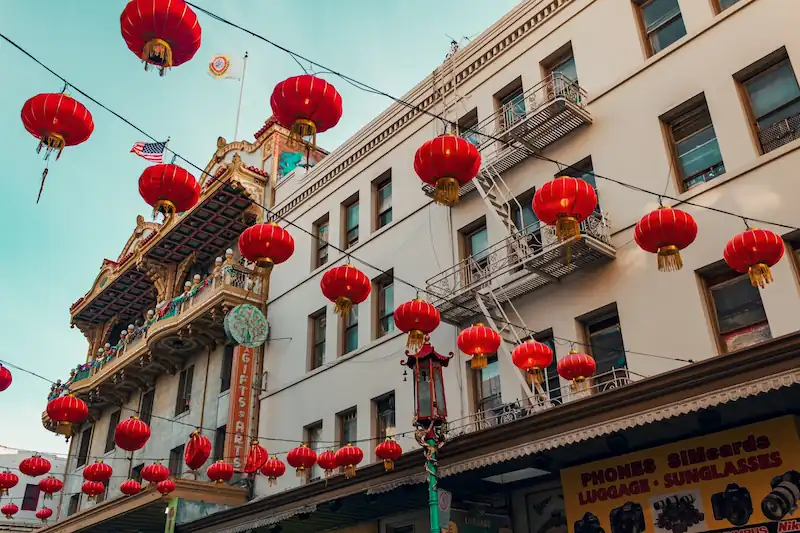
Chinatown is the strongest central choice for travelers who want atmosphere without defaulting to Union Square. It gives you dense street life, food access, historic texture, and immediate movement into North Beach, Nob Hill, and downtown edges. For a first trip, it can make the city feel more specific from the first morning because the neighborhood itself is already part of the experience. The trade-off is that hotels are less consistent, rooms can be smaller, and some travelers may find the density and noise less restful than a calmer district.
Why stay here: Stay here if you want a central, highly walkable, culturally distinct base with food, atmosphere, and strong access to several first-trip areas. It is especially useful if you want San Francisco to feel layered rather than generic.
Best for: first-time visitors, food-led central stays, cultural atmosphere, walkability, and travelers who want a stronger sense of place than generic downtown lodging
Pros
Very strong first-trip atmosphere with real city identity
Excellent walking links to North Beach, Nob Hill, the Financial District, and downtown-adjacent routes
Good food, snack, bakery, and casual meal access from morning through evening
Central without feeling like a generic hotel corridor
Useful for travelers who want culture and practicality together
A good alternative to Union Square for visitors who still want centrality
Cons
Hotel stock is less polished and less predictable than in Nob Hill or larger hotel districts
Some streets feel busy, tight, and noisy compared with residential bases
Not ideal if larger rooms, quiet nights, or full-service luxury are top priorities
Less relaxing for travelers who want calm returns after every day
Nearby highlights
North Beach dinners and cafés within an easy walk
Cable-car and Nob Hill movement close by
Financial District and downtown edges for practical transit and museum access
Markets, bakeries, dim sum, and compact food stops close to the hotel
A more distinctive central mood than shopping-led hotel zones
Easy sequencing with Coit Tower, Telegraph Hill, and the Embarcadero
Budget
Royal Pacific Motor Inn – Simple, practical stay on the Chinatown–North Beach edge with strong location value. Why we recommend: One of the most functional lower-cost choices if neighborhood position matters more than hotel atmosphere. Check availability
SW Hotel – Straightforward hotel inside Chinatown with a more practical feel than the neighborhood average. Why we recommend: A useful address when you want to stay directly in Chinatown without gambling on a very low-end property. Check availability
Grant Plaza Hotel – Compact budget-oriented stay near the Chinatown and Union Square seam. Why we recommend: A solid pick when you want highly central positioning and can accept a smaller, simpler room. Check availability
Mid
Orchard Hotel – Comfortable mid-range option on the Nob Hill–Chinatown side with better polish than many directly in-district alternatives. Why we recommend: A strong compromise if you want Chinatown logic with a more reliable hotel experience. Check availability
Hotel Triton – Boutique-leaning hotel near the district edge with easy access to Chinatown and downtown-adjacent routes. Why we recommend: Useful if you want a more stylized stay while keeping Chinatown in easy reach. Check availability
Executive Hotel Vintage Court – Historic-feeling central hotel close to Chinatown and Nob Hill movement patterns. Why we recommend: A reasonable middle-ground pick if you want location breadth more than neighborhood immersion. Check availability
Upscale
The Ritz-Carlton, San Francisco – Premium base on the Nob Hill–Chinatown side, with high service levels and easy access to both areas. Why we recommend: One of the best upscale choices if you want Chinatown in your orbit without compromising on hotel standards. Check availability
Orchard Garden Hotel – Polished, well-run boutique-style hotel in a very useful central position near the district. Why we recommend: A strong quieter alternative if you want the location logic without sleeping on the busiest streets. Check availability
Omni San Francisco – Elegant Financial District-adjacent hotel within practical reach of Chinatown and Nob Hill. Why we recommend: A good high-comfort option if you want this central cluster to work efficiently but prefer a more polished business-class product. Check availability
Where to stay in San Francisco for first-time visitors
For a first trip, the best base is the one that makes the city easier to read without stripping away its character. You want enough centrality to reach the classics, enough neighborhood life to enjoy evenings, and enough clarity that every morning does not start with a logistics puzzle.
Nob Hill is the safest classic default because it combines centrality, hotel choice, cable-car atmosphere, and a recognizably San Francisco setting.
North Beach is the better choice if you want the stay to feel more neighborhood-led, with easier dinners, cafés, Chinatown access, and old-city character.
Chinatown is a strong alternative to Union Square if you want centrality with denser atmosphere, food access, and quick walking links into North Beach and Nob Hill.
Hayes Valley works well for a stylish short first trip focused on food, culture, performances, and a more manageable central neighborhood.
The Marina is easiest for families or travelers who want a calmer, flatter, more open-air base near the bay and Presidio.
Pacific Heights is excellent if calm and hotel quality matter, but it is less efficient for a short sightseeing-heavy first trip.
The Mission is best for confident first-timers whose priority is food and nightlife rather than the classic north-side itinerary.
Avoid choosing only by distance to Union Square or downtown; the exact district rhythm matters more than symbolic centrality.
Stay style
Best area
Why
Classic first trip
Nob Hill
Central, iconic, hotel-friendly, and easier to structure for a short visit
First trip with more character
North Beach
Atmospheric, food-led, and still practical for north-side sights
Central with cultural density
Chinatown
Highly walkable, distinctive, and better rooted than generic downtown lodging
Stylish compact stay
Hayes Valley
Pleasant, central, food-friendly, and easier between plans
Easier family first trip
Marina District
Flatter, calmer, and closer to bayfront open space
Where to stay in San Francisco with family
Family trips work best when the area itself feels manageable. The right base should reduce hill fatigue, make meals easy, offer calmer returns, and keep parks or open space close enough to reset the day.
The Marina is often the easiest family base because it feels flatter, more open, and more straightforward than the central hills.
Pacific Heights works well for families who prioritize quiet nights, better room quality, and a calmer residential feel over maximum sightseeing efficiency.
Nob Hill can work for older kids and short classic trips, but the hill factor should be taken seriously.
North Beach is family-viable for food and walking, especially if you want easy access to Chinatown and the waterfront, but rooms can be smaller.
Chinatown is better for older kids and food-curious families than for travelers who need space and calm above all.
Hayes Valley suits families who want a compact, manageable base with cafés, culture, and quick rides to different parts of the city.
The Mission is usually better for families with older teens who will enjoy food and street life; it is not the easiest default for younger children.
For families with a car, the Marina and selected Pacific Heights or Lombard-edge hotels usually make more sense than central hill districts.
Priority
Best area
Why
Easy streets and open-air resets
Marina District
Flatter, bay-facing, and close to Crissy Field and the Presidio
Quiet and better room quality
Pacific Heights
Residential atmosphere and calmer evenings
Short classic family break
Nob Hill
Strong reach to first-trip sights, but better for older children
Food and walkability with older kids
North Beach or Chinatown
Easy meals and compact neighborhood movement
Stylish but manageable central stay
Hayes Valley
Small-scale, practical, and good between activities
Where to stay in San Francisco for nightlife
San Francisco nightlife is not concentrated in one giant entertainment district. The best base depends on whether you want bars, late dinners, classic cafés, polished restaurants, or a neighborhood where the evening continues naturally after sightseeing.
The Mission is the strongest base for bars, late dinners, cocktails, casual food, and a more current local energy.
North Beach is better for classic San Francisco evenings, easy restaurant-to-bar movement, and a softer old-city atmosphere.
Hayes Valley suits travelers who want polished restaurants, wine bars, performances, and a more controlled evening rhythm.
Chinatown works best when food, atmosphere, and proximity to North Beach matter more than bar-heavy nightlife itself.
The Marina has casual nightlife and easygoing bars, but it is more relaxed and less distinctive than the Mission.
Nob Hill is better as a classic hotel base with nearby evening options than as a nightlife district in its own right.
Pacific Heights is not a nightlife base; stay there only if quiet evenings are part of the appeal.
If nightlife matters, stay close to where you plan to end the evening rather than relying on late cross-city returns.
Night style
Best area
Why
Food, bars, and local energy
The Mission
Best density and most natural late-evening rhythm
Classic San Francisco evenings
North Beach
Restaurants, cafés, bars, and atmosphere connect easily on foot
Polished dinner and culture
Hayes Valley
Stylish restaurants and performance venues suit controlled evenings
Casual bay-side evenings
Marina District
Easygoing bars and restaurants, but less depth than the Mission
Where to stay in San Francisco on a budget
A budget stay in San Francisco is not just about the lowest room rate. Because hills, transport, safety feel, and evening location affect the whole trip, a slightly more expensive room in the right area can outperform a cheaper hotel that creates daily friction.
North Beach has some of the best location value because even simple hotels put you inside a useful, atmospheric, food-led neighborhood.
Chinatown can be one of the strongest central value plays if you accept smaller rooms and less polished hotel stock.
The Marina is often the most comfortable budget compromise, especially if you want easier streets, parking logic, and calmer evenings.
Hayes Valley has a few smart lower-cost options, but inventory is limited and tends to book early.
The Mission can work for budget travelers who want food and nightlife value, but block choice is especially important.
Nob Hill can justify paying slightly more on a short stay because it protects time and structure.
Pacific Heights is rarely the cheapest option, but selected edge hotels can be worth it if comfort and quiet matter.
Do not choose an isolated cheaper address only because it looks close on the map; repeated rides can erase the saving quickly.
Budget goal
Best area
Why
Best location value
North Beach
Simple hotels still give strong walkability and evening value
Most central practical value
Chinatown
Central, atmospheric, and food-rich without needing a premium hotel district
Most comfortable compromise
Marina District
Easier daily experience, parking potential, and calmer streets
Affordable with food and nightlife
The Mission
Restaurants and bars reduce the need to move constantly
Short trip where time matters
Nob Hill
Paying a little more can protect the entire itinerary
Which area makes the most sense for your trip length
Trip length changes the value of each neighborhood. The shorter the stay, the more important it is to protect structure and reduce transfers. The longer the stay, the more valuable comfort, quiet, food routines, and neighborhood identity become.
Label
Stay
Avoid
Why
1 to 2 nights
Nob Hill, North Beach, Chinatown, or Hayes Valley
Pacific Heights, the Mission, or the Marina unless the trip has a very specific focus
A very short stay needs immediate structure and fewer repositionings.
3 days
Nob Hill for classic range, North Beach for charm, Chinatown for atmosphere, Hayes Valley for compact style
Outer residential zones and any hotel chosen only because it is cheap
At this length, the base must support both sightseeing and evenings.
4 to 5 days
North Beach, Hayes Valley, Chinatown, the Marina, or Nob Hill depending on rhythm
Over-central hotel corridors chosen only for name recognition
You have enough time to prioritize neighborhood quality without losing the trip to logistics.
1 week
Pacific Heights, the Marina, the Mission, North Beach, or a well-chosen Chinatown base
The busiest downtown-adjacent blocks unless there is a strong hotel reason
Longer stays benefit from comfort, better routines, and a neighborhood that still feels good after several nights.
First trip
Nob Hill first, North Beach second, Chinatown third, Hayes Valley fourth
The Mission as a default unless food and nightlife are core priorities
These areas make the city easier to read while still preserving a sense of place.
Return trip
The Mission, Hayes Valley, Pacific Heights, North Beach, or Chinatown depending on mood
Choosing purely for sightseeing access
Once the postcard checklist matters less, daily neighborhood quality becomes more important.
Family trip
Marina District, Pacific Heights, or Nob Hill with older kids
The Mission or dense Chinatown blocks if calm and space matter most
Families usually need easy meals, safer-feeling returns, and fewer energy drains.
Food-led trip
The Mission, North Beach, Chinatown, or Hayes Valley
Pacific Heights or the Marina if you want dense dining at the door every night
Food-focused travelers gain more from staying inside the dining rhythm than commuting to it.
Car-based or road-trip stop
Marina District, selected Pacific Heights edges, or hotels with explicit parking
Central hill or Chinatown addresses without clear parking logic
Parking and break-in anxiety can overwhelm the benefit of a central address.
How to choose the right hotel once you have picked the neighborhood
In San Francisco, the neighborhood name is only the first filter. The exact street, slope, hotel age, sound control, parking setup, and nighttime return route can materially change the stay.
Topic
WhatToDo
WhatToAvoid
WhyItMatters
Prioritize the exact street, not only the neighborhood
Check whether the hotel sits on a calmer side street, a pleasant commercial block, or a heavy corridor such as Van Ness, Lombard, or a busy downtown edge.
Assuming every address inside a good district feels equally good on arrival.
Street noise, walk comfort, safety feel, and evening atmosphere vary sharply block to block.
Pay for location when the trip is short
For 1- to 3-night stays, spend more for a better-positioned hotel in Nob Hill, North Beach, Chinatown, or Hayes Valley.
Saving on room rate only to lose time and energy repositioning every day.
Short stays have less room to absorb transport friction or weak evening geography.
Respect the hill factor
Treat steep return walks as part of the hotel choice, especially in Nob Hill and Pacific Heights.
Planning only the downhill version of the day and ignoring the climb back.
A central hilltop hotel can be excellent, but it may feel less convenient by night three.
Match hotel type to neighborhood reality
Expect smaller inns and older properties in North Beach, Chinatown, Hayes Valley, and the Mission; expect more practical motor-inn stock around the Marina.
Expecting the same full-service hotel standards in every neighborhood.
Better expectations lead to better location choices and fewer disappointments.
Use quieter districts for recovery
If your days are long, consider Pacific Heights, the Marina, or a quieter Hayes Valley edge for calmer returns.
Choosing nightlife-heavy areas if sleep quality and easy recovery are major priorities.
A good night’s sleep can matter more than shaving ten minutes off a daytime journey.
Do not confuse boutique with better
Read for room comfort, soundproofing, heating, service consistency, and bathroom setup, not only design language.
Picking a small design-led property that underperforms on basics.
San Francisco’s small hotels vary widely beyond the photos.
Drivers should choose strategically
If you have a car, lean toward the Marina, selected Pacific Heights edges, or properties with clear parking terms.
Assuming central historic neighborhoods will be easy or cheap for parking.
Parking cost, stress, and vehicle break-in risk can change the whole stay.
Check evening food within a realistic radius
Make sure there are restaurants you would genuinely use within a comfortable evening walk.
Choosing a hotel that is fine by day but awkward for dinner returns.
San Francisco rewards staying near your evening rhythm because late cross-city movement feels longer than the map suggests.
Be cautious with edge-zone bargains
If a hotel is much cheaper, inspect the surrounding blocks, transit access, and nighttime return route carefully.
Assuming a cheap central-ish address is automatically a good deal.
A weak block can erase the savings through rides, discomfort, or reduced evening flexibility.
Think seasonally about room comfort
Check heating, window quality, and fog/wind exposure, especially in older buildings and western or bay-facing zones.
Assuming California means warm evenings and easy open windows.
San Francisco nights can feel cool and damp even when the day looked bright.
San Francisco stay FAQ
These are the questions travelers most often need answered before booking a San Francisco hotel or choosing between neighborhoods.
What is the best area to stay in San Francisco for first-time visitors?
Nob Hill is usually the safest first-time base because it combines classic atmosphere, hotel choice, cable-car access, and central reach. North Beach is better if you want more neighborhood character and stronger evenings, while Chinatown is a smart alternative if you want centrality with dense food and historic atmosphere.
Where should I stay in San Francisco without wasting time?
For short trips, Nob Hill, North Beach, Chinatown, and Hayes Valley usually perform best. They keep several parts of the city within reach while still offering enough neighborhood value. The Marina can also work if your itinerary leans toward the Golden Gate Bridge, Presidio, and bayfront.
Is Union Square the best place to stay in San Francisco?
Not necessarily. Union Square can be practical for transport, shopping, and some downtown logistics, but it often feels less distinctive than Nob Hill, Chinatown, North Beach, or Hayes Valley. Many travelers get a better overall stay by choosing a nearby neighborhood with stronger evening atmosphere.
Is Nob Hill or North Beach better?
Nob Hill is better for classic first-trip structure, hotel choice, and central reach. North Beach is better for walkable atmosphere, restaurants, cafés, and evenings that feel natural without extra transport. Choose Nob Hill for structure and North Beach for character.
Is Chinatown a good place to stay in San Francisco?
Yes, especially if you want a central, walkable, food-rich base with real atmosphere. It is useful for first-time visitors who want easy access to North Beach, Nob Hill, and downtown edges. It is less ideal if quiet nights, large rooms, or predictable upscale hotel stock are your top priorities.
What is the safest-feeling area to stay in San Francisco?
Pacific Heights and the Marina often feel calmer and more comfortable to many visitors because they are more residential, less intense, and easier to navigate. Nob Hill can also work well in strong hotel pockets. Exact street choice still matters more than district reputation alone.
Where should families stay in San Francisco?
The Marina is often the easiest family base because it feels flatter, calmer, and close to open-air areas like Crissy Field and the Presidio. Pacific Heights is strong for quiet and comfort. Nob Hill works for shorter family city breaks with older kids who can handle hills.
Where should I stay in San Francisco for nightlife?
The Mission is the strongest base for bars, late dinners, cocktails, and local energy. North Beach is better for classic San Francisco evenings with restaurants and bars close together. Hayes Valley suits travelers who prefer polished dinners, wine bars, and culture-led nights.
Is the Mission a good place to stay?
The Mission is excellent if food, bars, murals, cafés, and a more local city feel matter most. It is better for return visitors, adults, and confident first-timers than for travelers who want the easiest classic sightseeing base or the calmest streets.
Is the Marina District a good place to stay?
Yes, especially for families, drivers, relaxed first trips, and travelers who want easier streets near the bay. It gives good access to Crissy Field, the Presidio, Palace of Fine Arts, and Golden Gate Bridge approaches. The trade-off is weaker cross-city transit and less local depth than North Beach or the Mission.
Is Pacific Heights worth it for visitors?
Pacific Heights is worth it if quiet, elegant streets, better room quality, and a residential feel matter more than fast sightseeing access. It is excellent for couples, longer stays, and comfort-led trips, but less efficient for a short first visit focused on classic sights.
Is Hayes Valley a good area to stay?
Hayes Valley is one of the smartest compact bases if you want restaurants, cafés, culture, design shops, and central usefulness without staying in a generic downtown hotel corridor. It is especially good for couples and short stays, though it does not offer immediate bay views or Golden Gate access.
Where should I stay in San Francisco on a budget?
North Beach and Chinatown often offer the best location value if you accept smaller or older hotel stock. The Marina can be a more comfortable budget compromise, especially with parking. The Mission can work if food and nightlife matter, but block choice is important.
What area is best for a romantic trip to San Francisco?
Pacific Heights is best for quiet elegance, North Beach for walkable dinner atmosphere, Hayes Valley for polished restaurants and culture, and Nob Hill for classic hotel romance. The right choice depends on whether you want calm, food, style, or iconic San Francisco mood.
Where should I stay for a 2-night trip?
Choose Nob Hill, North Beach, Chinatown, or Hayes Valley. With only two nights, you need a base that works immediately for sightseeing and evenings. This is usually not the time to experiment with a slower residential area unless the hotel itself is the priority.
Where should I stay for a 4- or 5-day trip?
With 4 or 5 days, you can prioritize neighborhood quality more. North Beach, Hayes Valley, Chinatown, the Marina, and Pacific Heights all become strong depending on your travel style. The Mission also makes sense if food and nightlife are central to the trip.
Where should I stay for a one-week trip?
For a week, comfort and routine become more important. Pacific Heights, the Marina, North Beach, Hayes Valley, Chinatown, or the Mission can all work well. Choose based on whether you want calm, bay access, food, classic centrality, or local nightlife.
Should I stay near Fisherman’s Wharf?
Staying near Fisherman’s Wharf can be convenient for families, Alcatraz, bay tours, and first-time waterfront sightseeing, but it is not usually the most characterful base. North Beach or the Marina often give better overall rhythm while keeping the northern waterfront accessible.
Should I stay downtown in San Francisco?
Downtown can be useful for business, conventions, transport, and some museum access, but it is not automatically the best visitor base. For most leisure trips, Nob Hill, Chinatown, North Beach, Hayes Valley, the Marina, Pacific Heights, or the Mission create a more satisfying stay.
Can I stay in San Francisco without renting a car?
Yes, and most visitors should. Walking, transit, and selective rideshare usually work better than driving inside the city. A car is most useful if you are doing regional trips, but for in-city stays it often creates parking cost, stress, and break-in concerns.
Where should I stay if I have a car?
The Marina is usually the easiest of the main visitor areas for drivers. Selected Pacific Heights edges and some Mission-Castro or Lombard corridor hotels can also work if parking is clear. Avoid assuming central historic areas will be easy or affordable for parking.
Which area has the best hotel choice?
Nob Hill and its surrounding central cluster usually offer the strongest traditional hotel choice. The Marina has practical motel-style and family-friendly stock. North Beach, Chinatown, Hayes Valley, Pacific Heights, and the Mission have more limited but often more characterful options.
Which area is best for food lovers?
The Mission is the strongest food base for tacos, casual dining, bars, and local energy. North Beach is excellent for classic evenings and Italian-leaning dining. Chinatown is best for dense daytime and casual food access, while Hayes Valley works well for polished restaurants and cafés.
How important is the exact hotel block in San Francisco?
Very important. Street feel, slope, noise, and nighttime comfort can change quickly. A good block on the edge of a strong neighborhood can outperform a weaker block inside a more famous district.
What is the biggest mistake when choosing where to stay in San Francisco?
The biggest mistake is choosing only by map centrality or price. San Francisco requires thinking about hills, evening returns, exact street quality, transport resets, and whether the neighborhood supports the way you want to spend your days.
Which San Francisco area is best if I want Golden Gate Bridge access?
The Marina is the easiest hotel base for Crissy Field, the Presidio, Palace of Fine Arts, and Golden Gate Bridge approaches. North Beach and Nob Hill can still work, but they require more deliberate movement to the bridge side of the city.
In San Francisco, the best area is the one that reduces friction for the trip you are actually taking.
Keep planning your San Francisco trip
Once you have chosen the right base, use the city guide to understand how San Francisco fits together, then use the things-to-do guide and itineraries to shape each day around that neighborhood choice.
Turn the right neighborhood into the right itinerary
Once you know where to stay in San Francisco, the next step is structuring the rest of your trip around that base. Use the planner to build a route that fits your pace, priorities, and how you actually want your days to unfold.